

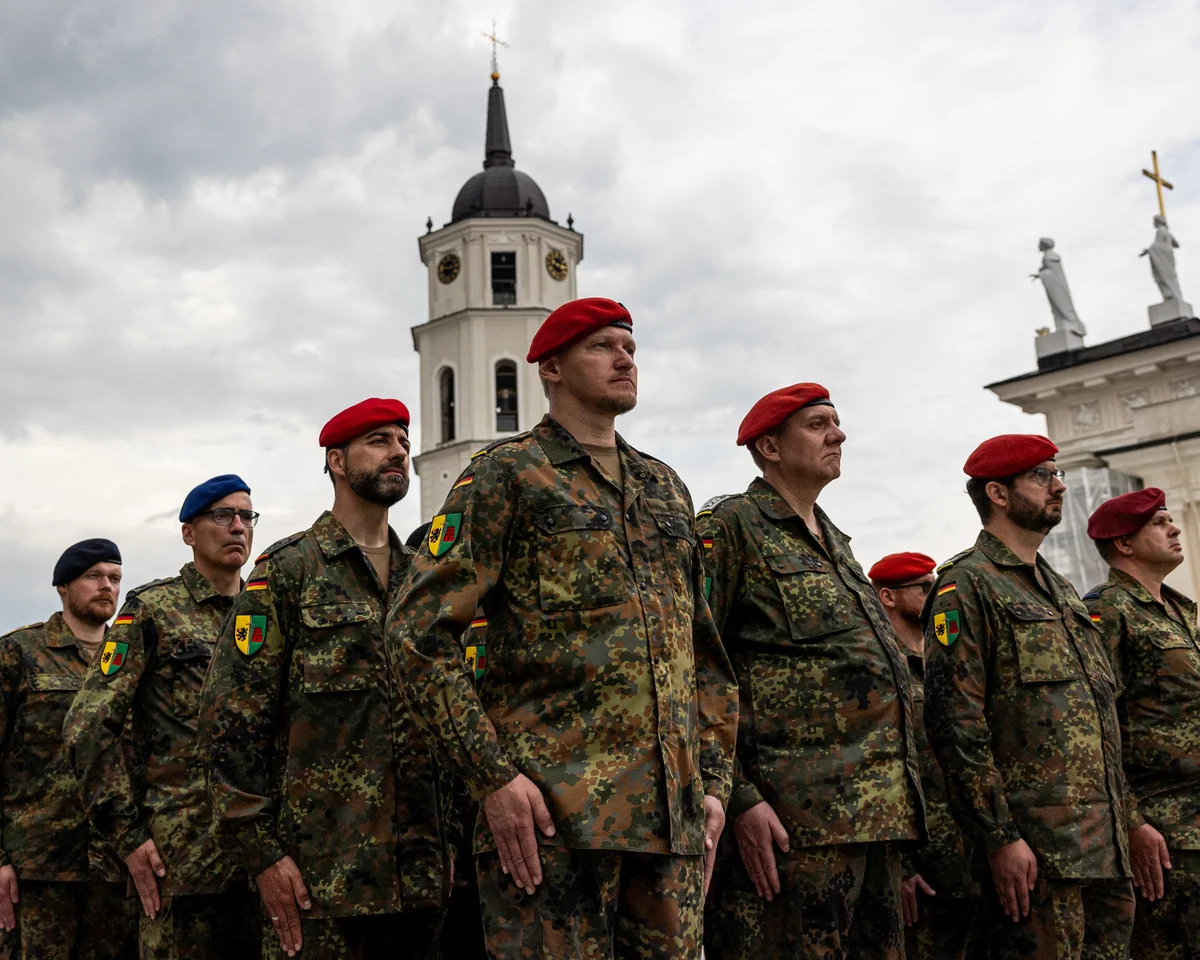
Germany’s renewed debate on reintroducing compulsory military service has triggered alarm bells in the business world. With NATO pressuring Berlin to bolster its defense posture against eastern threats, plans to expand conscription and reserve service are seen by many employers as a move that could further restrict access to skilled labor.
Steffen Kampeter, head of Germany’s largest employer association BDA, expressed support for strengthening national defense but warned that the economy and military could end up competing for the same human resources:
“There can be no economy without security, but there can be no army without a strong economy.”
Conscription or Voluntary Service?
Defense Minister Boris Pistorius plans to recruit around 5,000 young volunteers annually into the armed forces. However, many doubt that this number will be enough to meet Germany’s NATO commitments. The ministry has indicated that if voluntary enlistment falls short, mandatory conscription will be reconsidered.
Business leaders are especially worried about the growing labor shortages in key sectors such as healthcare, engineering, and education. They fear that conscription could upset already fragile workforce dynamics.
“There’s a conflict between prosperity and security—we’re drawing from the same talent pool,” said one industry representative.
What Do the Numbers Say?
A 2023 report by the Ifo Institute, commissioned by the German Finance Ministry, suggests that a voluntary model is far more sustainable than compulsory service. While employing 39,000 young volunteers each year would cost the state around €1.5 billion, mandatory service could deal greater long-term damage to individual careers and the national economy.
Big Goals, Limited Resources
The Bundeswehr aims to add 80,000 new soldiers within the next decade and expand its reserve forces to 200,000 personnel. Newly elected Chancellor Friedrich Merz is encouraging companies to increase productivity while also supporting national defense. However, this dual expectation may be difficult for small and medium-sized enterprises to meet.
Jens Günther, a small business owner who received an award from the Ministry of Defense for releasing an employee for reserve duty, put it bluntly:
“I can handle one person being away, but if two or three leave, I can’t run my business.”
Expert Opinions
Prof. Carlo Masala of Bundeswehr University believes business concerns are overblown:
“Even if conscription returns, no more than 25,000 young people would be called up annually—far below the hundreds of thousands during the Cold War,” he said, adding that the business community should engage constructively with the process.
Germany is trying to maintain both its security and economic stability. But balancing rising defense needs with a limited labor pool may prove to be one of the country’s toughest challenges. As the military looks to close its personnel gap, the business sector’s concerns are likely to shape how Germany navigates the trade-off between security and prosperity.
