

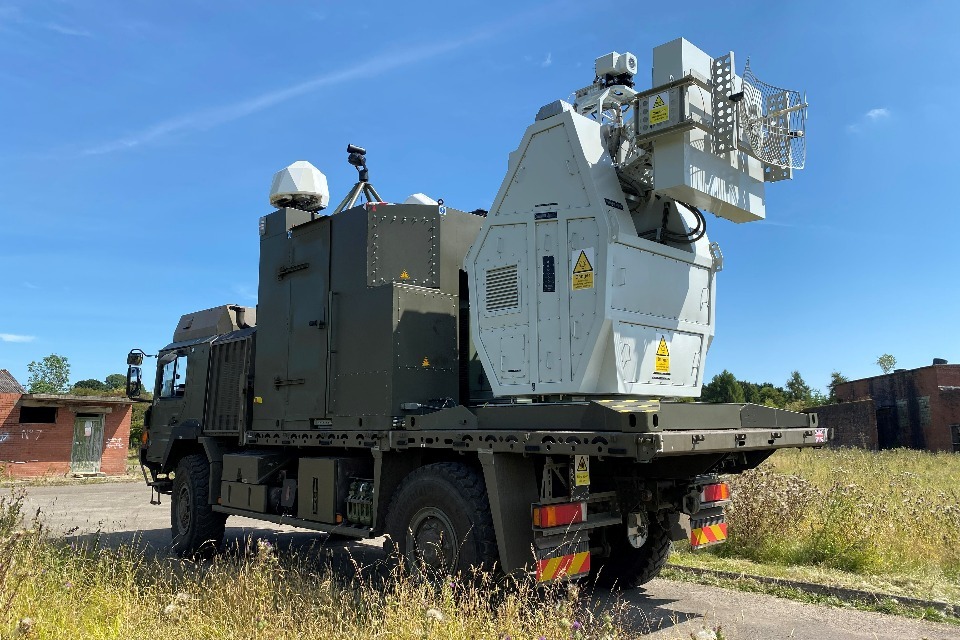
The British Armed Forces have introduced a groundbreaking advancement in electronic warfare with the Radio Frequency Directed Energy Weapon (RFDEW), a state-of-the-art system designed to protect critical assets from aerial and ground threats. Officially unveiled in May 2024, RFDEW represents a significant leap in defense technology, combining high efficiency with cost-effectiveness.
Developed under Project Ealing—a collaborative initiative involving the Ministry of Defence’s Defence Science and Technology Laboratory, Defence Equipment & Support agencies, and a consortium of industry leaders including Thales UK, QinetiQ, Teledyne e2v, and Horiba Mira—RFDEW employs directed radio frequency energy to disable or disrupt electronic systems. Capable of targeting multiple threats simultaneously up to one kilometre away, the system can neutralize drones, aircraft avionics, and other critical electronic components almost instantaneously.
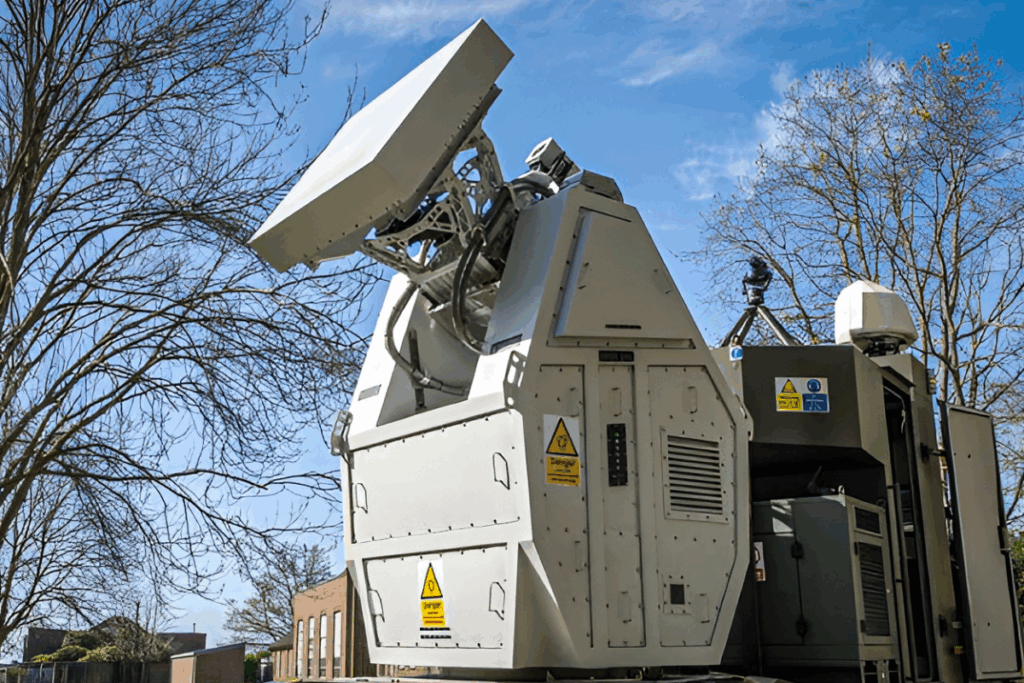
Unlike traditional missile-based defense systems such as the Aster missile, which carries a unit price ranging between $1.3 million and $2.5 million, RFDEW operates at an estimated cost of just 10 pence per shot. This dramatic reduction in operational expenses makes it an attractive solution amid evolving warfare landscapes characterized by drone swarms and electronic threats.
The weapon’s versatility allows it to be deployed across a variety of platforms, from naval vessels to ground vehicles, enhancing the protection of bases and strategic infrastructure. Its extensive automation enables operation by a single individual, reducing manpower requirements while maintaining rapid response capabilities.
In December 2024, the British Army’s 7th Air Defence Group successfully conducted the first field tests, validating the system’s effectiveness. Further tests in April 2025 demonstrated RFDEW’s ability to neutralize over 100 drones in a single engagement, effectively downing two drone swarms with near-instantaneous results.
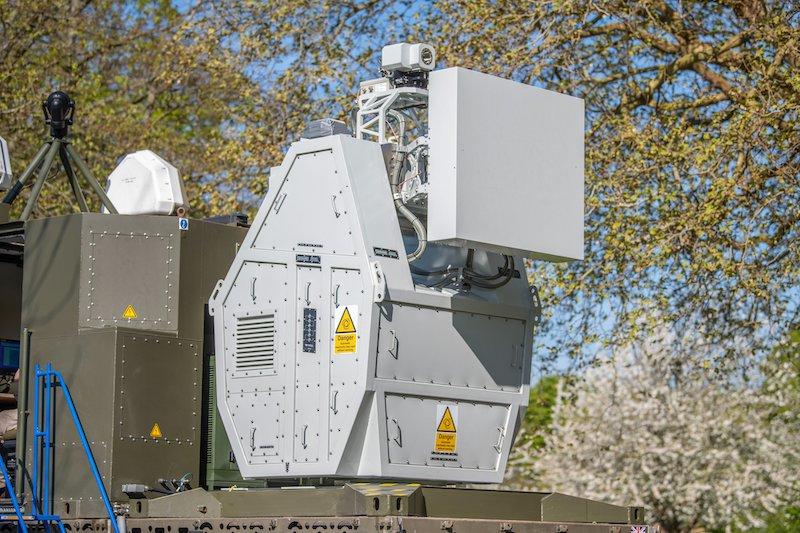
The development of RFDEW is underscored by recent global conflicts, including the Russo-Ukrainian war, the Gaza crisis, and tensions in the Red Sea, which have spotlighted the need for affordable and scalable counter-UAV solutions. The UK government’s commitment to boosting defense spending to 2.5% of GDP by 2030 has further accelerated the system’s progression from concept to battlefield readiness.
As modern warfare increasingly relies on electronic systems and unmanned platforms, the RFDEW stands out as a pioneering technology that could redefine defensive operations, offering a potent, cost-effective shield against a spectrum of emerging threats.
