

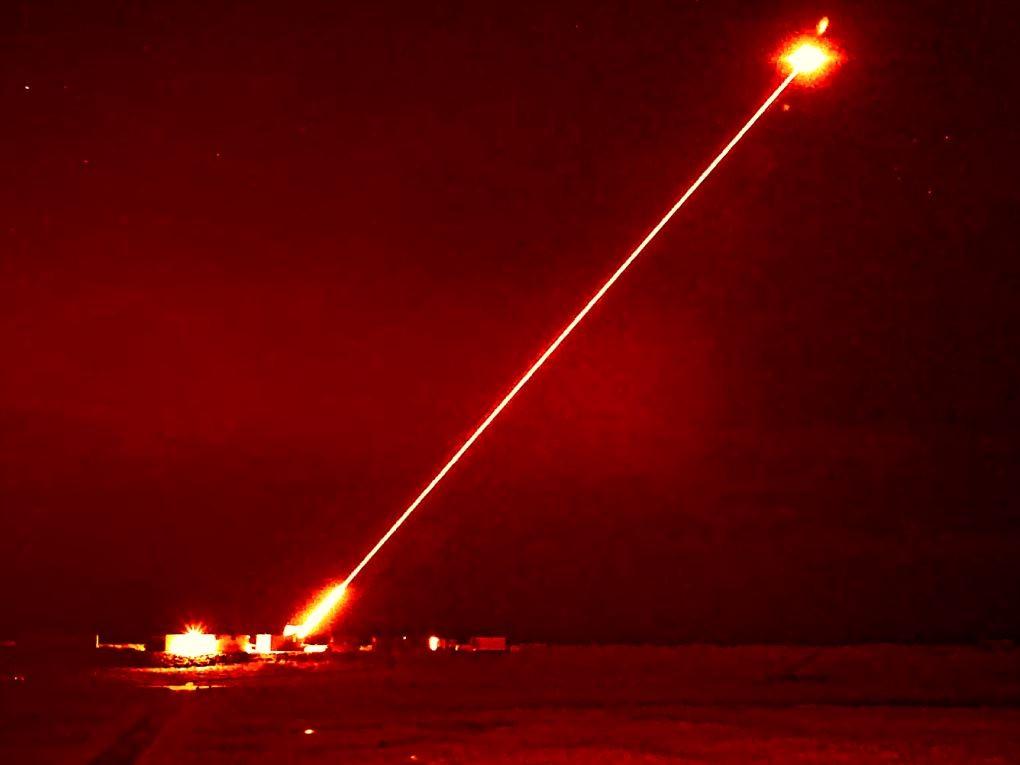
Among the groundbreaking advancements in today’s defense technologies, Directed Energy Weapons (DEWs) stand out with their potential to revolutionize the battlefield by going beyond conventional ammunition. Operating with high-intensity energy forms such as lasers, microwaves, and particle beams, these weapons aim to neutralize targets without physical contact. But how do they work, which countries are developing them, and what kind of military paradigm awaits us in the near future?
How Do Directed Energy Weapons Work?
The basic principle behind directed energy weapons is concentrating energy on a target to cause either physical or electronic damage. These energy types typically fall into three main categories:
- High Energy Lasers (HEL): Emit focused beams of light that cause structural damage to the target. They are particularly effective against drones, missile threats, and small vehicles.
- High-Power Microwaves (HPM): Emit electromagnetic waves over a wide area to disable or blind enemy electronics.
- Particle Beam Weapons: Use high-speed subatomic particles to inflict internal damage to the target. This technology remains largely experimental.
One of the most notable advantages of these systems is that they can be used repeatedly without the need for ammunition and can strike targets with high precision.
Which Countries Are Developing This Technology?
Directed energy weapons are on the radar of many countries seeking strategic superiority. Although R&D efforts are still largely ongoing, several nations have taken the lead in this field:
- United States: A global leader in laser and microwave weapon technologies. The U.S. Air Force’s THOR system defends against drone swarms using electromagnetic waves. Other laser-based systems like HELLADS and LaWS are actively being tested.
- China: Focuses on increasing its electronic warfare capabilities through laser and electromagnetic weapons. It is particularly interested in systems that counter drones and satellites.
- Russia: Testing advanced versions of its laser-based Peresvet system, which is designed for satellite blinding and air defense applications.
- United Kingdom: Developing the Radio Frequency Directed Energy Weapon (RFDEW) under “Project Ealing.” The system is expected to be operational for the British military by 2027.
- India: Concentrating on laser and electromagnetic pulse weapons. The Defense Research and Development Organization (DRDO) is working to create indigenous technologies.
Advantages and Challenges
Advantages:
- Eliminates the cost of transporting and managing ammunition
- Potential to neutralize threats instantly
- Offers a low-cost solution against advanced threats
- Silent, fast, and delivers direct effects
Challenges:
- High energy requirements and portability issues
- Susceptibility to weather conditions (fog, rain, dust)
- Maintaining system stability in long-range or continuous use
- Lack of clear regulations in international law for their deployment
The Battlefield of the Future is Shifting
Although directed energy weapons have not yet become standard on the battlefield, it’s widely expected that this will change in the coming years. Especially in countering drones, hypersonic threats, and electronic warfare components, these technologies offer faster and more effective solutions compared to conventional systems.
These developments are not only likely to alter the military balance but also reshape global security concepts and defense strategies. Directed energy is no longer science fiction—it is rapidly becoming a tangible reality.
