

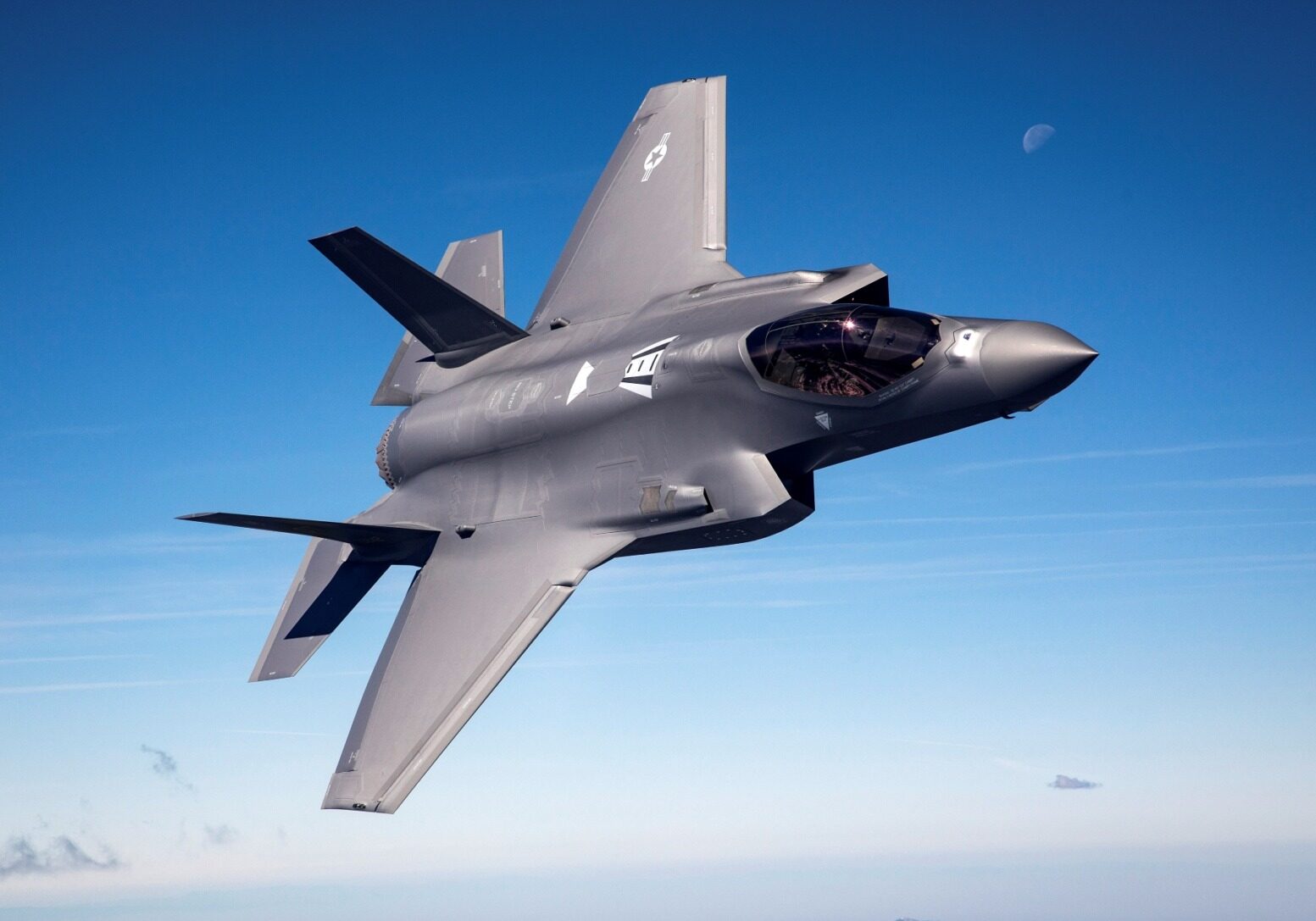
The Lockheed Martin F-35 Lightning II is revolutionizing modern aerial warfare with its stealth capabilities, advanced sensor systems, multi-role functionality, and network-centric warfare features. Developed under U.S. leadership, this aircraft is not just a fighter jet—it’s a digital combat platform enabling integrated operations across air, land, and sea forces.
Multi-Role and Customer-Oriented Design
The F-35 was designed in three main variants to meet different operational requirements:
- F-35A: A conventional takeoff and landing (CTOL) version developed primarily for air force use.
- F-35B: A short takeoff and vertical landing (STOVL) variant designed for Marine Corps and aircraft carrier operations.
- F-35C: A version adapted for carrier-based operations, featuring reinforced landing gear and larger wing surfaces.
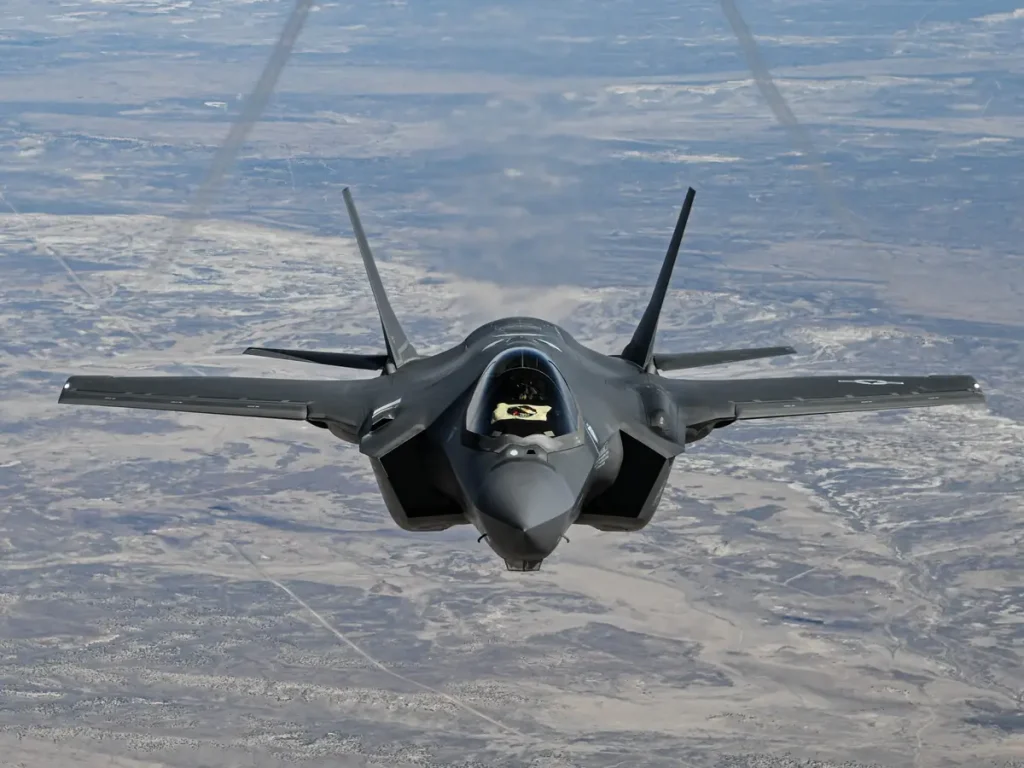
Stealth and Deep Strike Capability
One of the F-35’s most notable features is its low radar signature. Thanks to its advanced body coatings, internally mounted weapons systems, and radar-deflecting design, the aircraft can penetrate deep into enemy territory without being detected by radar.
Sensor Fusion and Network-Centric Warfare
The F-35 is equipped with cutting-edge sensors that provide the pilot with a full 360-degree view not only from the cockpit but from the aircraft’s surroundings as well. Its electronic warfare systems can jam enemy radars and communications. Furthermore, it enables real-time data sharing across air, ground, and naval forces, allowing coordinated joint operations on the battlefield.
International Cooperation and Global Presence
In addition to the United States, many NATO and allied countries have joined the F-35 program. Countries including (but not limited to) Turkey contributed as co-producers or end users. The program serves as a model for global cooperation not only in military but also in industrial and technological domains.
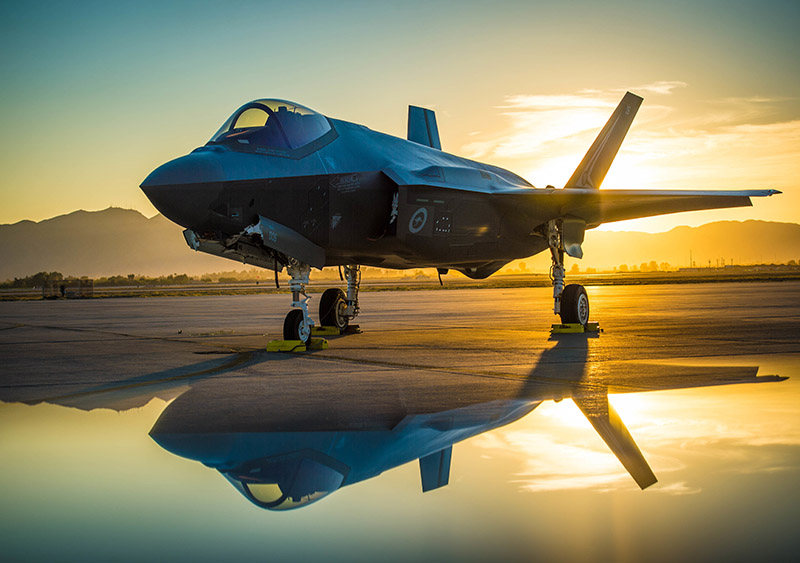
The Fighter of the Future—In the Skies Today
The F-35 Lightning II is designed not just for today’s mission requirements but also for future combat scenarios. With high maneuverability, electronic warfare capabilities, a robust cybersecurity framework, and continuously upgradeable software, it is expected to remain the backbone of many nations’ air power for decades to come.
Lockheed Martin F-35 Lightning II: The Pinnacle of Fifth-Generation Air Power
Shaping tomorrow’s battle doctrines today, the F-35 Lightning II stands out as the most sophisticated combat aircraft of our time. Combining air superiority, ground strike, intelligence gathering, and electronic warfare into one platform, it redefines what a fighter jet can be.
Three Variants, One Mission Philosophy
The F-35 is developed in three primary configurations to address different operational needs:
- F-35A – For Air Forces: Conventional takeoff and landing version.
- F-35B – For Marines and short-runway operations: Capable of short takeoff and vertical landing (STOVL).
- F-35C – For Navy operations: Larger wingspan and reinforced landing gear for aircraft carrier compatibility.
A Global Fighter: Operator Nations
The F-35 program modernizes not only the U.S. military but also the air forces of its global allies. Many countries participate as users or production partners.
Main Operator Countries:
- United States
- United Kingdom
- Italy
- Netherlands
- Australia
- Norway
- Denmark
- Japan
- South Korea
- Israel
- Belgium
- Finland
- Poland
- Singapore
- Sweden (recently joined)
- Canada (deliveries expected by 2025)
F-35 Lightning II Technical Specifications
| Specification | Value |
|---|---|
| Manufacturer | Lockheed Martin |
| Type | 5th-Generation Multi-Role Fighter |
| Crew | 1 |
| Max Speed | Mach 1.6 (~1,975 km/h) |
| Cruise Speed | Mach 1.2 |
| Range | ~2,200 km (without aerial refueling) |
| Service Ceiling | 50,000+ ft (15,240+ m) |
| Engine | Pratt & Whitney F135 |
| Weapons Capacity | 8,160 kg (internal + external) |
| Radar System | AN/APG-81 AESA Radar |
| First Flight | December 15, 2006 |
| Operational Entry | 2015 (U.S. Air Force) |
| Stealth Features | Low observable design and internal weapons bays |
Flying Intelligence for the Future
The F-35 is more than a jet—it’s an integrated combat system. Data gathered mid-flight is instantly projected onto the pilot’s helmet visor and heads-up display. It offers unmatched capabilities in close air support, suppression of enemy air defenses, reconnaissance, and overseas missions.
Thanks to its advanced software architecture, the F-35 is continuously updated and capable of adapting to evolving threats—making it a long-term strategic asset for any air force.
