

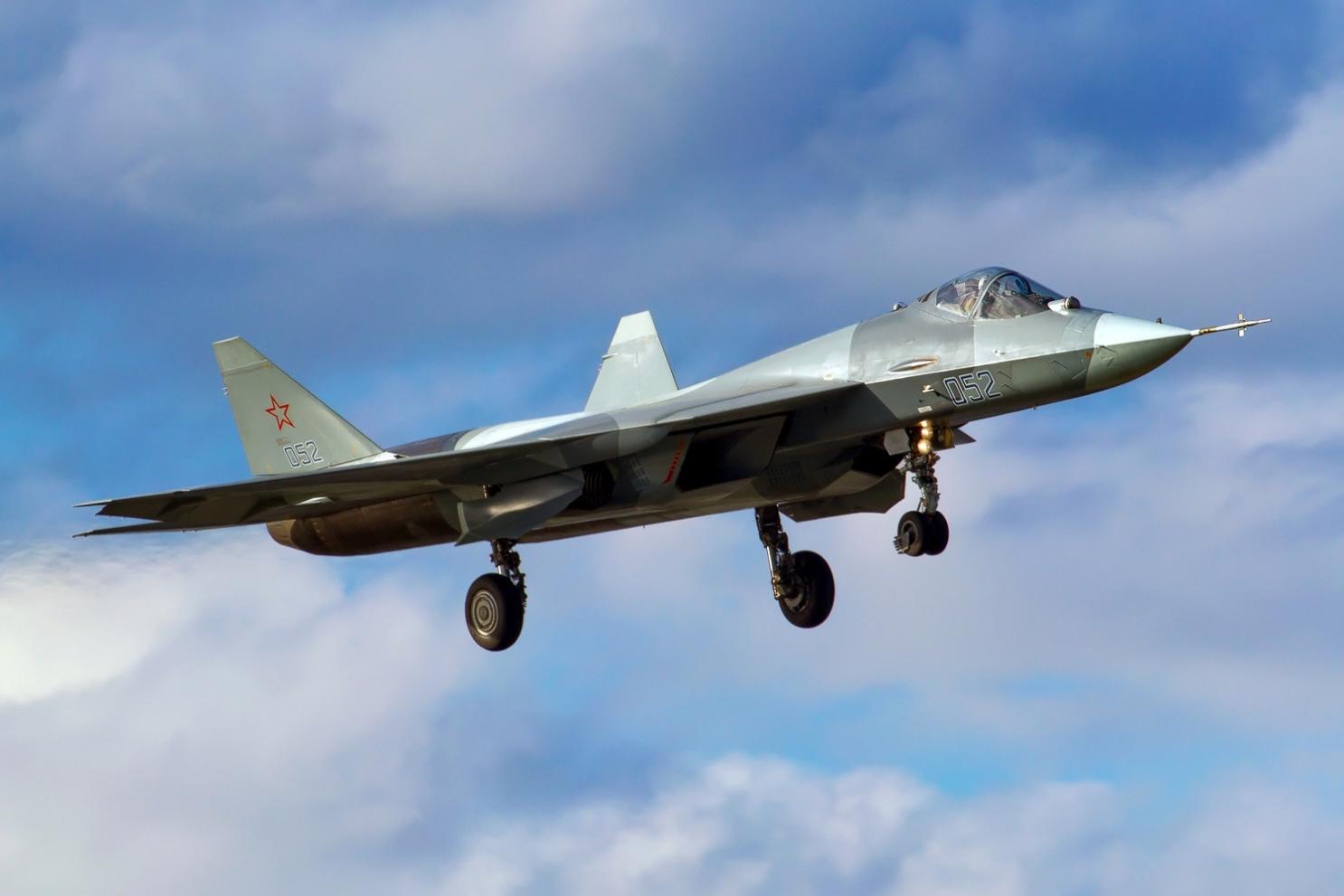
Developed as Russia’s fifth-generation combat aircraft, the Sukhoi Su-57 stands out as a modern platform noted for its air superiority and multi-role strike capabilities. Plagued by technical challenges during its development and repeated production delays, this aircraft has long been the subject of much attention, symbolizing Russia’s ambition in military aviation.
The Journey Beginning with the T-50
The foundations of the Su-57 trace back to the T-50 prototype developed under the PAK FA program. This prototype, which took its maiden flight on January 29, 2010, was designed to replace earlier generations of Russian fighters such as the Su-27 and MiG-29. The aim was to incorporate stealth technology to reduce radar visibility, achieve supercruise speeds, and demonstrate superior maneuverability.
Throughout its flight tests, the prototypes were equipped with advanced electronic systems, AESA radars, state-of-the-art avionics, and next-generation weapons systems. Introduced to the public at the 2011 MAKS Air Show, the Su-57 made an impression with its advanced aerodynamic design and engines featuring vectored thrust control.
A Challenging Development Process
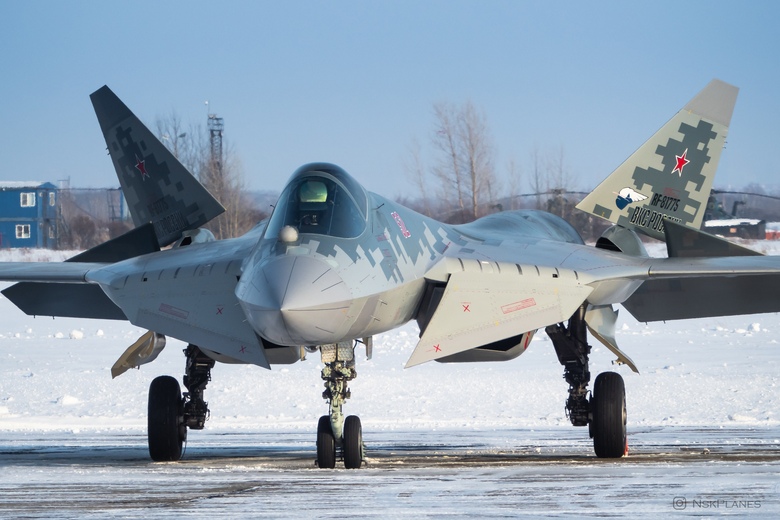
The transition to mass production has been repeatedly postponed due to shortcomings in engine technology and technical issues within the production infrastructure. During the prototype phase, the program faced various setbacks such as accidents, engine fires, and delayed testing schedules. While early units were powered by an advanced variant of the AL-31F engine from the Su-27 family, plans are underway to transition to the more advanced “Izdeliye 30” engine system in later production models.
Design Features and Technical Advantages
The Su-57 is distinguished by its integrated airframe design—which blends the fuselage with the wings using composite materials—and its advanced sensor integration. The aircraft is fitted with multiple AESA radar systems, electro-optical sensors, infrared warning systems, and electronic warfare capabilities.
Powered by a pair of turbofan engines with vectored thrust, the Su-57 is capable of reaching speeds up to Mach 2, a supersonic range of 1,500 km, and an operational ceiling of 20,000 meters. It is versatile enough to carry both air-to-air and air-to-ground armaments from its internal and external weapon stations. Additionally, the Su-57 is capable of executing high-angle attack maneuvers, such as the “cobra maneuver,” offering exceptional agility in close air combat.
Weapon Systems and Avionics
The Su-57’s armament includes a 30 mm internal cannon as well as an array of air-to-air missiles (such as the K-77M and K-74M2), air-to-ground munitions (including the Kh-38M and KAB-250/500), and anti-ship missiles (like the Kh-35 and Kh-31). This diverse ordinance portfolio enables the Su-57 to perform both traditional air superiority missions and strategic strike operations effectively.
In addition, the aircraft is outfitted with the N036 Byelka AESA radar system, the L402 Himalaya electronic warfare suite, and the 101KS Atoll integrated electro-optical defense system—providing it with high-level tactical flexibility for both offensive and defensive operations.
Production Plans and Future Outlook
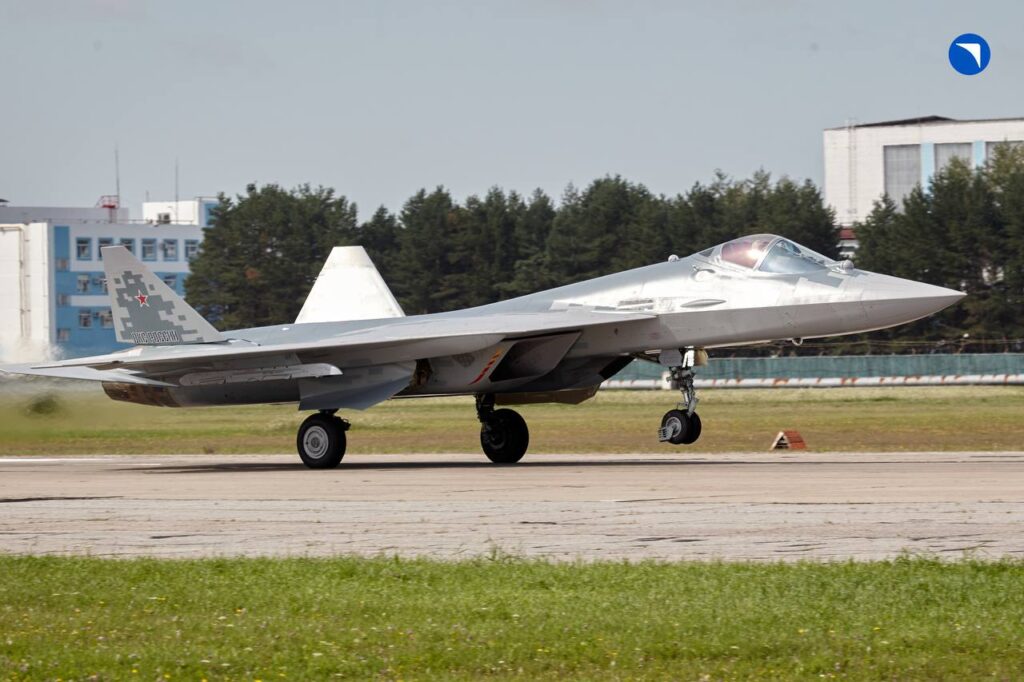
Russia initially plans to produce 78 Su-57 aircraft, with intentions to increase this number and fully operationalize the fleet with the new-generation engine. Although India was initially slated to participate as a joint producer under a major contract, it later withdrew from the program.
With an expected operational lifespan of about 35 years, the Su-57 remains a strategic asset intended to represent Russia’s global air power. Competing in the global league of fifth-generation fighters alongside China’s J-20 and the U.S. F-22 and F-35, the Su-57 continues to attract attention for both its technical prowess and geopolitical impact.
