

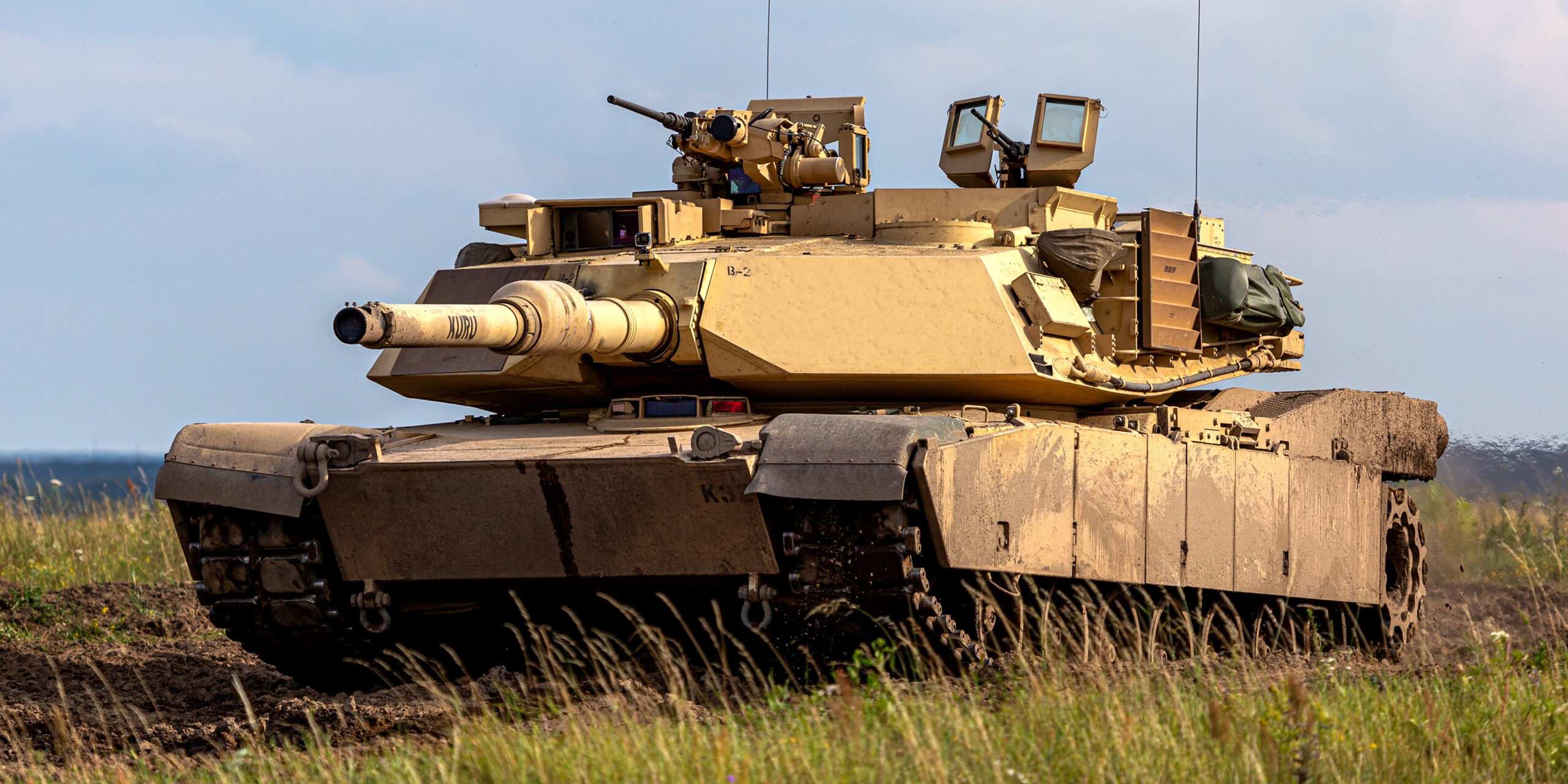
The M1 Abrams is a third-generation main battle tank that reflects the military strength of the United States and has played a key role in shaping modern warfare doctrines. In service since 1980 with the U.S. Army and Marine Corps, the Abrams has also been adopted by the militaries of Egypt, Kuwait, Saudi Arabia, Australia, and, since 2010, Iraq. The tank is named after former U.S. Army Chief of Staff General Creighton Abrams.
Design and Technological Advancement
Weighing 61.7 tons and powered by a 1,500-horsepower gas turbine engine, the M1 Abrams is one of the heaviest and most powerful tanks in its class. Originally developed to replace the M60 Patton, this beast has evolved over time into more advanced variants like the M1A1 and M1A2.
The M1A2 variant, in particular, stands out with its advanced digital systems, next-generation composite armor, and electronic warfare capabilities. Thermal imaging, laser rangefinders, ballistic computers, and an independent commander’s sight enable the Abrams to maintain superiority on the battlefield.
Armor and Protection Systems
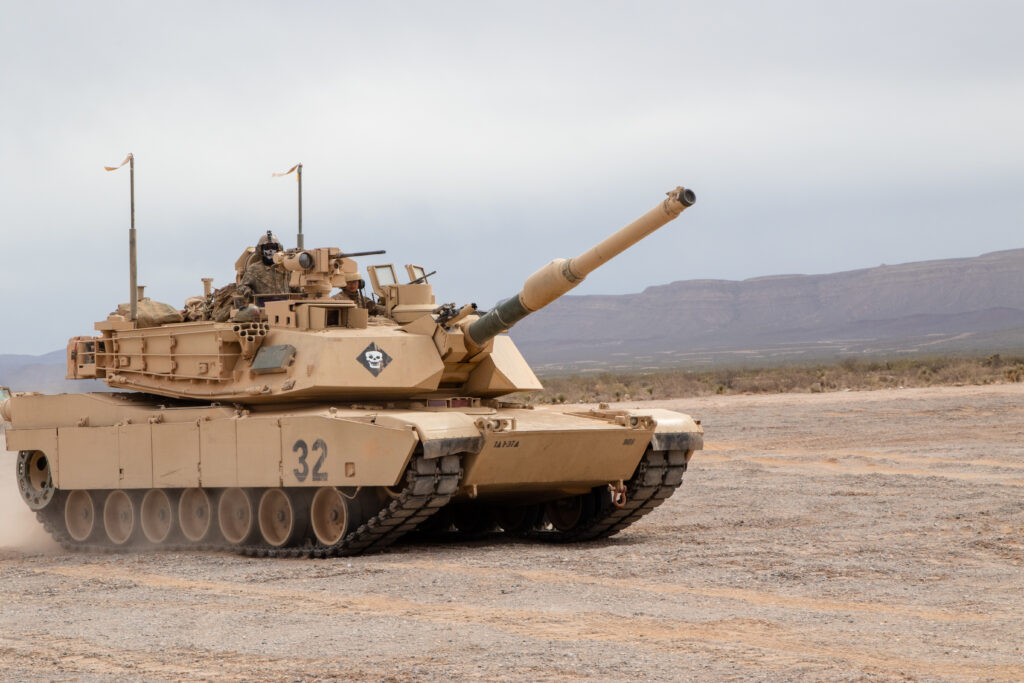
The Abrams features a Chobham-based composite armor system, with later models like the M1A1HA and M1A2 incorporating depleted uranium armor inserts. This special armor offers exceptional resistance against both kinetic energy penetrators and high-explosive anti-tank (HEAT) munitions. Additionally, blow-off panels on the turret help direct the energy from internal explosions away from the crew compartment, enhancing crew survivability.
While some Abrams tanks were penetrated during the Iraq War by tandem HEAT warheads such as those from the RPG-29, the overall protection level of the Abrams remains among the highest in its class.
Armament Systems
The initial M1 models were equipped with a 105 mm M68A1 rifled cannon. Later versions—M1A1 and M1A2—adopted the 120 mm M256 smoothbore gun designed by Rheinmetall, similar to that used in the Leopard 2 tank. This main gun can effectively engage targets up to 4 kilometers away with high accuracy when paired with advanced ammunition.
In addition to the main gun, the Abrams is equipped with a 12.7 mm M2 machine gun (controlled by the commander), a 7.62 mm M240 machine gun for the loader, and smoke grenade launchers. The TUSK (Tank Urban Survival Kit) package enhances protection in urban combat with features such as thermal sights, remote weapon systems, and additional armor.
Engine and Mobility
The Honeywell AGT1500 gas turbine engine enables the Abrams to reach speeds of up to 72 km/h (45 mph) on roads and offers flexibility in fuel usage. However, its high fuel consumption and hot exhaust can make coordination with infantry challenging in urban settings. Despite this, its quiet operation has earned it the nickname “Silent Death.”
Production and Variants
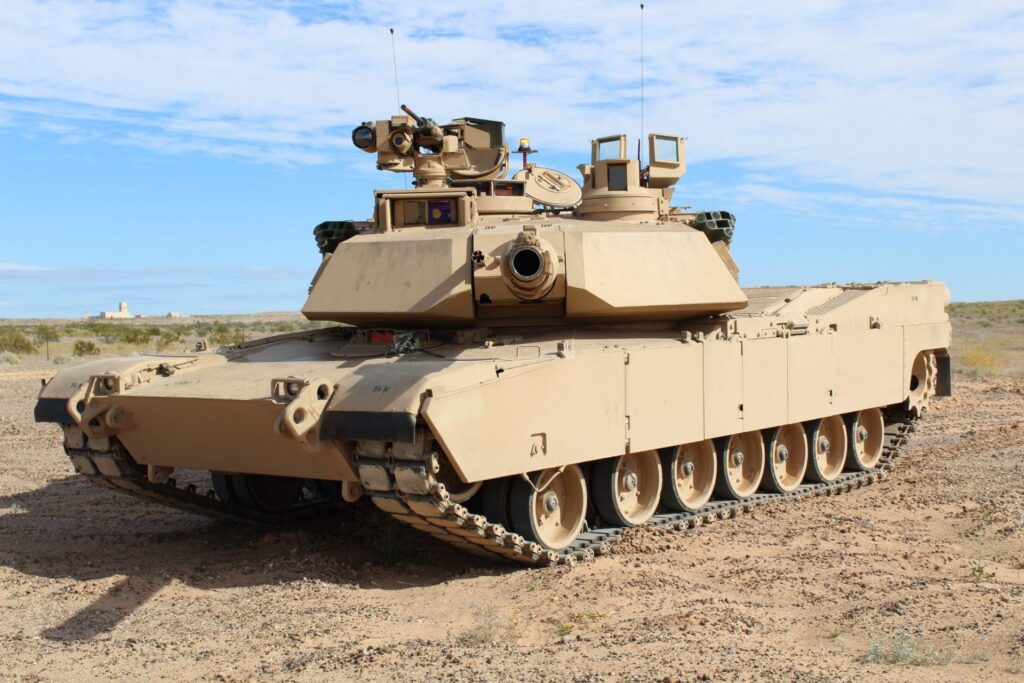
The first Abrams tank was designed by Chrysler Defense and later mass-produced by General Dynamics. To date, over 8,800 Abrams tanks have been built. Variants include the XM1 prototype, the 105 mm-armed M1, the upgraded M1A1 with 120 mm cannon and reinforced armor, and the digitally enhanced M1A2. There are also specialized variants for bridging, mine clearing, and training purposes.
Operational History
The M1 Abrams saw its first major combat test during the 1991 Gulf War. Over 1,800 tanks deployed to Saudi Arabia demonstrated overwhelming superiority against Soviet-made T-72s. Lacking advanced night vision and targeting systems, Iraqi tanks were outclassed, while Abrams crews completed operations with virtually no fatalities.
During the 2003 Iraq invasion and subsequent urban combat, some vulnerabilities of the Abrams in close-quarter environments became apparent. The TUSK upgrades were introduced to address these threats, but mines, IEDs, and RPG attacks still posed challenges to side armor.
The M1 Abrams is more than just a combat vehicle—it’s a symbol of technological evolution and modern battlefield doctrine. With its cutting-edge armor systems, advanced targeting technologies, and proven combat performance, it remains one of the most formidable armored platforms of the 21st century. Expected to remain in service until at least 2050, the Abrams will continue to play a dominant role on the battlefield for years to come.
