

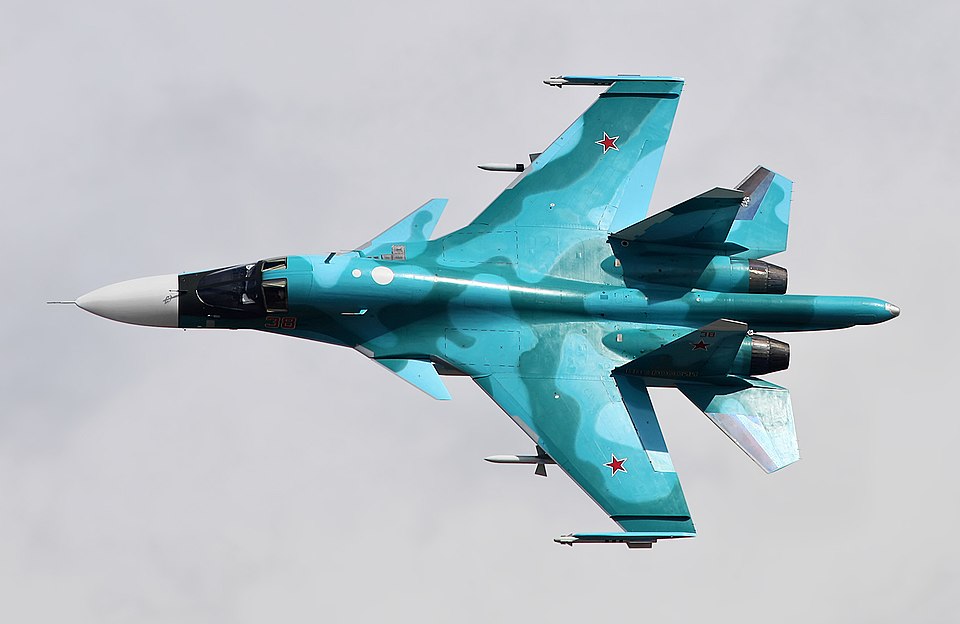
The Russian Aerospace Forces (VKS) have officially expanded the operational role of the Su-34 “Fullback” fighter-bomber to include tactical reconnaissance missions, signaling a strategic shift in aerial intelligence gathering amid ongoing combat in Ukraine. The announcement, made by the state-owned conglomerate Rostec on July 10, 2025, accompanied the latest batch delivery of Su-34s to frontline units under the state defense procurement program.
This evolution mirrors a broader historical trend of adapting multirole combat aircraft for reconnaissance duties — a practice dating back to World War II. From modified Spitfires to Cold War-era RF-4 Phantoms, and now to modern pod-equipped fighters like the F-16 and Su-24, the fusion of strike and surveillance capabilities has long offered tactical flexibility. The Su-34 follows this lineage, leveraging modular reconnaissance pods and built-in survivability systems to conduct ISR (intelligence, surveillance, reconnaissance) missions over contested terrain without sacrificing strike capacity.
Derived from the Su-27 airframe and introduced into Russian service in 2014, the Su-34 is a twin-seat, twin-engine aircraft capable of supersonic flight and long-range operations. With a 12,000 kg ordnance load across 12 external hardpoints, and equipped with advanced radars, targeting systems, and electronic countermeasures, the Su-34 was originally designed for precision deep-strike missions in high-threat environments. The new reconnaissance role is enabled through the integration of the Sych universal pod system, available in optical, radar, and signal intelligence configurations.
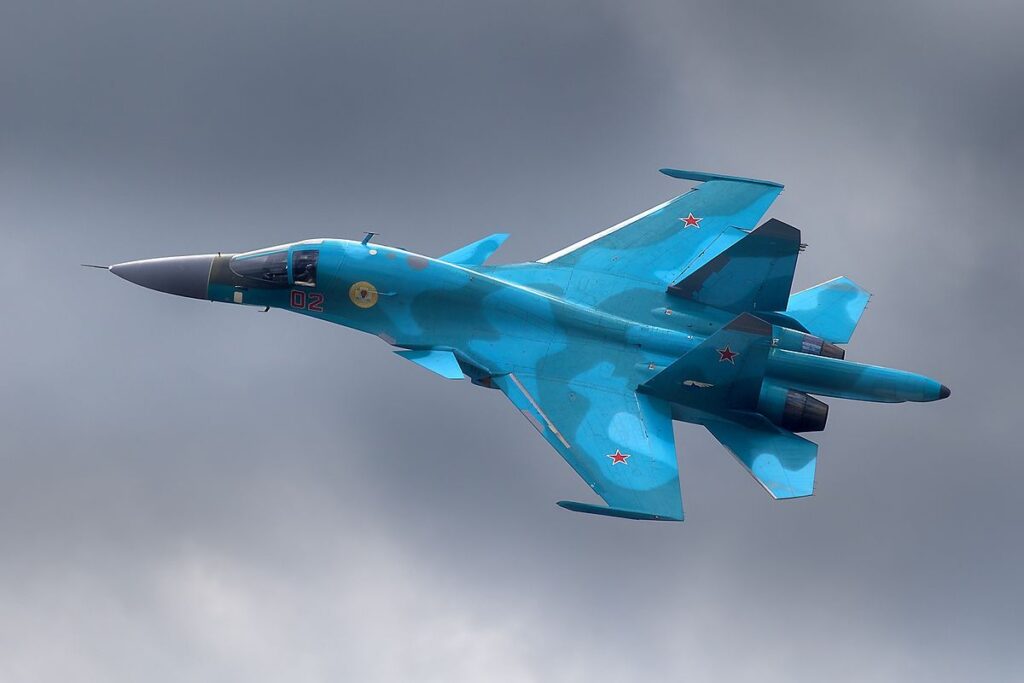
Modern enhancements like the Khibiny and Sorbtsiya electronic warfare suites bolster the aircraft’s survivability, while anti-radiation missiles such as the Kh-58 and Kh-31P allow it to neutralize air defense threats. These features — tested during prior deployments in Syria, Georgia, and Ukraine — now support a dual-role mission profile where Su-34s can gather real-time battlefield intelligence while remaining combat-ready.
The platform’s evolution is also pragmatic. With aging ISR aircraft like the Su-24MR and Il-20M facing obsolescence or attrition, the Su-34 offers a survivable, multi-functional solution for real-time reconnaissance in contested airspace. This transition reflects a broader VKS trend: adapting frontline fighters like the Su-30SM, Su-35S, and even the Su-57 for reconnaissance and targeting support roles to compensate for ISR capability gaps.
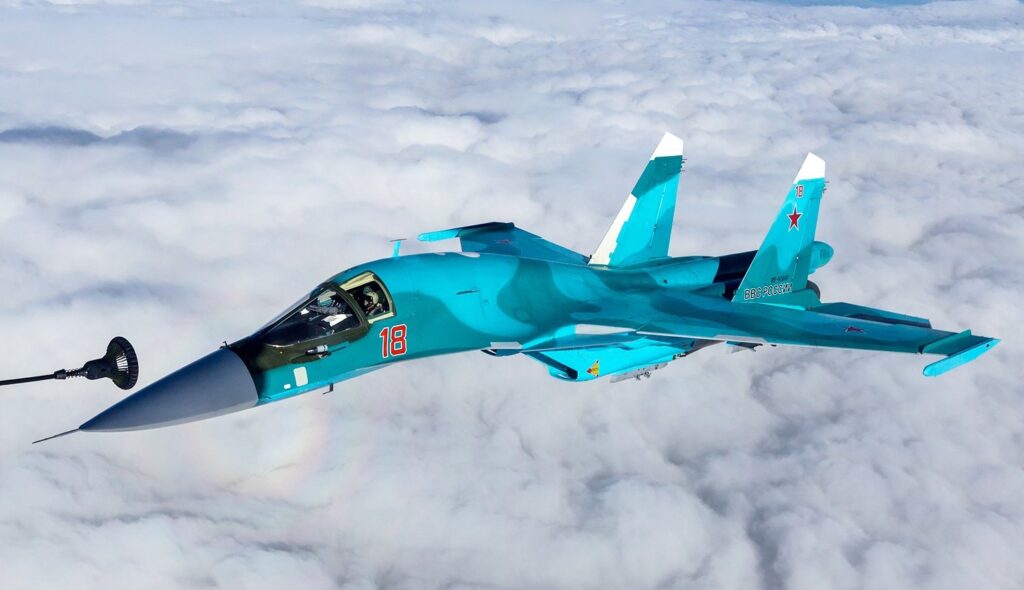
Since its initial production in 2005, more than 150 Su-34 units — including upgraded Su-34M variants — have been delivered. Deployed extensively during the war in Ukraine, the Su-34 has faced notable losses, including shootdowns by man-portable air defenses and missile strikes on airbases. However, the platform’s adaptability has kept it central to VKS operations.
In reassigning reconnaissance duties to the Su-34, Russia is not only maximizing its existing airframe investments but also reinforcing its tactical ISR capabilities with a high-speed, survivable platform. As Ukraine’s contested skies demand resilient and versatile aircraft, the Su-34’s transformation underscores Russia’s shift toward more integrated and multifunctional combat aviation assets in the modern battlespace.
