

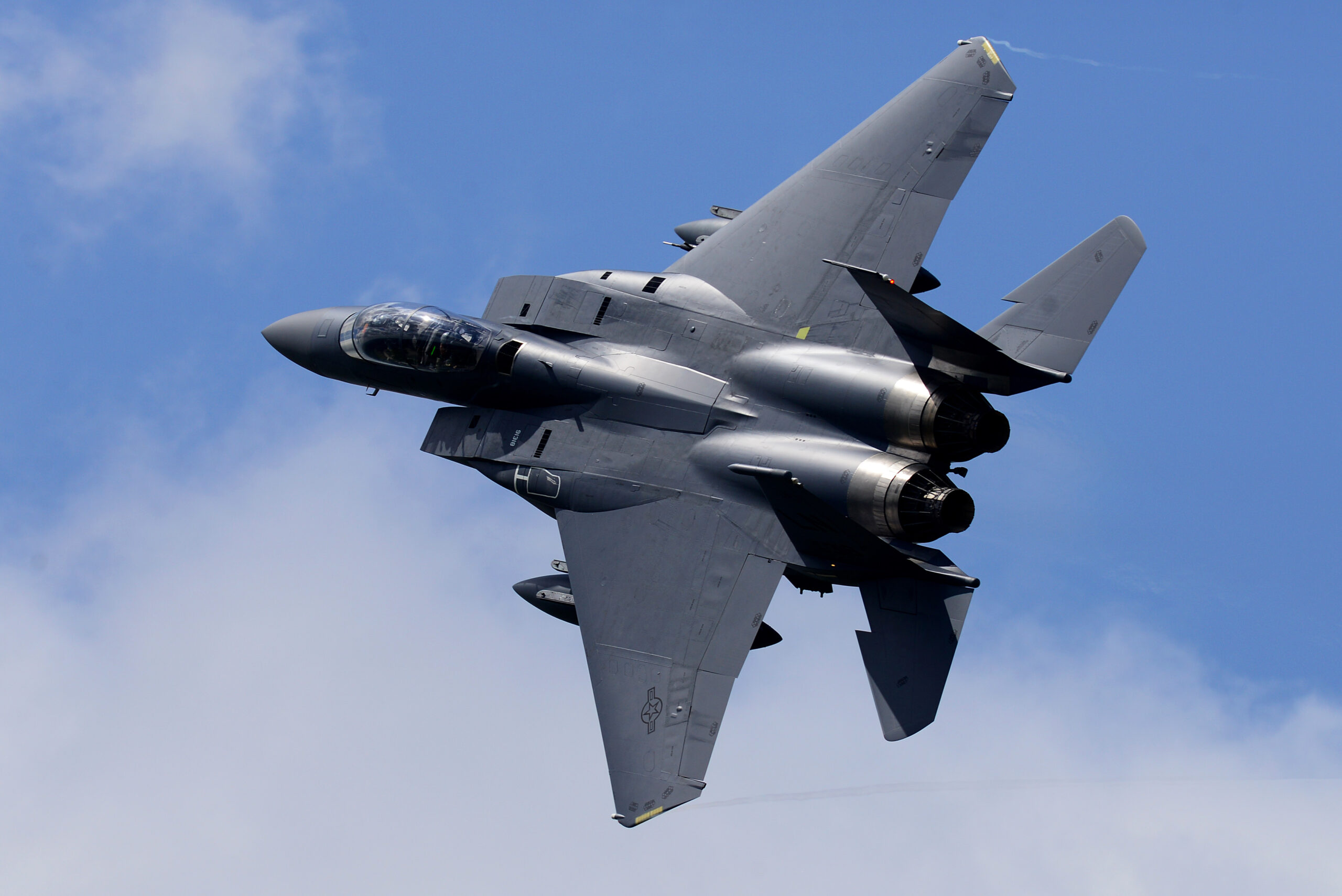
The McDonnell Douglas F-15 Eagle is a twin-engine, all-weather air superiority fighter developed for the United States Air Force (USAF). Selected in 1969 to fulfill the USAF’s need for a specialized air superiority aircraft, the F-15 made its maiden flight in 1972 and entered service in 1976. With an outstanding combat record—especially notable for 104 victories without loss in Israeli Air Force operations—the Eagle remains one of the most successful modern fighter jets.
Originally designed primarily for air superiority, the F-15’s flexible airframe also incorporated secondary ground attack capabilities, paving the way for the development of the F-15E Strike Eagle variant introduced in 1989. Both the F-15 and F-15E have been exported and continue production with enhanced subvariants globally.
Replacing the F-4 Phantom II towards the end of the Cold War, the F-15 played a key role in conflicts like the Gulf War, Lebanon War, and operations over Yugoslavia. While the USAF began replacing older F-15 models with the F-22 Raptor in the 2000s, the introduction of the advanced F-15EX model extends the platform’s service life to 2040. The F-15 remains an active fighter in many countries worldwide.
Technical Specifications
| Feature | Value |
|---|---|
| Length | 19.43 meters |
| Wingspan | 13.06 meters |
| Height | 5.69 meters |
| Max Speed | Mach 2.5 (at 13,716 meters altitude) |
| Service Ceiling | 19,812 meters |
| Max Takeoff Weight | 30,600 kg |
| Engines | 2 × Pratt & Whitney F100-PW-100 / 220 (Afterburning turbofans) |
| Thrust (each engine) | 14,590 lbf (dry) / 23,770 lbf (with afterburner) |
Key Variants
- F-15A/B/C/D: Primary air superiority models and trainers.
- F-15E Strike Eagle: Two-seat, multi-role strike and air superiority fighter.
- F-15EX Eagle II: The latest version with a fully digital cockpit and increased weapon capacity, planned for service until 2040.
