

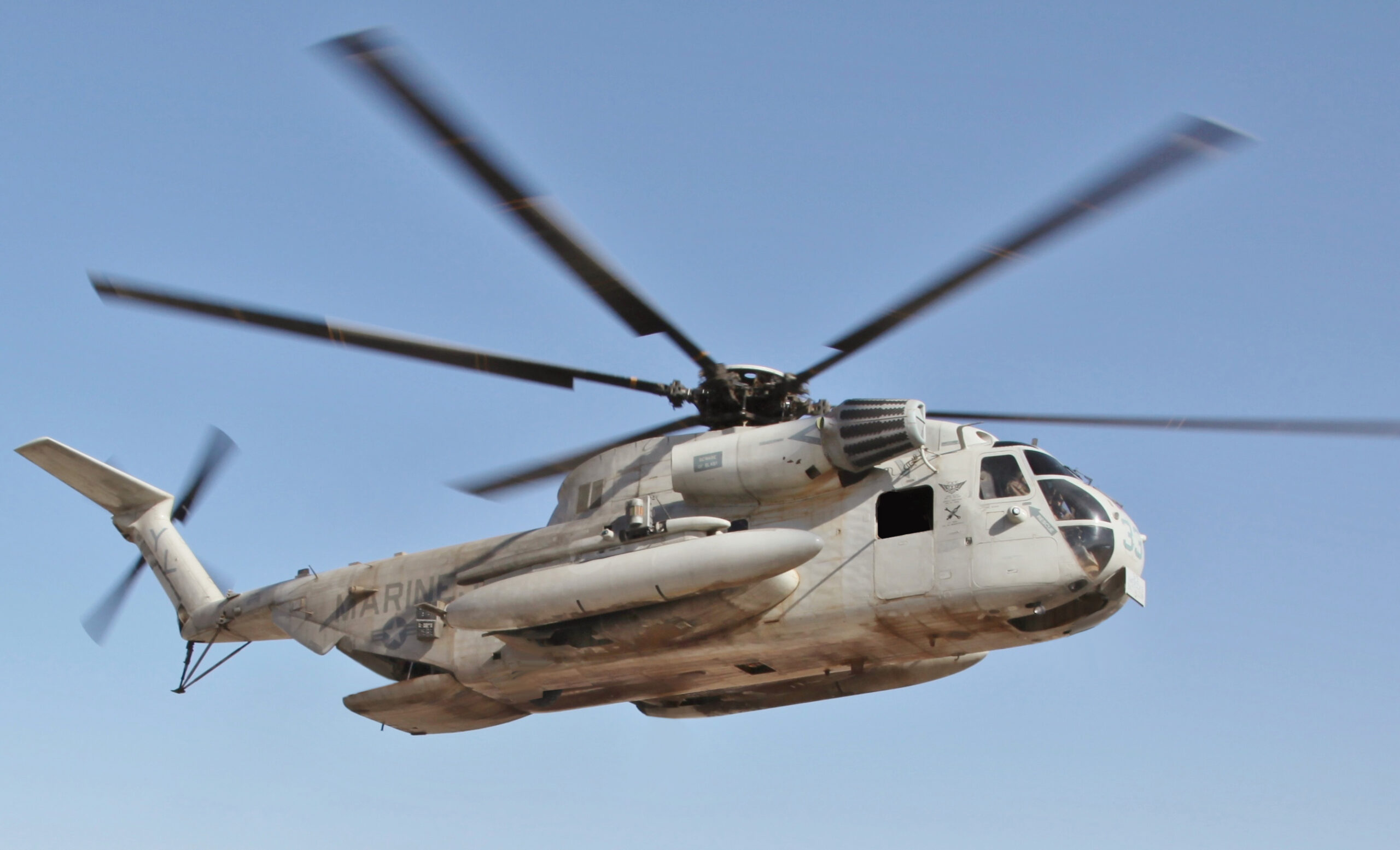
The Sikorsky CH-53E Super Stallion is more than just a helicopter—it’s a flying crane, a colossal mechanical beast that dominates the skies in the service of the U.S. military. With its three engines, seven-blade main rotor, and a tail rotor canted at 20 degrees, it blends brute force with refined aerodynamics. Operating from both Navy ships and land bases, it serves a critical role in lifting the heaviest loads in the harshest environments.
Evolution in Engineering: From S-65 to S-80
Born from the limitations of the CH-53D, the CH-53E emerged from Sikorsky’s internal project “S-80.” The U.S. Marine Corps needed something faster, stronger, and more capable—and Sikorsky delivered.
- The third engine dramatically enhanced lifting power and operational safety.
- The seventh rotor blade reduced vibration and boosted lift.
- The 20° tilted tail rotor added vertical lift during hover while countering torque.
These innovations propelled the CH-53E beyond its twin-engine predecessor, making it the largest Western-built helicopter in service for decades.
Performance Built for War
The Super Stallion’s specs make it not just a transport vehicle but a battlefield game-changer:
- External lift capacity: 36,000 lbs (16.3 tons)
- Internal load capacity: 32,000 lbs (14.5 tons)
- Range: Up to 1,000 km (620 mi), extendable with aerial refueling
- Troop capacity: 37 troops (up to 55 with extra seating)
- Max takeoff weight: 73,500 lbs (33.3 tons)
This allows the CH-53E to carry vehicles like the LAV-25, artillery like the M198 howitzer, and even recover aircraft of comparable size—making it an aerial logistics powerhouse.
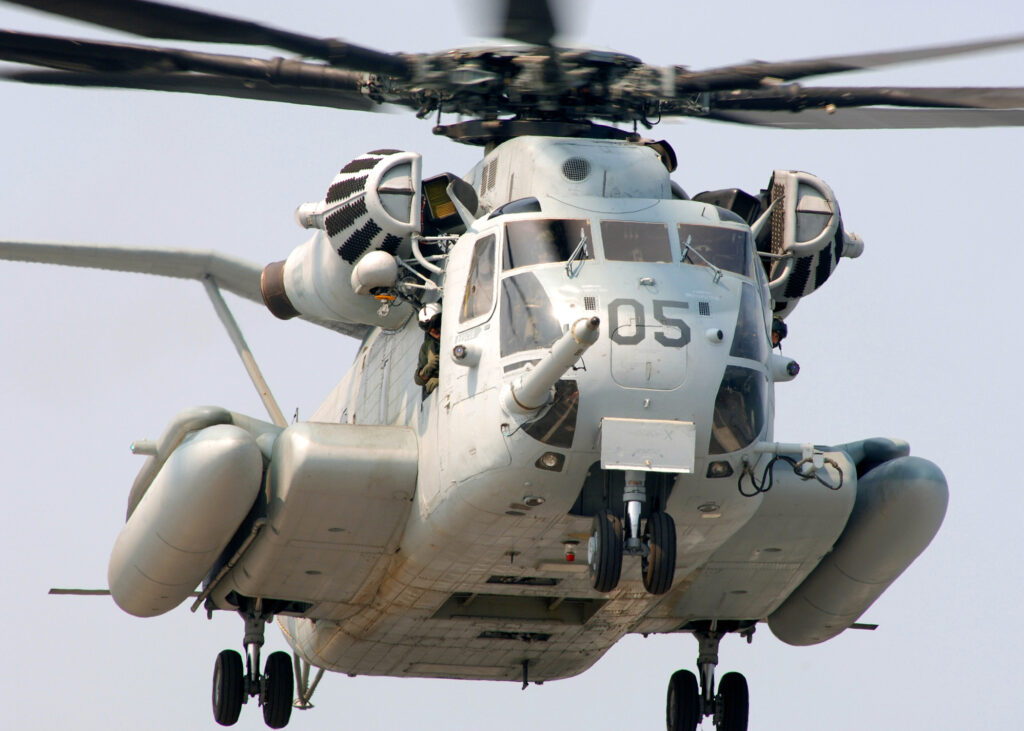
MH-53E Sea Dragon: Countermine Specialist
The MH-53E Sea Dragon is a Navy-tailored variant of the Super Stallion, optimized for airborne mine countermeasures. With enlarged sponsons for additional fuel and digital flight control systems tailored to mine-sweeping operations, the Sea Dragon remains a cornerstone of naval mine warfare. Its ability to refuel mid-air extends its operational endurance dramatically.
The Future: CH-53K King Stallion
Sikorsky’s CH-53K King Stallion carries the legacy forward. Originally designated CH-53X, it introduces composite rotors, fly-by-wire controls, a wider cabin, and upgraded engines. With production underway, the King Stallion will replace the CH-53E, ensuring the heavy-lift mission continues into the 21st century with modernized performance and maintainability.
A Witness to Crisis and Combat
The CH-53E has seen action everywhere—from Somalia and Iraq to Afghanistan and Lebanon. It has rescued pilots, deployed special forces, and supplied forward bases. But its complexity comes at a price: an average of 40 maintenance hours per flight hour, largely due to aging components and airframe fatigue.
A Heavy Legacy with Risks
Despite its capabilities, the Super Stallion has a checkered safety record. Between 1984 and 2019, over 130 fatalities were linked to CH-53E and MH-53E mishaps. These included mechanical failures, mid-air collisions, and mission-related crashes. Investigations have pointed to fire hazards, especially in the No. 2 engine, and raised concerns about the aircraft’s long-term safety.
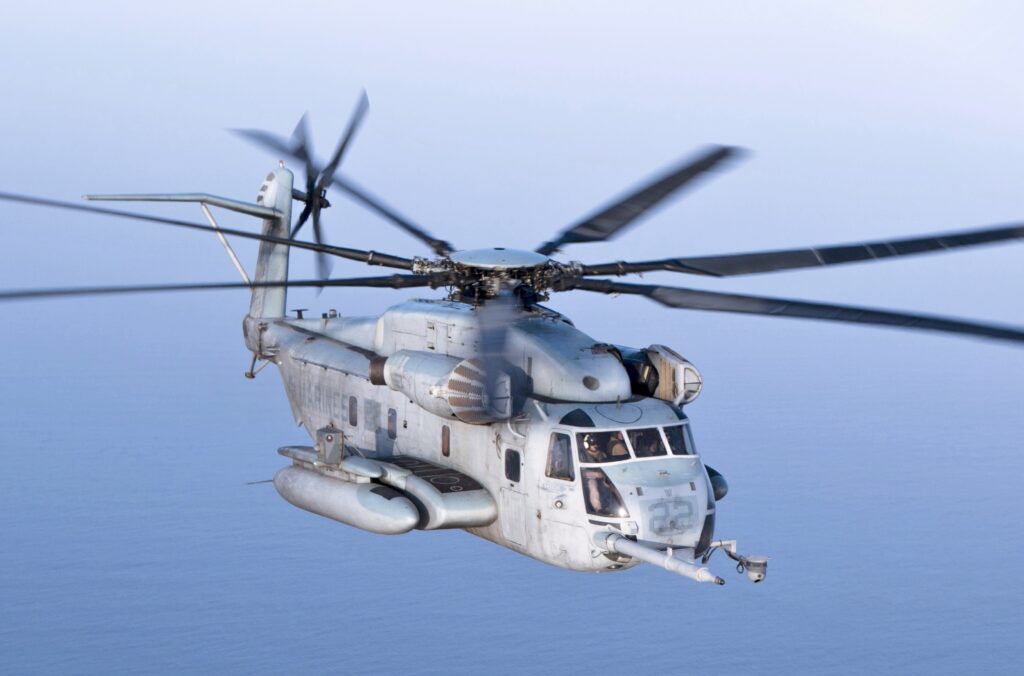
Final Verdict: A Flying Fortress of Muscle
The CH-53E Super Stallion is not just another helicopter—it’s a flying steel muscle, a mechanical gladiator designed to conquer the logistics of modern warfare. As it slowly retires to make room for the CH-53K, its legacy lives on in the countless missions it supported and the warfighters it carried across oceans and conflict zones.
It remains a symbol of airborne strength, heavy-lift mastery, and the relentless demand for mobility in warfare.
