

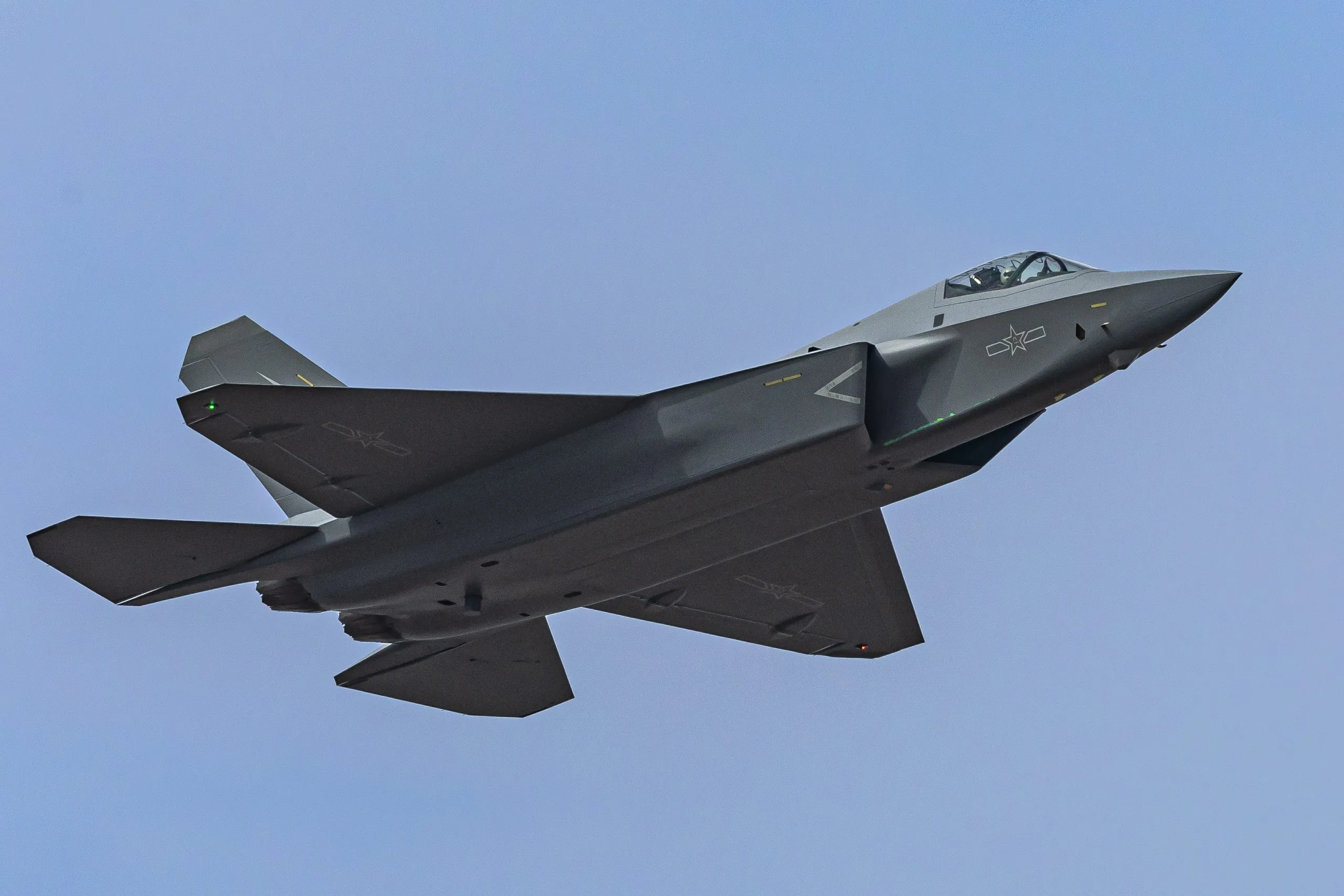
China has officially launched the serial production of its fifth-generation stealth fighter jet, the J-35. Developed specifically for operations aboard the People’s Liberation Army Navy’s (PLAN) third aircraft carrier, the Type 003 Fujian, this milestone marks the dawn of a new era in Chinese naval aviation. It is also one of the most strategic steps in China’s broader ambition to build a global blue-water navy.
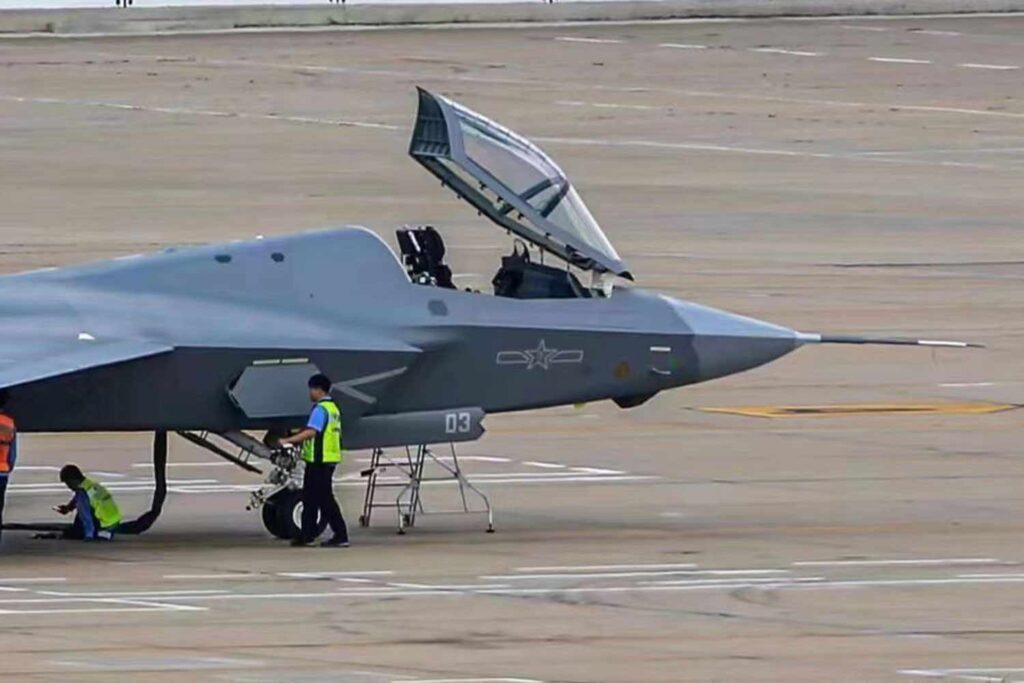
Unlike the J-15 fighters currently in service on the Liaoning and Shandong aircraft carriers—both relying on ski-jump (STOBAR) systems—the J-35 is designed for CATOBAR (Catapult-Assisted Take-Off But Arrested Recovery) operations, supported by the electromagnetic launch system (EMALS) onboard the Fujian. The aircraft features carrier-specific components such as folding wings, reinforced landing gear, and a tailhook for arrested landings. With its stealth-optimized design, reshaped air intakes, and embedded sensors, the J-35 stands as a fully-fledged fifth-generation combat platform.
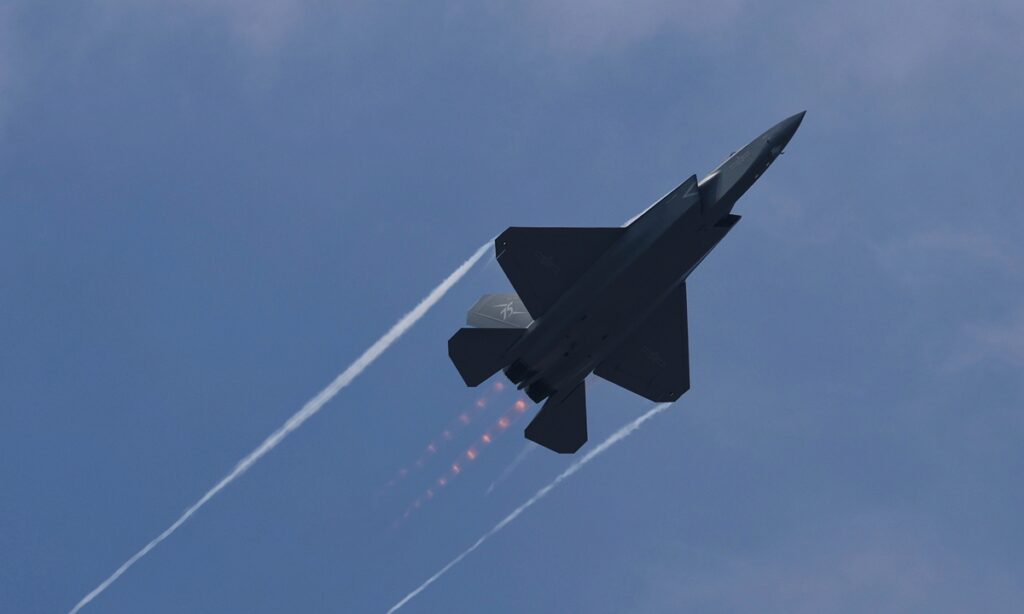
Over the last decade, China’s aerospace sector has made significant strides in stealth technology. Early J-35 variants were powered by WS-13E engines, but later serial-production models reportedly use the more powerful and reliable WS-19 engines. These upgrades improve payload capacity and range, crucial for carrier-based operations. Internally, the aircraft is equipped to carry long-range PL-15 air-to-air missiles, short-range PL-10 IR missiles, and precision-guided munitions. It also includes an advanced AESA radar and an Electro-Optical Targeting System (EOTS) mounted below the cockpit—mirroring the F-35’s sensor suite.
The J-35’s twin-engine configuration offers additional security in carrier operations and potentially greater payload and range. However, the U.S. Navy’s F-35C still holds the edge in terms of network-centric warfare, logistics infrastructure, and combat-proven systems. While the J-35 remains in the integration phase, its current progress suggests that China may soon close the performance gap.
Since 2021, sightings of prototypes have increased, with evidence of naval adaptations like grey paint, folding wings, and carrier-specific landing gear. Recent leaks show at least two nearly production-standard J-35s in flight tests. Chinese sources claim a potential production rate of 50 aircraft per year, which could supply full carrier air wings within a few years.
The Fujian aircraft carrier itself is a major leap in PLAN capabilities. Launched in June 2022, it is China’s first carrier to utilize the EMALS launch system, enabling faster and more flexible aircraft deployment. With an estimated displacement of 80,000 tons and a flat deck design, Fujian can launch heavier aircraft and maintain a higher sortie rate. It is projected to accommodate up to 60 aircraft, including J-35 fighters, KJ-600 early warning planes, and helicopters. After beginning sea trials in May 2024, the Fujian is expected to become fully operational by the second half of 2025.
With the J-35, China becomes the second country after the United States to field fifth-generation stealth fighters on CATOBAR carriers. This dramatically boosts China’s ability to conduct long-range strikes, establish air superiority, and carry out deep reconnaissance missions across the Indo-Pacific region.
For regional powers such as India and Japan, this development signals a rising threat, prompting increased investment in carrier aviation and maritime strike capabilities. The U.S. has also intensified naval patrols and joint exercises in the region to ensure maritime security and freedom of navigation.
As the J-35 nears full operational capability and the Fujian prepares to enter active service, a new chapter is unfolding in the naval balance of the Indo-Pacific. These developments signal not only a technological leap but a clear strategic message: China is preparing to project hard power far beyond its shores.
