

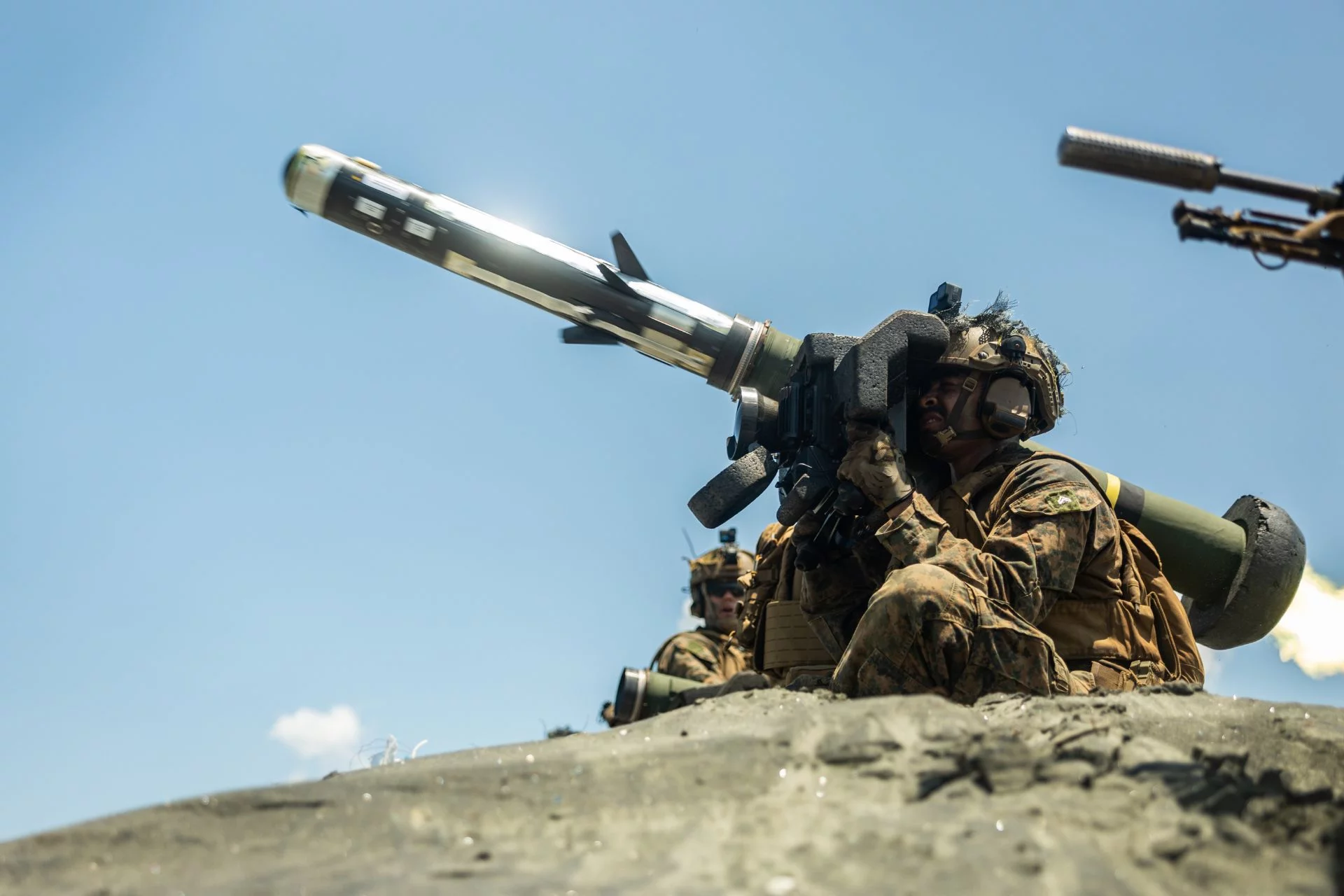
In a strategic push to bolster its defense self-reliance and counter growing threats from China, India has formally requested U.S. approval for the co-production of Javelin anti-tank guided missiles on Indian soil. This move aligns with the country’s “Make in India” initiative, aimed at strengthening indigenous defense manufacturing and cutting dependency on overseas suppliers. According to senior officials, talks between New Delhi and Washington are progressing swiftly, reflecting India’s urgency to equip its forces for modern combat scenarios.
The Javelin, a state-of-the-art third-generation missile system jointly developed by Raytheon and Lockheed Martin, is renowned for its “fire-and-forget” capability. Its infrared-guided technology and soft-launch system allow it to be operated by a single soldier, even from confined or urban environments. Armed with a tandem-charge warhead, the missile is capable of penetrating up to 800mm of reactive and conventional armor, making it highly effective against enemy tanks, bunkers, and even low-flying helicopters.
Weighing 11.8 kg and measuring just over a meter in length, the missile pairs with a lightweight 6.4 kg Command Launch Unit (CLU) equipped with both optical and thermal imaging capabilities. Depending on the configuration, it can strike targets up to 4,750 meters away—even under challenging visibility conditions—thanks to its long-wave infrared seeker. The Javelin system is currently fielded by over 20 nations, including key NATO allies.
India’s plan to locally produce the Javelin is part of a wider effort to modernize its military arsenal, particularly in light of persistent tensions along its borders with Pakistan and China. The Indian military is increasingly favoring compact, mobile weapons systems that can support operations in mountainous and rugged terrains. In addition to the co-production proposal, India is in separate talks with the U.S. for an urgent procurement of Javelin systems to meet immediate defense needs.
Recent high-level defense dialogues between Indian Defense Minister Rajnath Singh and U.S. Defense Secretary Pete Hegseth have focused on expanding bilateral defense cooperation. These discussions pave the way for a forthcoming long-term defense agreement that will deepen joint development, technology sharing, and operational coordination between the two nations.
Should the co-production agreement move forward, it would not only boost India’s anti-tank capabilities but also position its defense sector as a regional hub for advanced missile technologies—further solidifying its strategic partnership with the United States.
