

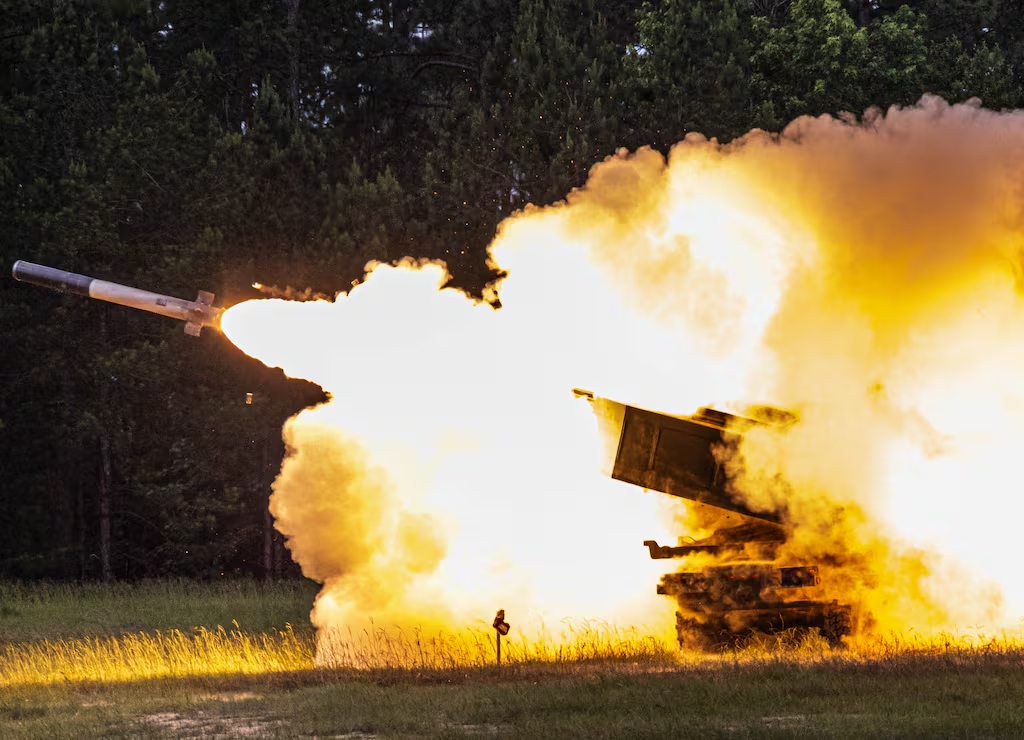
The U.S. Army is pushing forward with plans to develop a common launcher that can be used across NATO allies, allowing for the firing of various munitions from different countries. This initiative is part of a newly launched “Eastern Flank Deterrence Line,” a regional strategy focused on the Baltic nations.
Gen. Christopher Donahue, commander of U.S. Army Europe and Africa, emphasized at the inaugural LandEuro conference in Wiesbaden, Germany: “We’re working toward a launcher system that’s both offensive and defensive, one with a common fire control system, allowing munitions from multiple countries to be used seamlessly.”
The concept also includes optionally manned systems, increasing operational flexibility. Donahue pointed to HIMARS as a model that could be adapted to various national preferences, such as being mounted on wheeled vehicles by countries like Norway.
To accelerate this vision, the Army has issued a “Request for Solutions” under the Rapid Capabilities and Critical Technologies Office (RCCTO) for the development of a Common Autonomous Multi-Domain Launcher (CAML). Two variants are sought: CAML-H (heavy), which would support Tomahawk and PAC-3 MSE missiles, and CAML-M (medium), designed for HIMARS and AIM-9X munitions.
The CAML platforms will be supported by autonomous resupply vehicles capable of reloading missile pods without human intervention. The goal is to deliver initial prototypes within 18 to 36 months, depending on variant.
Lockheed Martin, with its existing missile and launcher systems including Typhon and PAC-3, is seen as a key player. Company officials noted that much of the required technology already exists, and development would mostly involve reconfiguring and integrating current systems.
“This isn’t a new missile program—it’s about integration,” said Lockheed VP Paula Hartley. “We’re moving quickly, and the government is as well.”
