

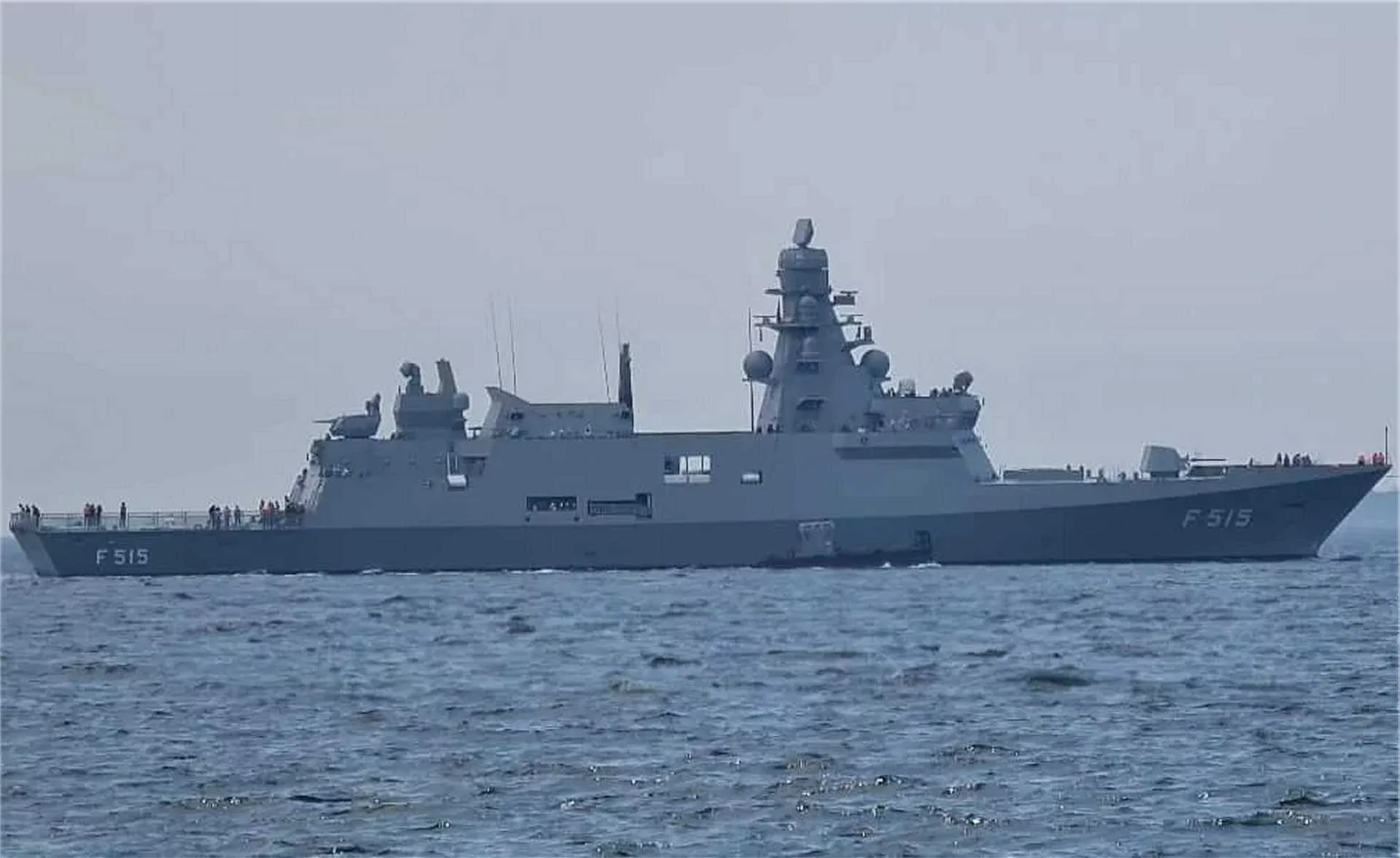
On July 26, 2025, during the IDEF 2025 Defense Exhibition held in Istanbul, the Turkish Presidency of Defense Industries (SSB) announced the signing of a contract between TAIS Shipyards and the Indonesian Ministry of Defence for the delivery of two MILGEM Istif-class frigates. The agreement, signed with the participation of SSB President Prof. Dr. Haluk Görgün, represents a historic breakthrough as it marks Türkiye’s first-ever export of MILGEM-class warships.
TAIS Consortium, a major maritime entity established by three of Türkiye’s leading private shipyards—Anadolu Shipyard, Sedef Shipyard, and Sefine Shipyard—was created to centralize national naval expertise and produce advanced platforms. TAIS specializes in the design and construction of surface combatants, amphibious vessels, and auxiliary ships. In January 2025, the consortium demonstrated its production capabilities by simultaneously launching two Istif-class frigates for the Turkish Navy, showcasing its ability to deliver complex defense programs on time and at scale.
The MILGEM Istif-class frigates represent the most advanced evolution of Türkiye’s indigenous surface warship program. Developed from the original MILGEM (National Ship) initiative launched in the early 2000s, the Istif-class (I-class) is a next-generation multi-role frigate, designed based on operational experience with the ADA-class corvettes. Featuring greater displacement, extended range, and significantly enhanced sensor and weapon systems, the class is optimized for high-seas operations. The lead ship, TCG Istanbul (F-515), was launched in 2021 and began sea trials in 2023. The design has attracted global attention, including cooperation with Ukraine for modified MILGEM corvettes.
Technically, Istif-class frigates displace around 3,100 tons and measure 113 meters in length. Powered by a CODAG (Combined Diesel and Gas Turbine) propulsion system, they are capable of high-speed, long-range missions. Their weapon suite includes a 16-cell MIDLAS vertical launch system (compatible with the indigenous HISAR air defense missiles), ATMACA anti-ship missiles, a 76mm naval gun, and close-in weapon systems. The integrated mast hosts a national AESA radar, advanced electronic warfare systems, and both hull-mounted and towed sonar arrays for anti-submarine warfare. The frigates also feature a hangar and flight deck for an S-70B Seahawk helicopter, enabling a wide array of operations from air defense and surface warfare to undersea and expeditionary missions.
Indonesia’s acquisition of these frigates represents a major step in its naval modernization strategy. The agreement includes industrial cooperation and technology transfer, which will support Indonesia’s efforts to strengthen its domestic shipbuilding industry. This export not only strengthens Türkiye’s rising role in the global defense market, but also deepens defense ties between Ankara and Jakarta.
This deal highlights the growing capabilities and global ambitions of Türkiye’s naval defense sector. Once focused solely on domestic needs, Turkish shipyards have transformed into international suppliers of modern warships, supported by state policies, long-term investments in indigenous technologies, and coordinated industrial strategies. Türkiye now offers a broad portfolio of naval platforms—from corvettes and frigates to amphibious assault ships and unmanned surface vessels—and is expanding its presence in strategic regions such as the Middle East, Southeast Asia, North Africa, and Eastern Europe.
With each successful export, Türkiye further strengthens its position as a competitive and reliable player in the international maritime defense industry.
ChatGPT’ye sor
