

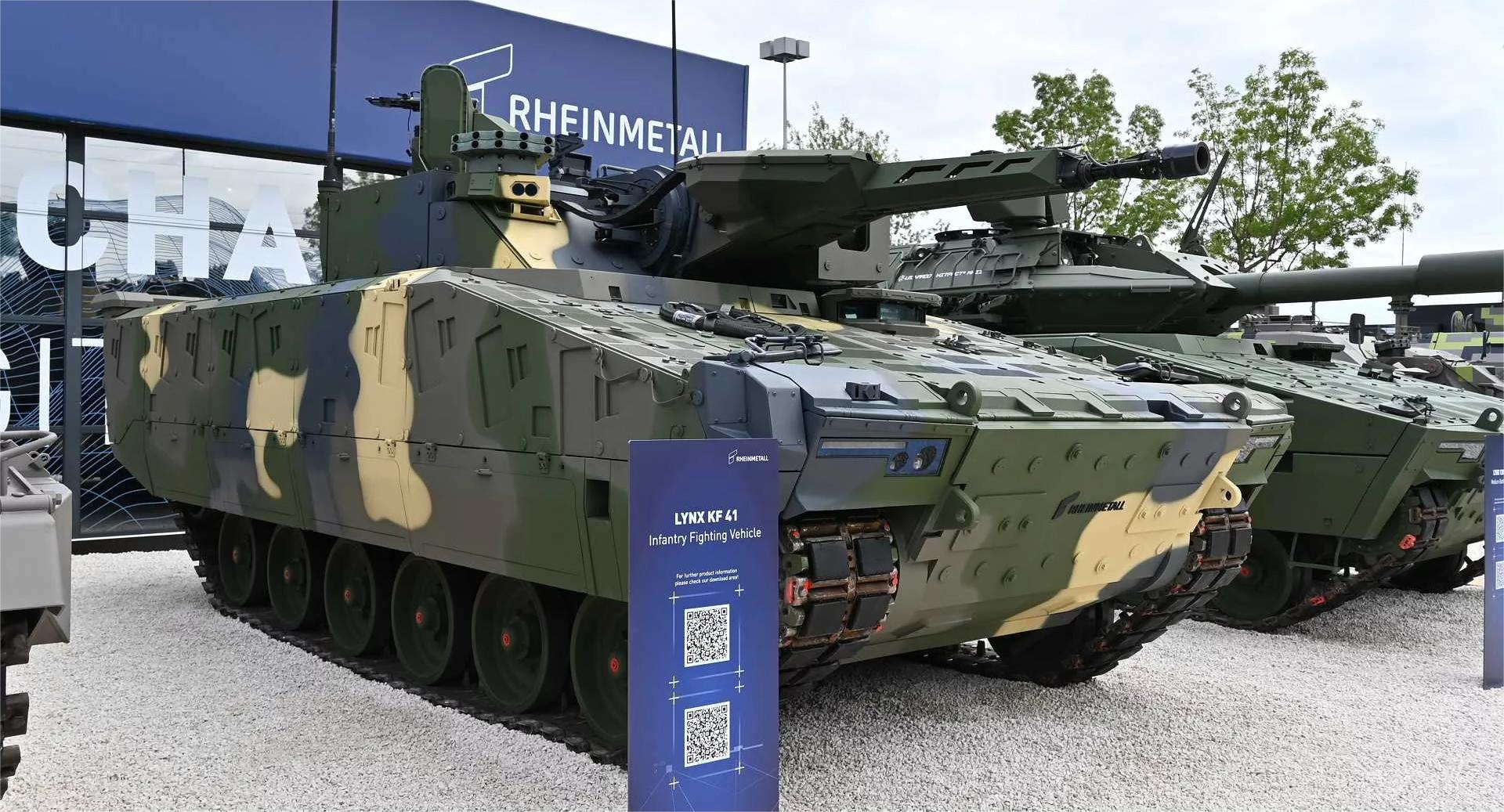
German defense industry giant Rheinmetall announced on July 28, 2025, that it has established a comprehensive local production and service network in Romania. This new structure includes wholly owned subsidiaries as well as strategic partnerships with Romanian companies. The program aims to produce KF41 Lynx Infantry Fighting Vehicles (IFVs), medium-caliber ammunition, and propellant systems domestically. This development is seen as a key part of Rheinmetall’s strategy to strengthen its presence in Eastern Europe and contribute to the modernization of the Romanian Armed Forces.
The KF41 Lynx is a new-generation tracked infantry fighting vehicle developed by Rheinmetall in accordance with NATO standards. The vehicle features a modular design, high protection levels, and a Lance 2.0 turret equipped with a 35 mm automatic cannon. Its digital architecture allows it to meet the needs of modern infantry units while offering long-term upgrade potential.
This localization effort is directly linked to Romania’s planned acquisition of 246 KF41 Lynx IFVs from Rheinmetall, under a contract worth approximately €2.5 billion. The purchase is intended to equip a total of 15 mechanized infantry battalions with advanced combat vehicles, simulators, and supporting infrastructure. Although the Romanian Ministry of National Defence announced in May 2025 that the project is a top priority for the year, the final contract has yet to be signed. Officials are considering either a public procurement process or a direct government-to-government agreement to accelerate the timeline, with the latter seen as the most likely route for a signature before the end of 2025.
Production will be concentrated at Rheinmetall’s Automecanica facility in Mediaș. This center will manage a supply chain designed to reduce external dependencies and maximize local content. Medium-caliber ammunition production will be carried out by Rheinmetall Munitions Romania, while propellants will be manufactured at the Victoria Explosive Powder Factory. To support local production of energetic materials, Rheinmetall has initiated a knowledge transfer process to establish a propylene production plant. Additionally, maintenance and repair centers within the country will ensure continuous operational readiness of the military platforms.
A key component of the program is the Rheinmetall Excellence Center, an advanced training facility that will equip Romanian technicians and engineers with the knowledge and skills needed to support high-tech defense systems through simulators and digital platforms. The center aims to enhance Romania’s defense industry capabilities and foster technological independence.
Local partnerships play an important role in this process. Agreements with companies such as Uzina Automecanica Moreni, Interactive Software SRL, and MarcTel-SIT will enable significant portions of production and development to be carried out within Romania. This will integrate Romania into Rheinmetall’s global manufacturing ecosystem and provide long-term resilience to the domestic industry.
These investments are expected to create hundreds of skilled jobs across engineering, software development, manufacturing, and logistics. Furthermore, the localization strategy will stimulate ancillary industries and contribute to establishing a robust defense manufacturing infrastructure in Romania. The program also aims to increase Romania’s strategic autonomy by building indigenous armored vehicle and ammunition production capacities compatible with NATO standards.
All these steps reflect Rheinmetall’s vision of positioning Romania as a strategic hub for defense industrial cooperation in Europe. Amid evolving regional security dynamics, the company’s presence in Romania stands as a concrete demonstration of its long-term commitment to strengthening allied defense capabilities and delivering localized solutions.
