

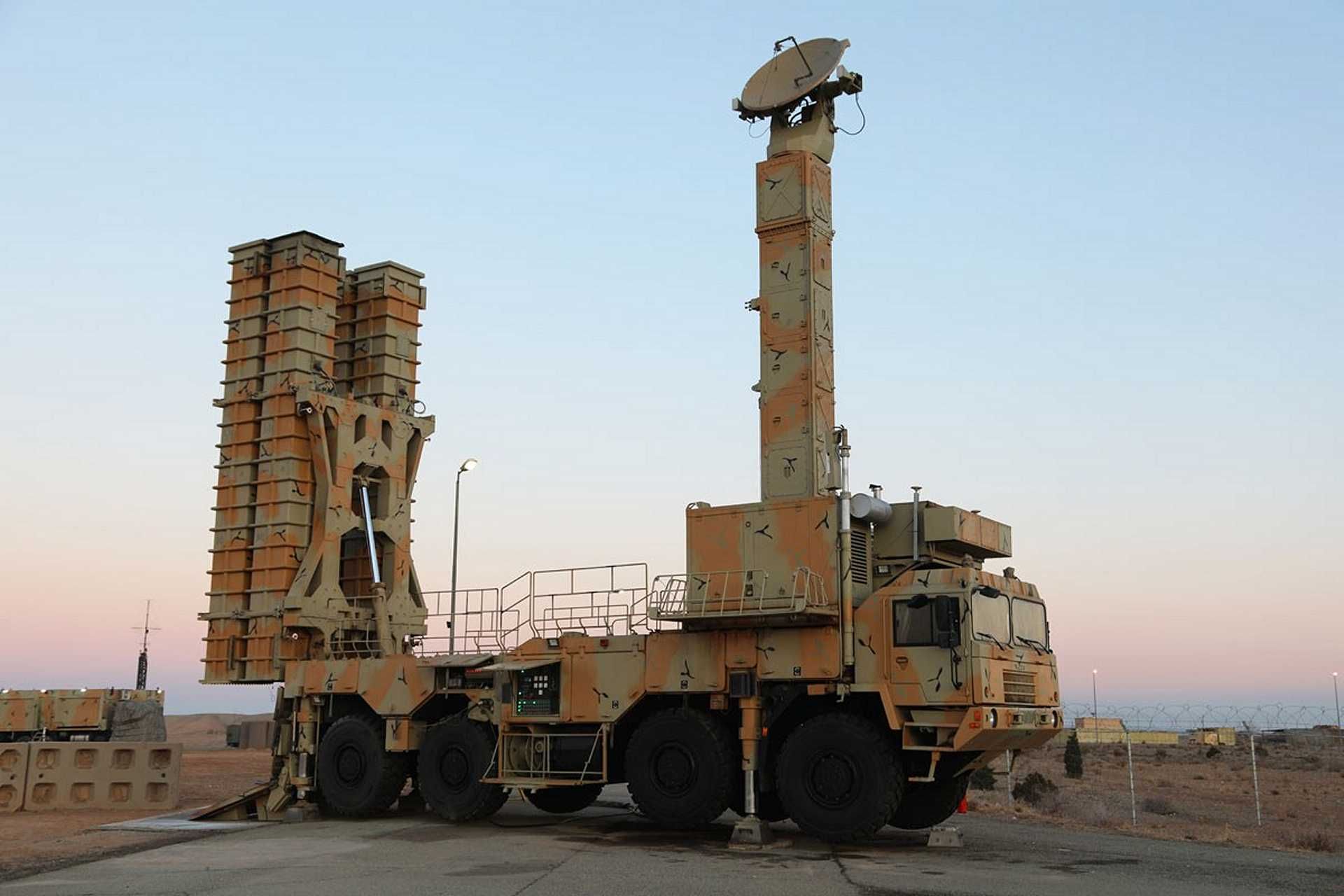
The Bavar-373 represents Iran’s premier long-range mobile surface-to-air missile (SAM) platform, developed domestically by the Ministry of Defense and the Aerospace Industries Organization. As a cornerstone of Iran’s modern air defense capabilities, it stands as one of the country’s most notable military achievements since the 1979 Islamic Revolution.
The project, named “Bavar” meaning “Belief,” was launched as a strategic effort to produce an indigenous alternative to the Russian S-300 system, amid challenges imposed by international sanctions restricting foreign purchases. Development commenced in the early 2010s, culminating in the first prototype by November 2011. After extensive testing, the system was officially presented in August 2019, in a ceremony led by then-President Hassan Rouhani.
Brigadier General Qassem Taqizadeh, Iran’s Deputy Defense Minister, has hailed the Bavar-373 as the most significant defense production since the revolution, highlighting Iran’s progress not only in air defense but also in cruise missile and anti-armor missile technologies.
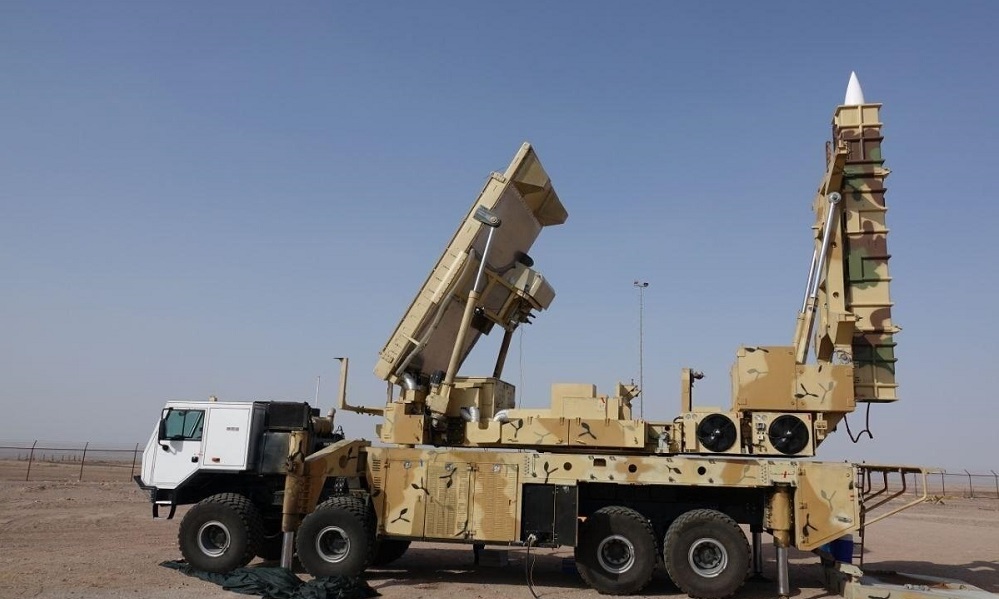
Produced with contributions from Iran Electronics Industries and other national defense firms, the Bavar-373 is designed to counter a broad range of airborne threats—including high-speed jets, cruise missiles, drones, and ballistic missiles. It employs a layered network of radars and missile launchers capable of operating independently or as part of an integrated air defense system.
Variants of Bavar-373
- Bavar-373 (1st Generation): The initial deployment includes launcher units mounted on 10×10 Zoljanah trucks and radars mounted on 8×8 Zafar trucks, supported by a central radar system.
- Bavar-373 Upgrade (2022): This version incorporates Sayyad-4B missiles, which offer enhanced operational range—up to 300 to 400 kilometers—and increased engagement altitude reaching 32 kilometers.
- Bavar-373-II (2025): Featuring autonomous Transporter Erector Launcher and Radar (TELAR) vehicles, each equipped with integrated radar and fire control systems, this model boasts extended detection and tracking abilities alongside simultaneous multi-target engagement.
Armament Details
Each Bavar-373 TELAR carries two to four vertically launched Sayyad-4 or Sayyad-4B missiles. These missiles are engineered to counter a wide spectrum of threats, including stealth aircraft and theater ballistic missiles.
The Sayyad-4 missile is a solid-fueled, single-stage weapon closely patterned after the Russian 48N6E missile used in the S-300P system. It achieves a maximum range of 300 km and can engage targets at altitudes up to 27 km. Its guidance system combines semi-active radar homing with a proximity-fused fragmentation warhead, optimized for high agility and resilience against electronic countermeasures.
The advanced Sayyad-4B introduces a two-stage propulsion system and an active radar seeker, extending the missile’s reach beyond 300–400 km and improving interception capabilities at higher altitudes. This variant marks a significant step forward in Iran’s missile technology, delivering better accuracy and kinetic effectiveness.
Mobility and Platform
Mobility is central to the Bavar-373’s operational concept, enabling rapid redeployment and survivability. The primary launcher vehicle is built on Iran’s indigenous Zoljanah 10×10 heavy-duty tactical truck chassis, known for its strong off-road capabilities and high payload capacity. Each launcher carries four vertical missile canisters mounted on the rear flatbed.
The system’s design allows flexibility, as evidenced by alternate configurations observed publicly. These include launchers mounted on Belarusian MZKT-791300 8×8 heavy trucks showcased during military parades, and the Zafar 8×8 chassis, originally designed for radar and command modules, also adapted for missile launchers in some cases. This modularity enhances adaptability across different operational scenarios.
The entire Bavar-373 battery—comprising launch vehicles, radars, and command units—is fully mobile on road networks, allowing swift repositioning to counter shifting threats and minimize vulnerability to enemy attacks. Such mobility is crucial for maintaining effectiveness in complex, contested air defense environments.
Command, Control, and Radar Systems
A typical Bavar-373 battery features up to six mobile launchers, an AESA engagement radar mounted on a truck chassis, an S-band acquisition radar on a Zafar 8×8 vehicle, and a command-and-control center also on a Zafar 8×8 chassis. The system employs the Fakour battle management suite and Rasoul encrypted data links for secure and coordinated operations.
The primary acquisition radar is the Meraj-4, developed by Iran Electronics Industries. This S-band 3D AESA radar boasts a detection range of up to 500 km and offers 360-degree azimuth coverage. Its tracking capability extends to 200 km, enabling early warning and seamless handover to engagement radars.
Operational Use
Since entering service, the Bavar-373 has been actively incorporated into multiple Iranian air defense exercises, including the large-scale “Defenders of Velayat Skies” drills. Iranian military sources report the system’s capability to detect up to 300 targets simultaneously, track 60 of them, and engage up to six at the same time—covering both fast-moving aircraft and incoming ballistic threats. The system has also been deployed in strategically sensitive regions within Iran and its borders.
