

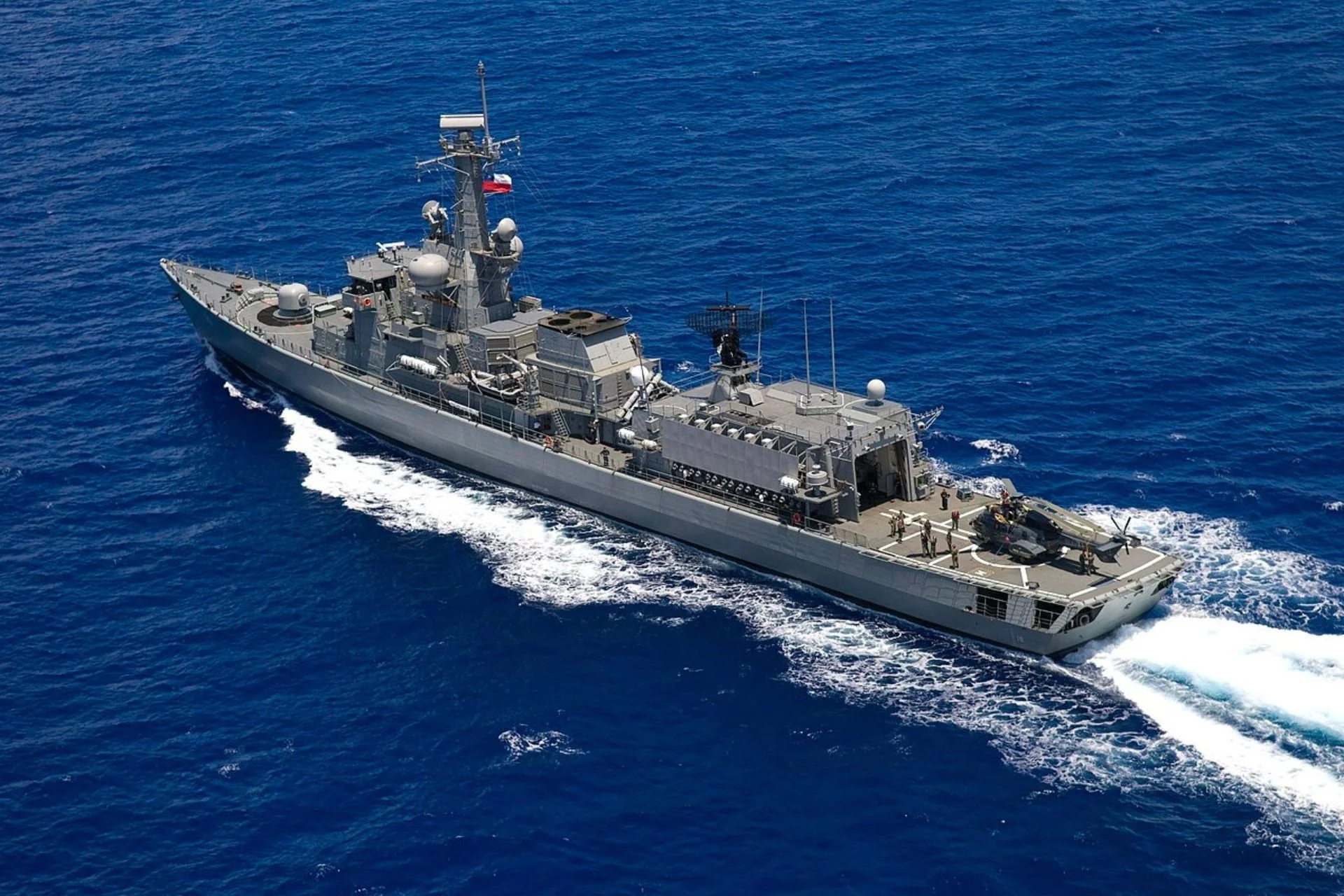
Chile has officially launched an ambitious initiative to develop a fully domestically built naval fleet by the end of this decade. On August 4, 2025, the board of the Corporación de Fomento de la Producción (Corfo) approved the creation of the Naval Construction Committee, marking a pivotal moment in the implementation of the National Shipbuilding Policy, introduced by President Gabriel Boric earlier this year.
Backed by the Sustainable Productive Development Program, the new committee will drive Chile’s maritime industrial development by coordinating public and private efforts to build all future surface vessels for the Chilean Navy within national borders. The overarching goal is to strengthen Chile’s military autonomy, reduce reliance on foreign suppliers, and ensure long-term technological sovereignty.
From a strategic and defense perspective, the policy will give the Navy greater control over fleet maintenance and modernization while improving national resilience amid global instability. Industrially, the plan aims to create a full production ecosystem—from shipyards and design bureaus to onboard system manufacturers—through close collaboration between the state, private firms, academic institutions, and labor organizations.
Economic Impact and Regional Vision
The policy also carries significant economic ambitions. It seeks to generate skilled jobs, especially in southern Chile, diversify the economy beyond raw materials, and elevate Chile’s position in Latin America as a potential exporter of naval platforms and components. Officials view this as an opportunity to boost regional integration, technological advancement, and long-term competitiveness.
The policy’s intersectoral scope was reflected in the high-level meeting that formalized the committee’s creation. Chaired by Economy Minister Nicolás Grau, it brought together representatives from key ministries—including Foreign Affairs, Defense, Social Development, Budget, Agriculture, and Science—alongside the Navy and Corfo.
The Naval Construction Committee will be led by a Governing Council composed of the Ministry of Defense, the Ministry of Economy, the Chilean Navy, and Corfo, and chaired by an independent figure jointly appointed by the Economy and Defense ministries. A Strategic Advisory Council will provide technical guidance and include stakeholders such as:
- Asmar (state-owned shipyards)
- Armasur (Southern Chile Maritime Transport Association)
- Asimet (National Metalworking Industries Association)
- Sonapesca (National Fisheries Society)
- ANA (National Association of Shipowners)
- Private shipyards, labor unions, and academic institutions
The committee’s mission is to coordinate state programs that support Chile’s shipbuilding sector, align innovation and development policies, and foster collaborative platforms to advance strategic projects. Public awareness and regional engagement will be central to its activities.
Current Fleet & Capability Gaps
Chile’s existing naval fleet consists primarily of second-hand vessels acquired from European allies. These include:
- Three British Type 23 frigates
- Five Dutch Karel Doorman-class frigates
- Two Scorpène-class and two Thomson-class submarines
- One Galvarino-class logistics support ship
- One Foudre-class landing platform dock
- A range of offshore and coastal patrol vessels tasked with securing Chile’s extensive maritime zones, including the remote and sensitive waters of Patagonia and the country’s island territories
By 2030, Chile aims to replace many of these foreign-built platforms with domestically designed and manufactured vessels—turning its naval force into a symbol of national industrial capability, resilience, and sovereignty.
