

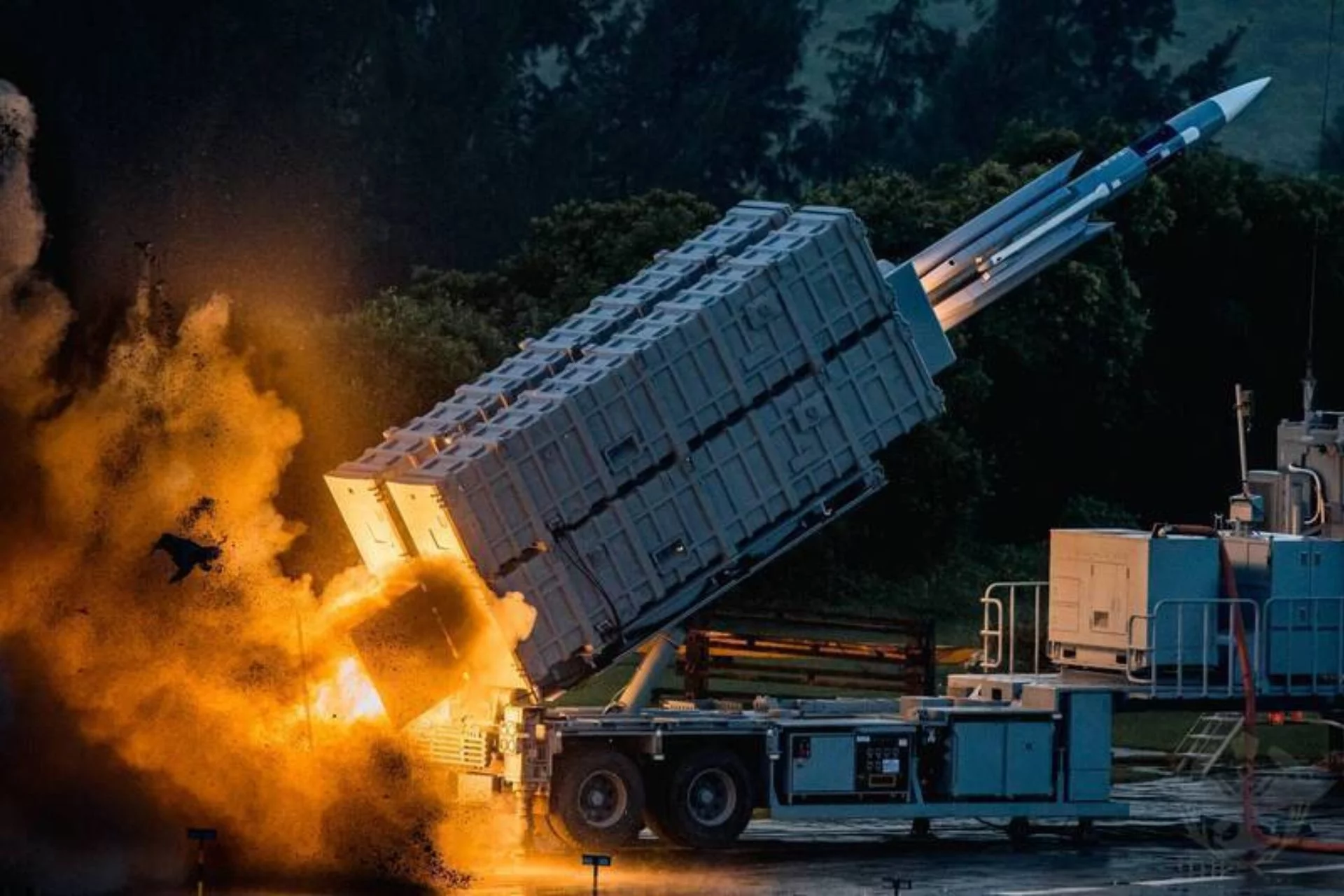
On August 17, 2025, Taiwan News and Liberty Times reported that Taiwan will produce 232 additional anti-ship missile systems to enhance its maritime defense capabilities by next year. The program, valued at NT$16.1 billion (around US$536 million), includes Hsiung Feng II, Hsiung Feng III (HF-3), and an extended-range HF-3ER variant. Modernized electronic components will be integrated to improve lethality and increase resistance to countermeasures.
Hsiung Feng II (HF-2): Standard range 148 km; upgraded versions can reach 160–200 km. Its electronic countermeasure capabilities are considered comparable to Western-made anti-ship missiles.
Hsiung Feng III (HF-3): Taiwan’s first supersonic missile, nicknamed the “carrier killer.” Entered service in 2011, it has a range of 150–250 km, speeds between Mach 2–2.5, and carries a 120–225 kg semi-armor-piercing warhead. Powered by a solid-fuel booster and a liquid-fueled ramjet, it features a smart fuze that detonates within a ship’s hull to maximize internal damage.
HF-3ER (Extended Range): Tested since 2017, this variant extends the range to nearly 400 km, increasing Taiwan’s strategic depth across the Taiwan Strait. It is deployed on Cheng Kung-class frigates, Tuo Chiang-class corvettes, Jin Chiang-class missile boats, and coastal batteries, with plans for Keelung-class destroyers.
Taiwan is also developing an air-launched version for the F-CK-1 Ching-kuo fighter. Recent tests involve aerodynamic validation, drop trials over Taichung, and exercises at Chihhang Air Base. The air-launched missile has been lightened to 900–1,000 kg from the 1,400 kg ground-based version to meet aircraft payload requirements.
In parallel, Taiwan is advancing electronic warfare capabilities, with pods for the F-CK-1 providing radar jamming and detection tools. These programs, funded since 2020 with around US$135 million, aim to give Taiwan independent defense options where foreign access is limited.
By expanding its arsenal and diversifying launch platforms, Taiwan seeks to reinforce a layered maritime defense strategy. The 232 new Hsiung Feng missiles expected by 2026 will strengthen Taipei’s deterrence, complicating Chinese naval operations and signaling a firm commitment to maintaining a credible balance of power in the region.
