

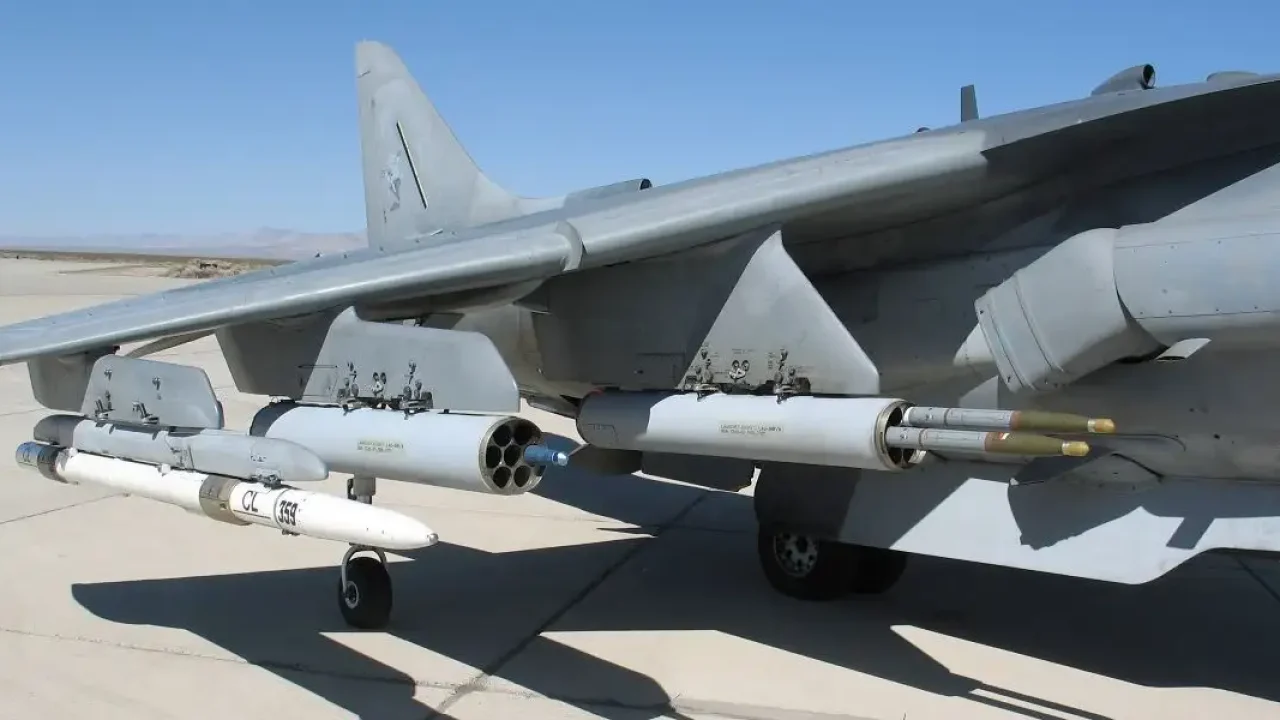
The U.S. Department of Defense announced that BAE Systems Information and Electronic Warfare Systems, based in Hudson, New Hampshire, has been awarded a $1.743 billion IDIQ contract for the production and delivery of up to 55,000 Advanced Precision Kill Weapon System II (APKWS II) rockets. The deal covers Full-Rate Production Lots 13 through 17, with deliveries scheduled through December 2031 to the U.S. Army, Navy, and approved international customers.
This marks one of the largest procurement programs for APKWS II, underscoring the Pentagon’s focus on expanding stockpiles of cost-effective precision-guided munitions. By spanning five consecutive production lots, the contract guarantees long-term industrial output and stable supply lines for both U.S. and allied forces.
APKWS II is a laser-guided upgrade to the legacy 2.75-inch Hydra 70 rocket. By inserting the WGU-59/B guidance section between the motor and the warhead, the rocket achieves sub-meter accuracy. This precision allows forces to engage light vehicles, fortified positions, and drones with minimal collateral damage at a fraction of the cost of heavier missiles such as Hellfire.
For the U.S. Army, APKWS II provides scalable firepower on AH-64 Apache, AH-6 Little Bird, and A-10 Thunderbolt II platforms, enhancing close air support and counter-insurgency missions. For the Navy and Marine Corps, it enables precision strikes from MH-60 Seahawks, AH-1Z Vipers, and AV-8B Harriers against both maritime and land-based threats, including small boat swarms and mobile missile sites. The weapon has also been tested in shipborne counter-drone defense, proving its versatility against emerging asymmetric challenges.
The system is widely exported, with nations such as Jordan, Iraq, Lebanon, the UAE, and Australia already fielding it. This latest contract ensures availability for allied forces and strengthens coalition interoperability.
For BAE Systems, the award secures long-term production capacity and cements its position in the precision weapons market. For the Pentagon, it guarantees a steady supply of affordable, combat-proven munitions that bridge the gap between unguided rockets and expensive guided missiles. Future improvements, such as dual-mode seekers, are expected to further expand its operational role.
The $1.743 billion procurement is not just a purchase order—it is a strategic investment in maintaining affordable precision strike capability across multiple domains while ensuring allied access to a proven battlefield solution.
