

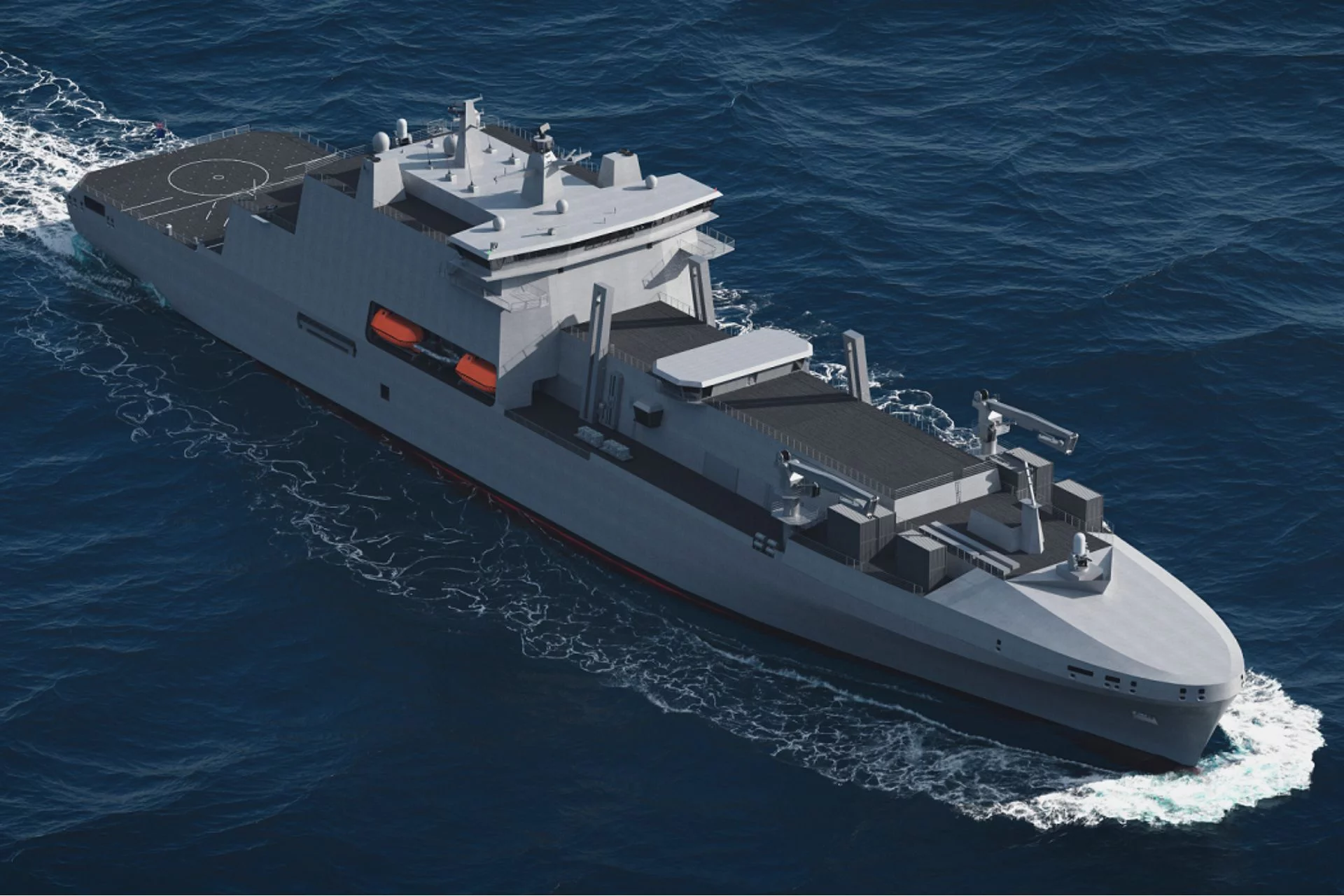
According to the Financial Times on September 17, 2025, delays at Belfast’s Harland & Wolff shipyard have led the Royal Navy to have the central sections of its next Fleet Solid Support (FSS) ship constructed largely in Spain. The £1.6 billion contract, awarded in 2022, covers three vessels designed to provide logistical support for the UK Navy. Spanish state-owned Navantia confirmed that the first ship’s midship and major structural components will be built in Cádiz rather than in the UK.
FSS ships will supply ammunition, food, spare parts, and other essentials to naval forces at sea, particularly supporting Queen Elizabeth-class carrier strike groups. Each ship will have a core crew of 101, with capacity for up to 80 additional personnel to operate helicopters, fast craft, and other operational systems. Their role also extends to counter-piracy and counter-terrorism support in collaboration with allied forces.
Technically, the FSS represents a generational leap. Displacing roughly 40,000 tonnes, they feature multiple at-sea replenishment stations, large storage capacity, and aviation facilities for Merlin and Wildcat helicopters. Sustainable technologies reduce energy use and emissions, with a long-term goal of carbon neutrality over their 30-year service life.
Originally planned for shared construction across Harland & Wolff (Belfast), Appledore (Devon), and Cádiz, delays have necessitated shifting midship blocks to Spain. Navantia UK director Donato Martínez indicated Belfast facilities will be ready by mid-2026 and emphasized that the UK’s total share of construction will ultimately exceed initial expectations.
Operationally, FSS vessels will bridge the gap between high-intensity naval operations and logistical endurance, ensuring carrier and amphibious groups remain at sea without port dependency. All three ships are expected to enter service by 2032, maintaining the UK’s strategic reach across the Atlantic, Mediterranean, and Indo-Pacific.
