

NBC News reported on September 27, 2025, that U.S. officials are reviewing potential airstrike options targeting Venezuela’s drug production and trafficking infrastructure. The plans, which have not yet been approved by President Trump, could involve precision strikes carried out by fighter jets or armed drones. Analysts suggest such an operation would mark a significant escalation in America’s counter-narcotics strategy and could heighten tensions across Latin America.
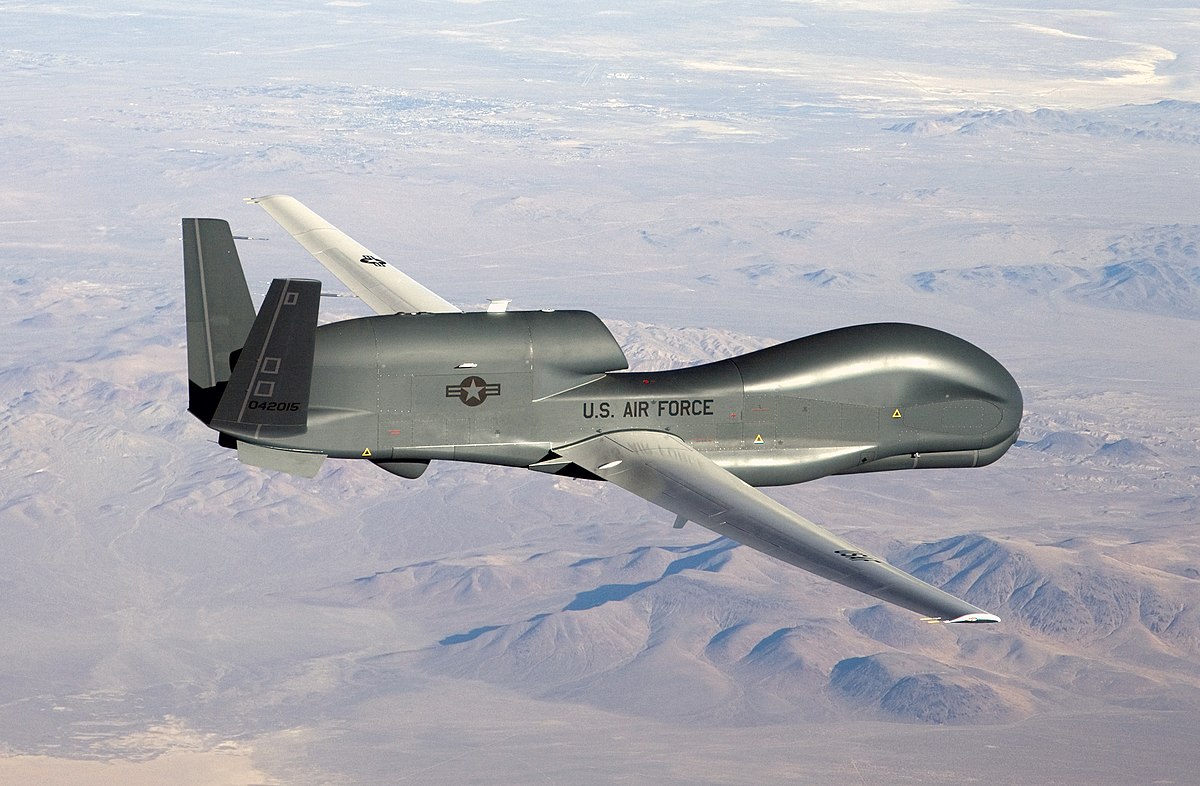
In preparation, the U.S. has strengthened its posture in the southern Caribbean and northern South America. U.S. Fourth Fleet task groups, supported by guided-missile destroyers and a Virginia-class submarine, are already in position. Forward-deployed F-35A Lightning II stealth fighters have been stationed at Hato Air Base in Curaçao and an undisclosed airfield in Puerto Rico, both within striking range of northern Venezuela. These deployments are supported by KC-135 tankers for aerial refueling, RC-135 Rivet Joint SIGINT aircraft, RQ-4 Global Hawk drones for persistent ISR, and EA-18G Growlers for electronic warfare and SEAD missions.
Additionally, MQ-9 Reaper drones have been deployed to Aruba, where they conduct round-the-clock ISR flights along the Venezuelan coast. These drones can be armed with AGM-114 Hellfires and GBU-38 JDAMs, enabling time-sensitive strikes on drug labs or trafficking convoys. A rotational detachment of U.S. special operations aircraft, including MC-130J Commando II and CV-22 Ospreys, is reportedly operating from forward facilities in Colombia and the Dutch Antilles.
Military analysts emphasize that air superiority and suppression of Venezuela’s layered air defenses will be critical for any potential operation. The Venezuelan Air Force still fields 18 F-16 Fighting Falcons and 21 Russian-built Su-30MKV multirole fighters, which pose a credible threat with long-range radar and beyond-visual-range missiles. On the ground, Venezuela operates S-300VM long-range SAM systems, Buk-M2E medium-range systems, and upgraded Pechora-2M batteries, forming a dense air defense network.
Experts caution that while Venezuela’s integrated air defense system appears formidable, its operational readiness is limited by maintenance and command-and-control issues. Nonetheless, U.S. planners are expected to employ extensive electronic warfare, cyber operations, and SEAD campaigns to neutralize these threats.
U.S. officials stress that the potential mission would be narrowly focused on disrupting transnational narcotics networks and would not seek regime change or establish permanent bases. However, conducting lethal strikes inside a sovereign nation raises legal and congressional oversight challenges, with the Department of Justice currently reviewing Title 10 and Title 50 authorities and key committees briefed on possible scenarios.
Defense analysts note that such an air campaign would not only test U.S. joint force interoperability against a semi-modern IADS but also set a precedent for using force against non-state criminal networks operating from within sovereign states—a scenario not seen since the 1989 invasion of Panama. The current U.S. posture indicates that the Pentagon is prepared for deterrence and rapid action, awaiting only political authorization.
