

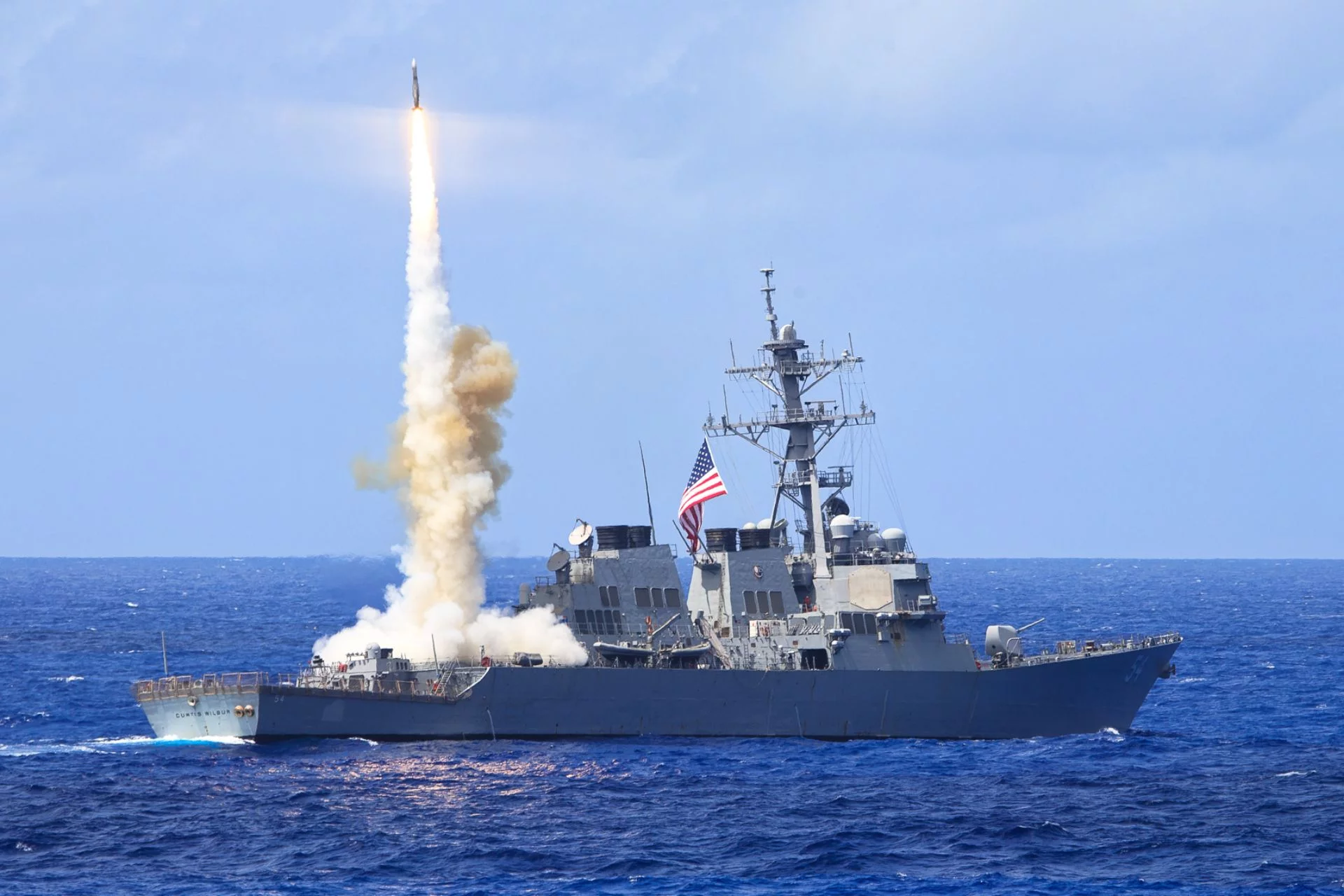
The U.S. Navy has announced that it will implement an open-architecture approach for its Naval Modular Missile (NMM) program at an upcoming Industry Day in Maryland. The initiative aims to boost competition and accelerate innovation for next-generation weapon systems.
The Navy confirmed it will host a two-day Naval Modular Missile Industry Day at Johns Hopkins Applied Physics Laboratory in Laurel, Maryland, on October 21–22, 2025. According to a pre-solicitation notice released on September 25, the Navy plans to use a government-owned reference architecture and pursue multiple competitive awards in Fiscal Year 2026—a rare level of detail for a program still in its early stages.
The NMM is designed as a missile “family” rather than a single type. Its concept ranges from long-range hypersonic options to smaller effectors for short, medium, and extended ranges. The Navy highlights the value of magazine depth, aiming to allow multiple weapons per vertical launch system cell to increase ship endurance without redesigning the launcher.
Technically, the backbone is an open architecture co-developed with the U.S. Air Force. The government will publish and control key interfaces—from message sets to physical and electrical boundaries—allowing vendors to compete for seekers, propulsion, guidance, datalinks, or even full missile rounds.
The first day of the event will be at the SECRET level, detailing top-level missile family requirements, the acquisition approach, and schedule. The second day will involve higher classification and only cleared participants.
Operationally, a modular missile family provides commanders with more flexibility for mission-specific magazine configurations. For example, a destroyer heading to the Western Pacific may carry more long-range anti-ship and land-attack missiles, whereas a cruiser in the Mediterranean could prioritize layered interceptors.
The Navy’s push reflects the evolving strategic environment. In the Indo-Pacific, Chinese surveillance and strike networks challenge surface forces at distance, while Russia continues to invest in stand-off missiles and electronic warfare. A government-owned architecture with multiple vendors reduces single points of failure and enables faster adaptation to emerging threats.
