

The Defense Security Cooperation Agency (DSCA) notified Congress of a proposed Foreign Military Sale to Canada covering 26 M142 HIMARS launchers, a deep magazine of precision rockets, and 64 M57 ATACMS pods in an estimated $1.75 billion package. The request includes secure radios, training, spares and contractor logistics support, with Lockheed Martin named as the prime contractor.
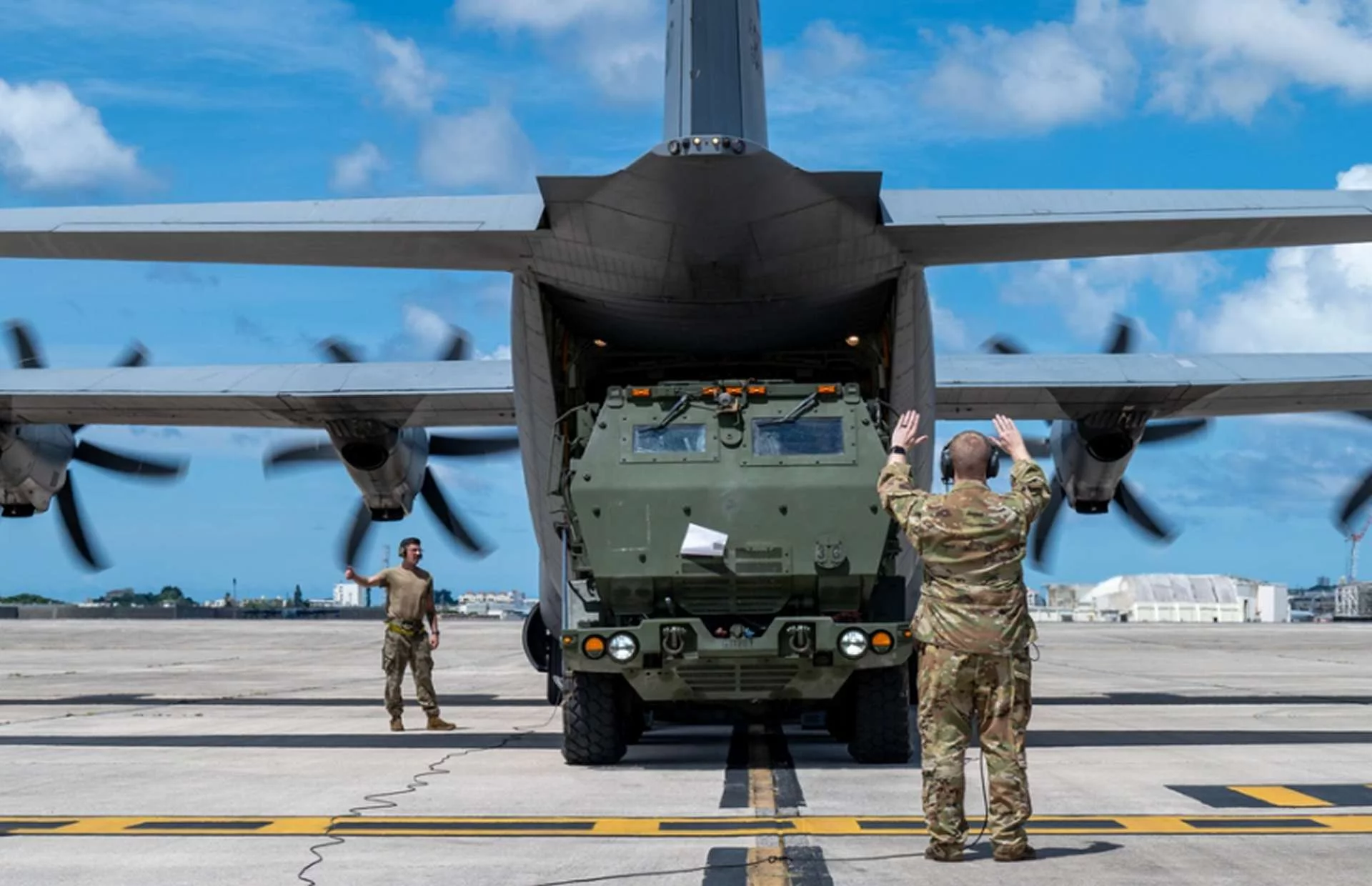
The M142 HIMARS is a 6×6 wheeled launcher that carries a single interchangeable pod: either six 227 mm GMLRS rockets or one ATACMS tactical missile. Its relatively light footprint and C‑130 transportability suit Canada’s dispersed geography and Arctic posture. The system emphasises shoot‑and‑scoot survivability, rapid digital mission uploads, pod swaps and quick organic rearm, reducing exposure to counter‑battery detection.
The notified munition mix lists 132 pods of M31A2 GMLRS Unitary and 132 pods of M30A2 GMLRS Alternative Warhead, plus 32 pods each of the Extended‑Range GMLRS M403 AW and M404 Unitary, and 64 M57 ATACMS pods. Standard GMLRS covers precision strikes roughly in the 70–90 km band; ER‑GMLRS stretches interdiction to about 150 km, while M57 ATACMS provides roughly 300 km‑class strike reach for air defences, logistics nodes, bridges and runways — all from the same vehicle.
The communications suite—Type 1 secure radios such as the AN/PRC‑160 and AN/PRC‑167 plus Simple Key Loaders—points toward seamless integration with NATO digital fires and sensor‑to‑shooter links. Palletized pods and an automated fire control enable batteries to fire salvos, displace within minutes and rearm rapidly — tactics proven valuable in contested, drone‑dense environments.
Operationally, HIMARS gives Canada an immediately credible long‑range fires ecosystem: from coastal and Arctic defence to expeditionary contributions such as Latvia’s enhanced forward presence. Strategically, the timing aligns with Ottawa’s defence policy update and broader NORAD modernization, while bolstering NATO magazine depth at a time of high demand for precision rockets and missiles. The DSCA notice authorises negotiation rather than a contract, but the scale of the request signals clear intent to field networked, full‑spectrum precision fires that increase Canada’s deterrent and operational weight in allied operations.
