

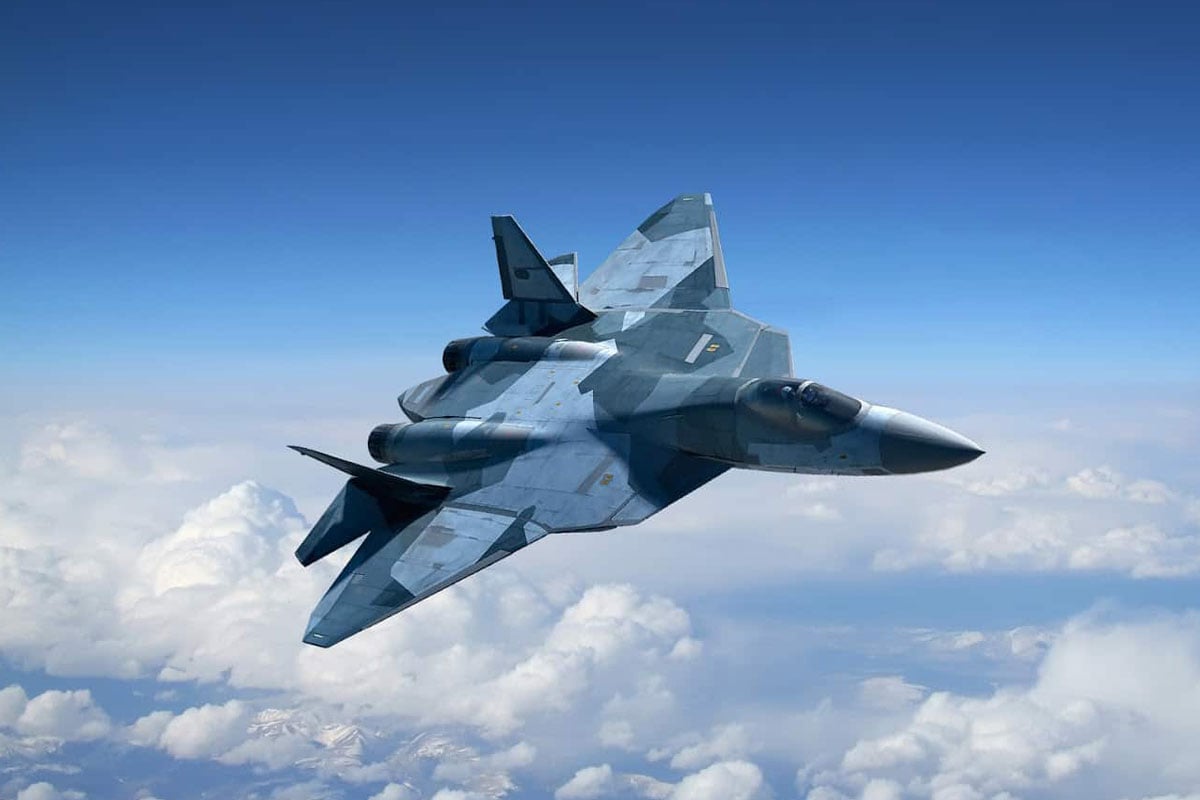
Russia has finalized the design of its next-generation long-range interceptor, the MiG-41, with a prototype expected to take flight in the coming years. The aircraft is being developed to tackle hypersonic missiles, stealth fighters such as the F-35, and potentially satellites.
Retired Russian Air Force commander Vladimir Popov stated on September 16, 2025, that the MiG-41, developed under the PAK DP program, has completed its external design phase. He explained that the project builds on high-speed interceptor concepts originally initiated during the late Soviet era in the 1980s, now adapted into a modern platform.
The MiG-41 is intended to replace the aging MiG-31, offering unprecedented performance, including speeds above Mach 4, near-space operational capabilities, and advanced avionics. Both manned and unmanned versions are planned, allowing the aircraft to engage not only traditional bombers but also hypersonic missiles, stealth aircraft, and high-altitude reconnaissance planes.
Some envisioned roles extend to anti-satellite operations in low Earth orbit, highlighting the aircraft’s strategic relevance for Arctic and northern air defense, where rapid response and extended reach are critical. The finalized external design was reportedly completed by late 2019, followed by wind-tunnel testing and scale model evaluations.
Propulsion options under consideration include a variant of the Izdeliye 30 engine family used in the Su-57, as well as ramjet or combined-cycle engines for sustained high-Mach flight. Stealth shaping and modernized avionics are designed to surpass the MiG-31’s capabilities. Armament plans include internal carriage of long-range air-to-air missiles and potential anti-satellite weapons.
The MiG-41 leverages lessons from the MiG-31 while providing a next-generation platform capable of high-altitude, long-range interception. Sustained flight above Mach 4 poses engineering challenges, requiring advanced cooling, heat-resistant materials, and powerful propulsion systems. The program’s completion may extend into the late 2020s or early 2030s, depending on technological, financial, and industrial constraints.
