

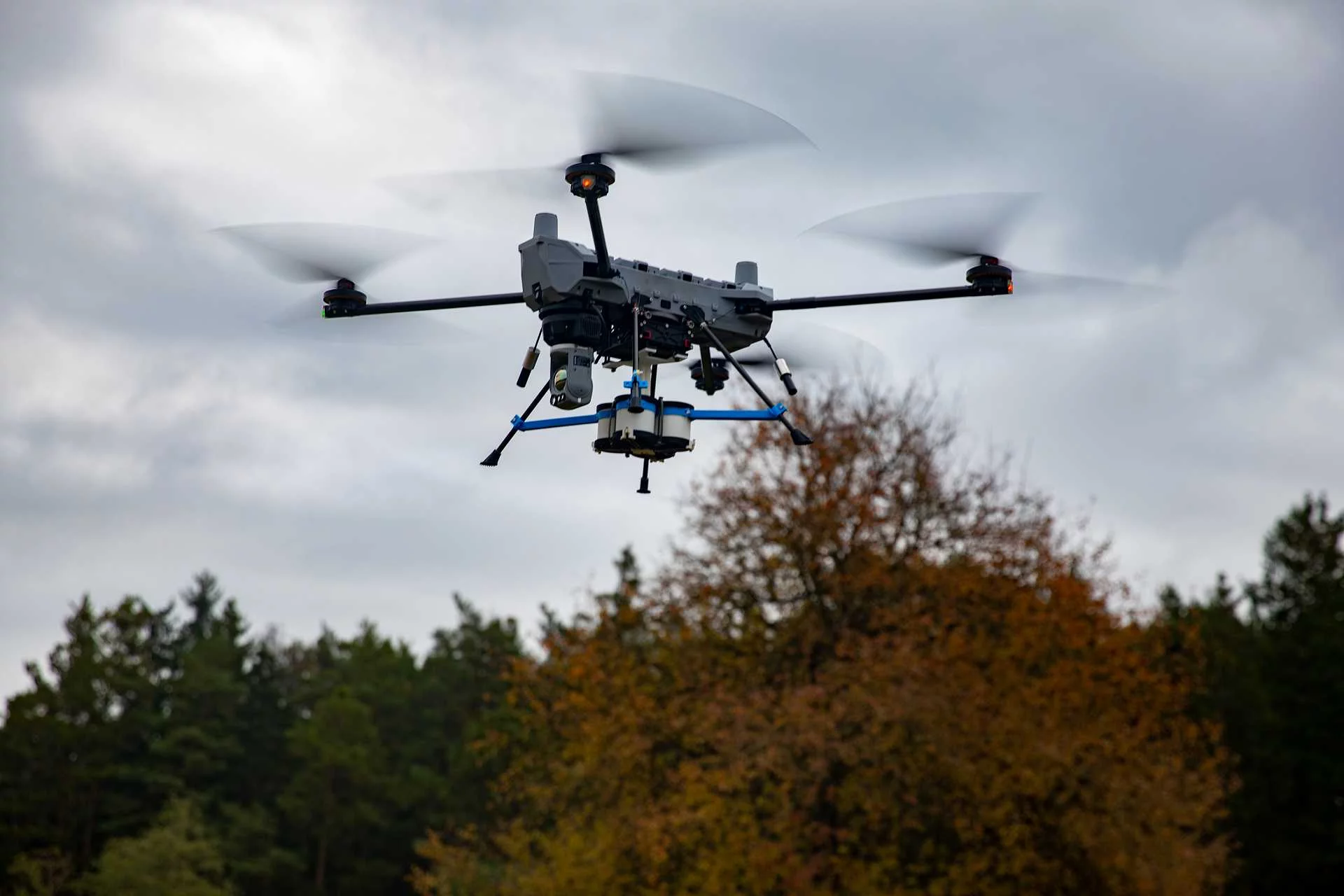
U.S. Army troops from the 101st Airborne Division have tested a 3D-printed munition drop system known as “Widowmaker” mounted on a PDW C-100 drone during the multinational exercise Combined Resolve 26-1.
The test marks a significant step in field-driven innovation, showing how soldiers can design and deploy mission-ready tools directly from the front lines.
Field-Made and Mission-Ready
According to the U.S. Department of War’s statement on October 9, soldiers from the 1st Battalion, 502nd Infantry Regiment’s Multi-Purpose Company developed and tested the Widowmaker entirely through additive manufacturing in theater.
The compact system allows the precision release of M67 fragmentation grenades, M18 smoke grenades, and training munitions. During testing, it successfully dropped up to four grenades from standoff ranges exceeding 100 meters.
Precision Strikes with PDW C-100
Developed by Pacific Defense Works, the PDW C-100 is an electric, foldable VTOL quadcopter capable of carrying over five pounds and remaining airborne for more than 30 minutes. Its low acoustic signature and stable flight profile make it ideal for infantry missions requiring precise munition delivery in complex environments such as cities or forests.
Combined with Widowmaker, the platform enables small units to conduct precision strikes without relying on artillery or air support. This capability allows platoons to locate, engage, and neutralize enemy positions within minutes.
Soldier-Built Innovation
Unlike conventional defense programs, Widowmaker was designed and built by soldiers themselves using commercial CAD software and standard Army additive manufacturing kits.
The project embodies the U.S. Army’s “Transforming in Contact” doctrine, which emphasizes bottom-up innovation and rapid field experimentation.
The design has been transferred to EagleWerx, the 101st Airborne’s innovation lab at Fort Campbell, Kentucky, for further refinement and potential field-wide adoption.
A Glimpse of Future Warfare
As modern conflicts become more decentralized and electronic threats increase, the ability of small units to generate independent combat effects is becoming critical.
Widowmaker demonstrates how soldier-led design and 3D printing can deliver scalable, adaptable, and cost-efficient solutions for next-generation warfare.
Analysts suggest that if the system enters wider production, it could redefine infantry operations—turning small squads into agile, autonomous strike teams with their own air-delivered precision capabilities.
