

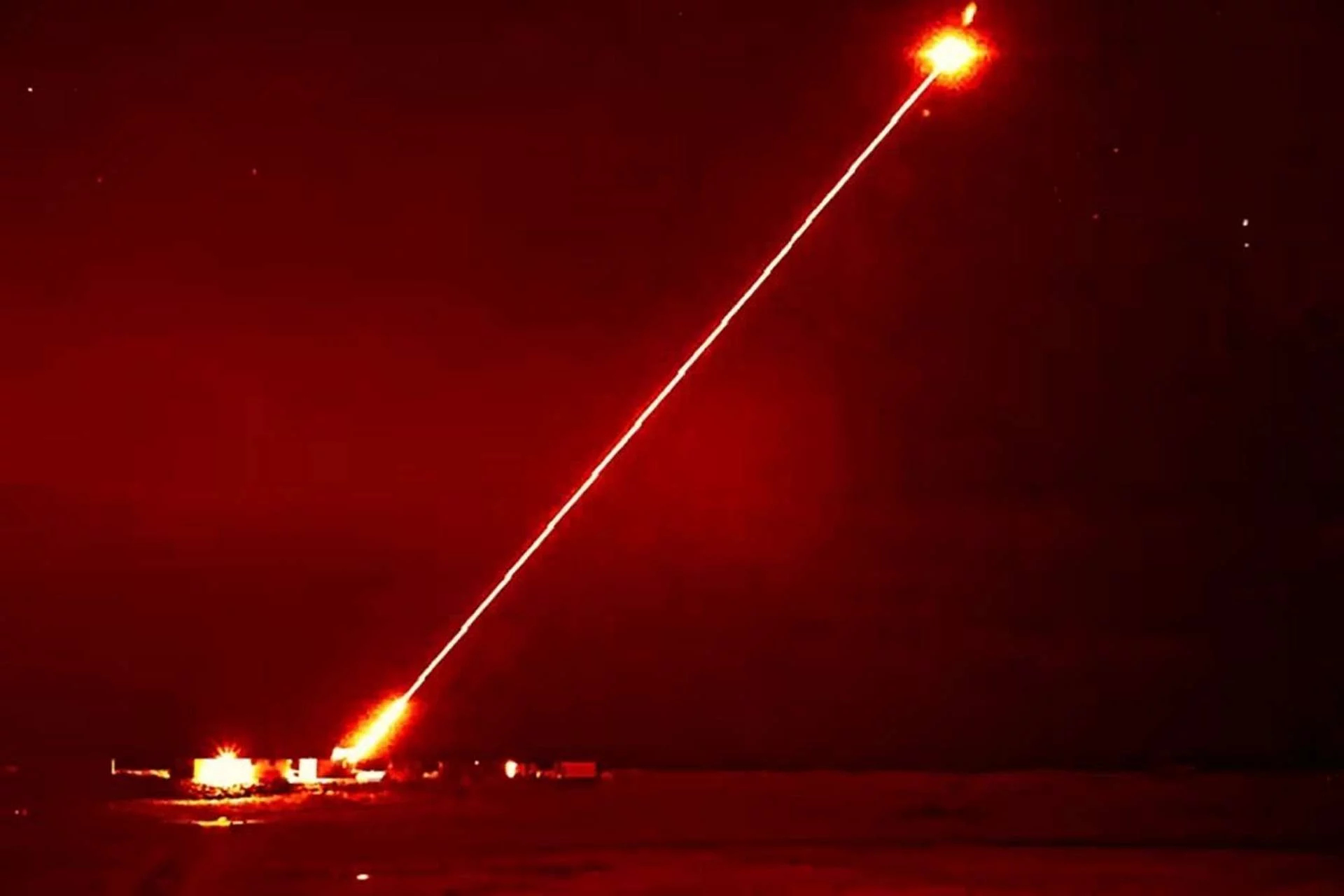
Increasing drone incursions across Europe and Asia are driving nations to rapidly deploy high-energy laser defenses once confined to laboratories. Countries including Israel, the United States, Germany, and Japan are moving toward operational directed-energy weapons that provide cost-effective, precise, and environmentally cleaner protection against mass drone attacks.
Airports, military bases, and energy facilities are responding to rising drone activity with emergency powers, new airspace restrictions, and accelerated counter-UAS technology programs. What began as a regional nuisance has become a global driver, prompting the European Commission, the U.S., Israel, and several Indo-Pacific nations to fast-track directed-energy and electronic counter-drone systems. As missile costs remain high and drone incidents multiply, high-power lasers are transitioning from test ranges to operational deployment, reshaping short-range and base defense strategies.
High-power laser weapons offer economic and tactical advantages. While a single small drone may cost a few hundred euros, intercepting it with missiles can reach tens of thousands. Lasers provide near-zero per-shot cost and sustained engagement capability, allowing silent and precise operations around cities, airbases, and sensitive infrastructure.
Top-tier programs include Israel’s Iron Beam, set for 2025 operational use as a low-cost counter to rockets, mortars, and drones integrated into national air defense networks. The U.S. Army has tested 50 kW DE M-SHORAD systems on Stryker vehicles, while the Navy’s HELIOS laser has successfully intercepted aerial targets. The UK’s DragonFire program aims to deploy a 50 kW-class laser for counter-UAS and inner-layer missile defense, while Germany’s Navy completed over 100 live-fire tests aboard the frigate Sachsen.
India conducted maiden flight tests of its DRDO integrated air defense laser in 2025. Turkey’s ASELSAN GÖKBERK mobile laser system successfully neutralized FPV drones. Japan and South Korea are progressing with prototype and operational tests. China and Russia are developing early-stage or classified laser programs, highlighting both momentum and technological challenges.
Technically, 10–50 kW lasers are effective against small to medium drones, while 100 kW+ systems can engage rockets and mortars at tactical ranges. Environmental factors, including weather and aerosols, significantly influence performance on land and naval platforms.
Looking ahead, lasers will complement but not replace missile-based air defenses. They offer an affordable inner layer for high-volume drone threats, while missiles remain essential for long-range, high-speed, or adverse weather engagements. The future doctrine will likely mix lasers, missiles, and electronic warfare, with beams handling cheap, frequent threats and interceptors reserved for critical targets.
