

October 20, 2025 – The UK government plans to grant military personnel and Ministry of Defence (MoD) police explicit legal authority to take down unidentified drones threatening military installations. Defence Secretary John Healey stated in London that the move comes in response to a rise in drone incursions across Europe, often linked by allies to Russian activity. The authority could later extend to critical infrastructure such as airports.
Under proposals associated with the upcoming Armed Forces Bill, British forces would be empowered to kinetically engage hostile or unidentified drones around UK military sites. Initial coverage would include domestic bases and MoD facilities, with the possibility to designate additional locations if threat conditions warrant. The decision follows months of drone sightings near sensitive areas and recent incidents near RAF bases hosting US assets.
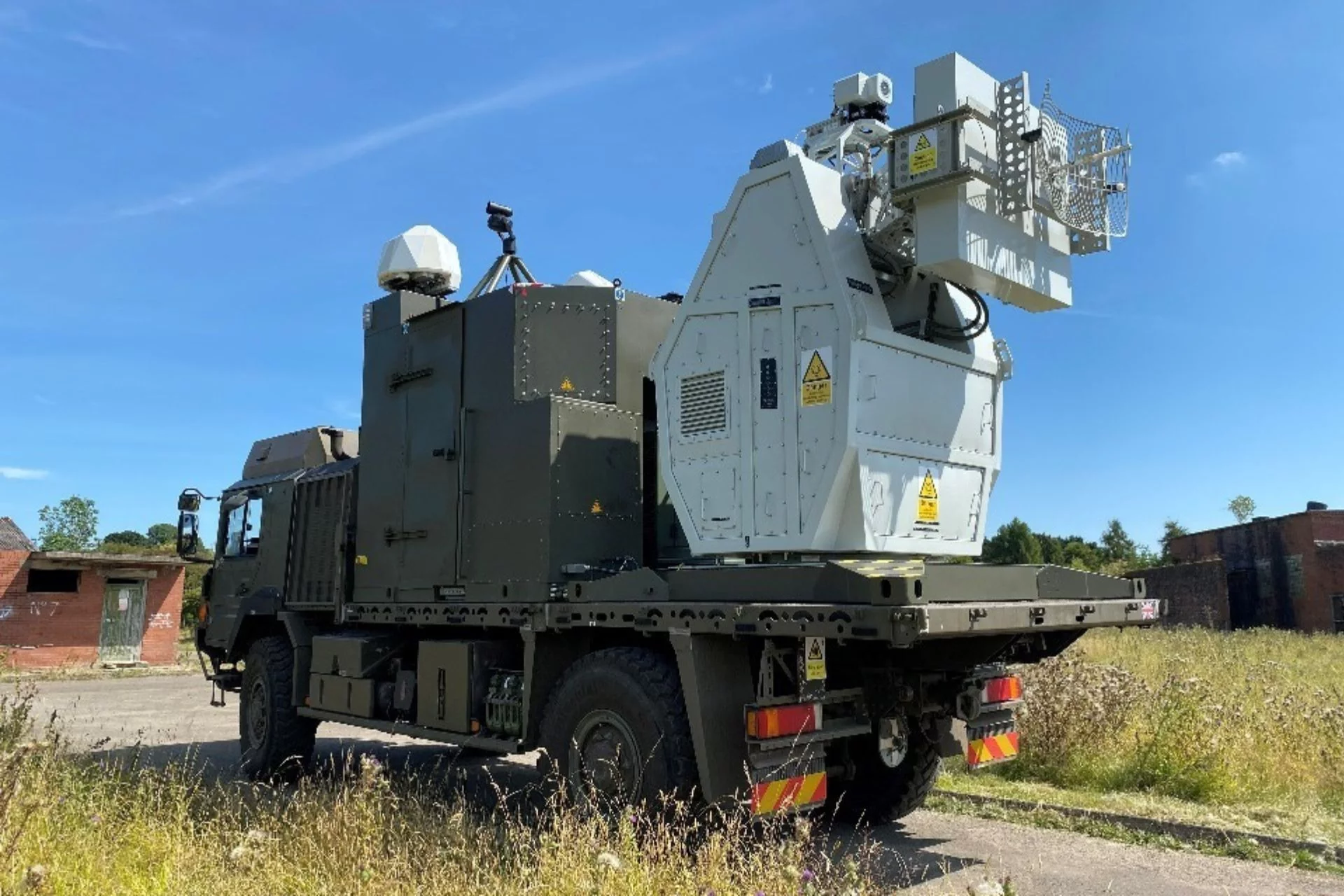
Currently, UK site defense relies primarily on soft-kill measures. Counter-UAS units detect and track small aerial vehicles using RF and optical sensors, intercept control links, and force landings or diversions when feasible. The new legal framework would allow soldiers or MoD Police to employ force, individual weapons, adapted munitions, or other effectors when drones pose an immediate threat to personnel, facilities, or operations.
Two technical elements underpin this approach. First, sensor fusion of RF and EO/IR systems allows classification and soft-kill mitigation before applying hard measures. Second, 2025 trials of RF-directed energy options demonstrated scalable responses to drone swarms without excessive ammunition usage. Kinetic engagement remains essential in high-threat scenarios.
The framework integrates soft- and hard-kill measures under a single legal authority, enhancing coordination among security posts, C-UAS operators, and military police. Engagements follow a graduated approach—jamming, takeover, destruction—based on distance, flight profile, and risk assessment. Coordination with air traffic control and local police is critical, particularly near airport approaches.
The UK’s layered drone defense includes:
- Multi-sensor detection using RF scanners, low-RCS radars, and EO/IR cameras,
- Electronic attack via uplink or GNSS disruption for low-cost, reversible mitigation,
- Hard-kill responses for imminent threats or suspected explosives, ranging from individual weapons to directed-energy systems.
The reform is driven by recent drone activity near Eastern Europe and UK bases. Clarifying engagement authority aims to deter reconnaissance flights, reduce operational disruption, and protect sensitive operations. At a European level, the measure complements broader efforts to standardize peacetime counter-drone defenses, ensuring NATO facilities can respond efficiently to fast, small, and ambiguous threats.
