

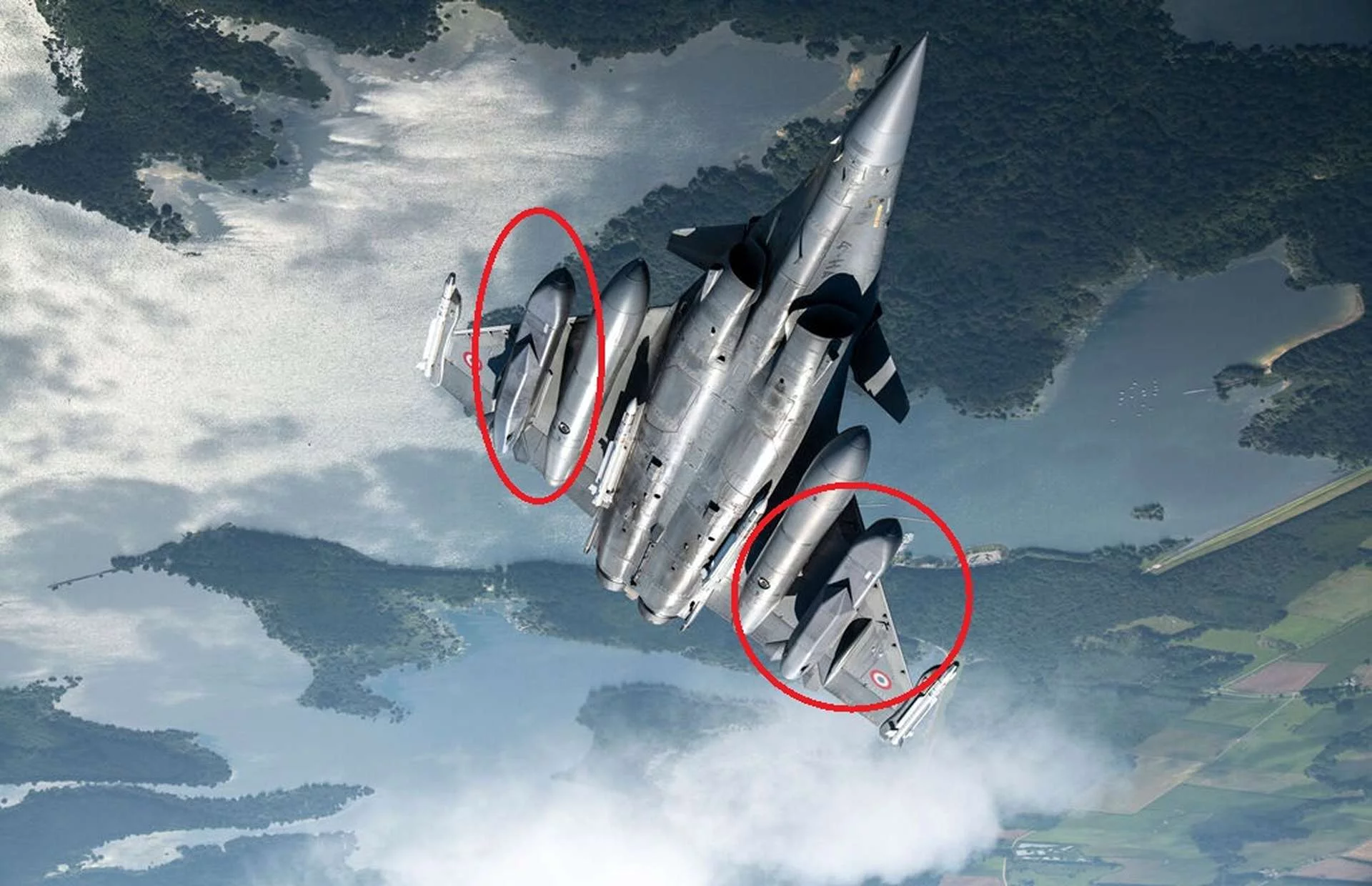
Ukraine’s General Staff announced on October 21 that its forces conducted a joint missile and airstrike on the Bryansk Chemical Plant in Russia, reportedly using British-made Storm Shadow cruise missiles that managed to breach Russian air defenses. Moscow confirmed missile and drone activity over Bryansk but claimed no damage occurred. While battle damage assessment is ongoing, the message from Kyiv is clear: Ukraine remains both capable and willing to strike deep into Russia’s defense production network.
The Storm Shadow, known in France as the SCALP-EG, is a low-observable, turbojet-powered cruise missile designed for precision attacks on fortified, high-value targets. Weighing about 1,300 kilograms and measuring 5.1 meters in length, it combines INS, GPS, and terrain-reference navigation to fly at low altitude beneath radar coverage. In its final phase, an infrared imaging seeker matches the target area with a stored image to ensure pinpoint accuracy, delivering a tandem penetrator warhead through reinforced structures. Its range of over 250 kilometers allows launch aircraft to remain safely beyond most medium-range air defense zones.
Ukraine has integrated the Storm Shadow onto its Su-24M Fencer strike aircraft, which are well-suited for carrying heavy long-range munitions. Imagery since 2023 confirms successful launches, showing Ukraine’s preferred mission profile: low-level ingress by the aircraft, terrain-hugging cruise flight by the missile, and precision terminal guidance to strike hardened targets.
The United Kingdom first confirmed the delivery of Storm Shadow missiles to Ukraine on May 11, 2023, becoming the first Western nation to supply long-range cruise missiles to Kyiv. France followed at the NATO Vilnius Summit in July 2023 with around 50 SCALP missiles, and both countries continued deliveries throughout 2024. In July 2025, London and Paris announced they would restart production of the Storm Shadow/SCALP series at MBDA facilities, signaling Europe’s commitment to sustaining Ukraine’s deep-strike capabilities over the long term.
Operationally, the Bryansk strike exemplifies the Storm Shadow’s intended purpose: to cripple the enemy’s logistical and industrial nodes that are difficult to relocate or repair. By coupling such missile attacks with drone operations, Ukraine complicates Russian air defenses and demonstrates that long-range precision warfare remains central to its strategy — as well as a continuing test for Western policy boundaries on cross-border strikes.
