

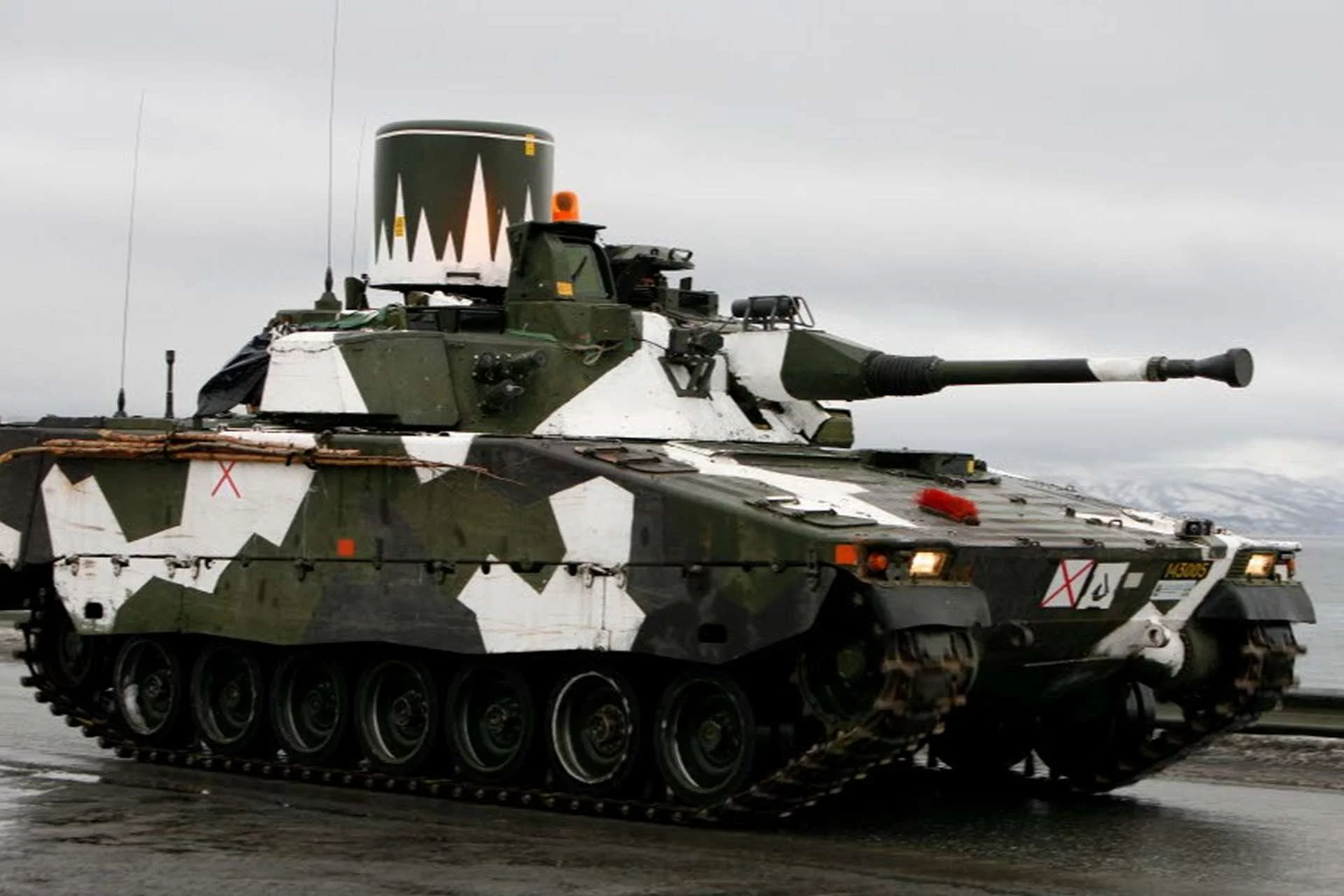
Sweden has announced plans to deploy anti-aircraft gun systems with its NATO unit in Latvia in 2026 — marking its first operational gun-based air defense contribution to a NATO mission since the 1960s.
The decision comes amid growing concerns over drones and other low-flying threats across Europe. Swedish defense officials emphasize that short-range, high-readiness air-defense systems have become crucial for protecting NATO forces on the eastern flank.
The systems expected to be fielded include the Luftvärnskanonvagn (Lvkv) 9040, the self-propelled air-defense variant of the CV90 infantry fighting vehicle. Armed with a 40 mm Bofors L/70 cannon and equipped with an advanced radar and fire-control suite, the Lvkv 9040 provides autonomous short-range defense against helicopters, drones, and cruise missiles.
This marks Sweden’s first overseas deployment of gun-based air defense since the Congo missions in the 1960s — a move highlighting Stockholm’s renewed commitment to high-intensity deterrence and NATO’s collective defense posture in the Baltic region.
The Lvkv 9040’s programmable 40 mm ammunition offers a balanced solution between missile systems and smaller-caliber guns, comparable to Germany’s Gepard platform. Lessons from Ukraine have reaffirmed the continuing importance of such gun systems in countering drone swarms and loitering munitions.
By deploying the Lvkv 9040 to Latvia, Sweden will reinforce NATO’s short-range air-defense network, providing protection for bases and logistics hubs while signaling deeper integration within the alliance. Strategically, this deployment underscores Sweden’s role in enhancing Europe’s layered air-defense architecture and adapting to the drone-dominated battlefields of modern warfare.
