

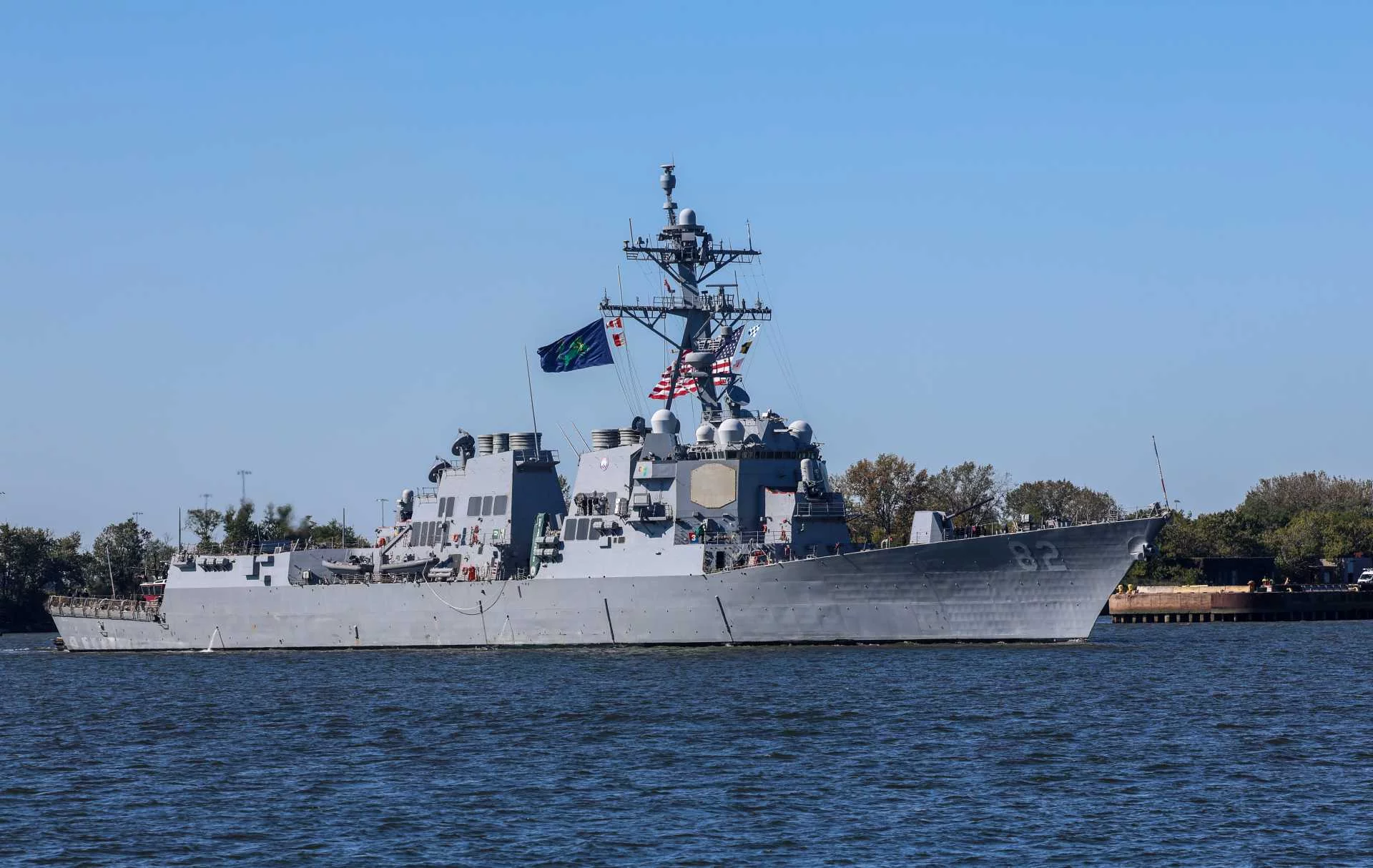
Senior U.S. officials are discussing a sweeping redesign of the Navy’s surface fleet under a concept tentatively called the “Golden Fleet.” The initiative aims to create a tech-forward, distributed naval force to blunt China’s growing maritime power.
According to people familiar with the talks, early planning is underway inside the White House and Navy leadership. The concept—still formative—has input from senior defense planners and has drawn attention from former President Donald J. Trump, who has reportedly raised concerns about current ship classes and advocated for a bolder surface combatant design. Key elements under consideration include advanced hull forms, modular combat systems, and a much larger role for unmanned and autonomous platforms to deter peer competitors across the Indo-Pacific.
Under the proposal, the fleet would pair a new generation of large, heavily armed capital ships with a mix of smaller, agile surface platforms. The flagship class being discussed would likely displace in the 15,000–20,000 ton range—far larger than today’s destroyers—and could include integrated electric propulsion, hardened hulls, sophisticated radar and sensor suites, and space for expanded long-range and hypersonic missile loads. The design intent is to dramatically increase offensive volume of fire while enhancing survivability against emerging threats such as Chinese anti-ship ballistic and submarine-launched hypersonic missiles.
Complementing the large combatants, the Golden Fleet would feature corvette- or light-frigate-type vessels optimized for rapid deployment, modular mission packages and distributed operations. These smaller ships would be suited for littoral engagement, unmanned swarm tactics and forward scouting in contested waters like the South China Sea or the Baltic.
Realizing such a shift poses significant industrial and technical hurdles. The proposed tonnage would outstrip current destroyer classes and demand new shipbuilding infrastructure, expanded drydocks and large-scale workforce training. Integrating hypersonic weapons remains challenging given limited production, cost and reliability concerns; as one program manager put it, “We can be decades ahead on hulls but years behind on the missiles.” Preliminary cost estimates indicate a large surface combatant in this class could run $4–6 billion per hull depending on loadout.
The timing reflects mounting U.S. concern over the People’s Liberation Army Navy’s rapid expansion. With several hundred hulls and dozens more added each year, China now fields the world’s largest navy by numbers, and its expanding anti-ship, air defense and carrier capabilities threaten to complicate U.S. force projection in the Indo-Pacific.
Officials expect to brief Congress as early as next year when initial planning documents are submitted and authorization for conceptual design funding is sought—potentially in advance of FY-2027. Lawmakers will likely press for proof of industrial feasibility, weapons maturity and favorable cost-to-lethality metrics. Parallel efforts could accelerate the Constellation-class frigate program and explore co-production of smaller Golden Fleet variants with allied yards—mirroring prior multinational procurement approaches.
Operational experimentation with unmanned surface vessels and manned-unmanned teaming—programs already being trialed in the Pacific—will inform final ship architectures. Ultimately, Golden Fleet would mark a doctrinal inflection: shifting from a traditional carrier-and-destroyer fleet toward a more diversified, distributed force emphasizing long-range fires and improved survivability in highly contested environments.
As design details, contract awards or prototypes are announced, deeper technical and operational analysis will follow.
