

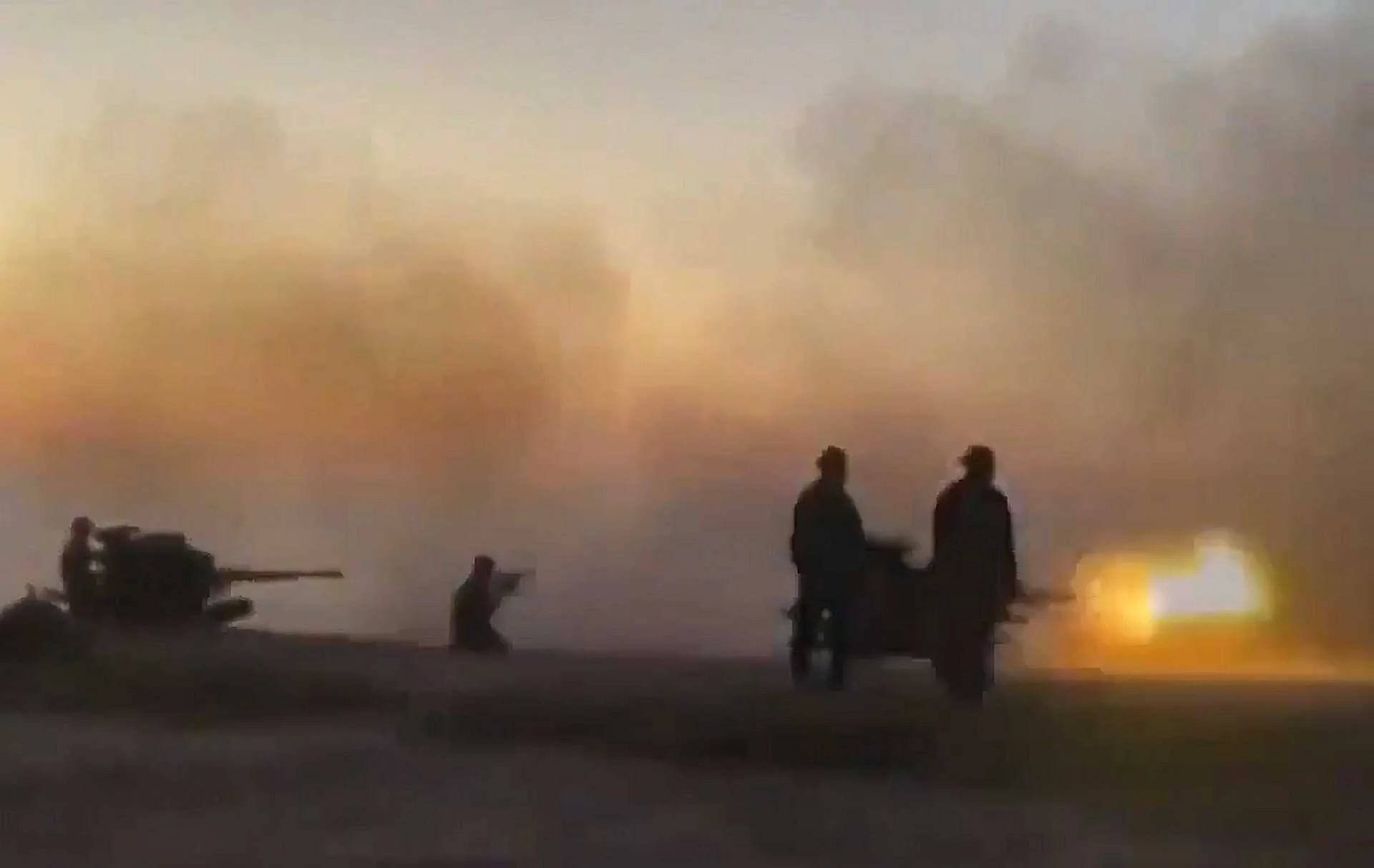
Venezuela has launched extensive air and coastal defense drills following the deployment of the USS Gerald R. Ford Carrier Strike Group near its northern maritime border. According to Army Recognition analysts, while the U.S. presence enhances rapid strike capability, Venezuela’s air defense network offers strong coverage but limited resilience against complex or electronic attacks. Venezuelan officials describe the exercises as a direct reaction to “escalating U.S. military activities,” marking the country’s largest air defense readiness drill since 2019.
Overview of Venezuelan Air and Coastal Defense
The drills showcase Venezuela’s reliance on Russian-made systems, including the S-300VM, Buk-M2E, and Pechora-2M, highlighting operational readiness across air and coastal domains. The S-300VM “Antey-2500” (SA-23 Gladiator/Giant) provides long-range coverage with at least 12 semi-mobile launchers extending into the Caribbean, forming the first layer of defense against potential U.S. strikes. These batteries can engage multiple high-speed aerodynamic and tactical ballistic targets at ranges up to 200 km.
Mid-range protection comes from nine Buk-M2E (SA-17 Grizzly) batteries, offering mobile radar-guided defense against low-flying aircraft, UAVs, and cruise missiles up to 50 km. While not fully networked like NATO-standard integrated systems, their autonomous operation improves survivability under suppression attempts.
Legacy systems, including 44 S-125 Pechora-2M (SA-3 Goa) launchers, remain near critical infrastructure, while short-range MANPADS such as 9K338 Igla-S (SA-24 Grinch) and systems like RBS-70 and Mistral pose threats to low and slow targets. Venezuela also maintains over 400 air defense guns, including ZU-23-2 and 40mm L/70 Bofors, alongside AMX-13 Rafaga light tanks equipped with 40mm autocannons for mobile point defense.
Strengths and Weaknesses
Despite this layered inventory, Venezuela’s main vulnerability lies in limited command-and-control integration and the absence of a fully digitized sensor-fusion network. Most radars operate independently, leaving interceptors reliant on local tracking rather than a national air picture.
The proximity of the Ford Carrier Strike Group poses a serious challenge. Any U.S. strike would likely aim to neutralize S-300VM batteries early through electronic warfare and stand-off missile strikes. Mid-range and point-defense systems can delay follow-on air operations, especially for manned aircraft in contested corridors.
Operational Implications for U.S. Forces
While not as advanced as near-peer integrated air defense systems like those of China or Russia, Venezuela’s network can inflict early losses, slow U.S. strike tempo, and necessitate additional SEAD efforts to suppress mobile systems. S-300VM systems particularly threaten high-value assets such as F/A-18s, EA-18Gs, AWACS, and refueling tankers.
Buk-M2E batteries fill mid-altitude gaps, intercepting cruise missiles and fighters, while Pechora-2M systems, dense MANPADS, and gun-based defenses increase attrition risk for helicopters, drones, and low-flying aircraft. The Venezuelan coastline compresses engagement zones, leaving limited maneuver space for carrier-launched operations.
Strategic Assessment
Although Venezuela’s defenses may not endure a prolonged U.S. air campaign, they can impose early losses, delay air superiority, and create tactical costs for any intervention attempt. Its air defense forces remain the most credible pillar of Caracas’ military deterrence, shaping U.S. operational planning and requiring careful suppression and prioritization.
