

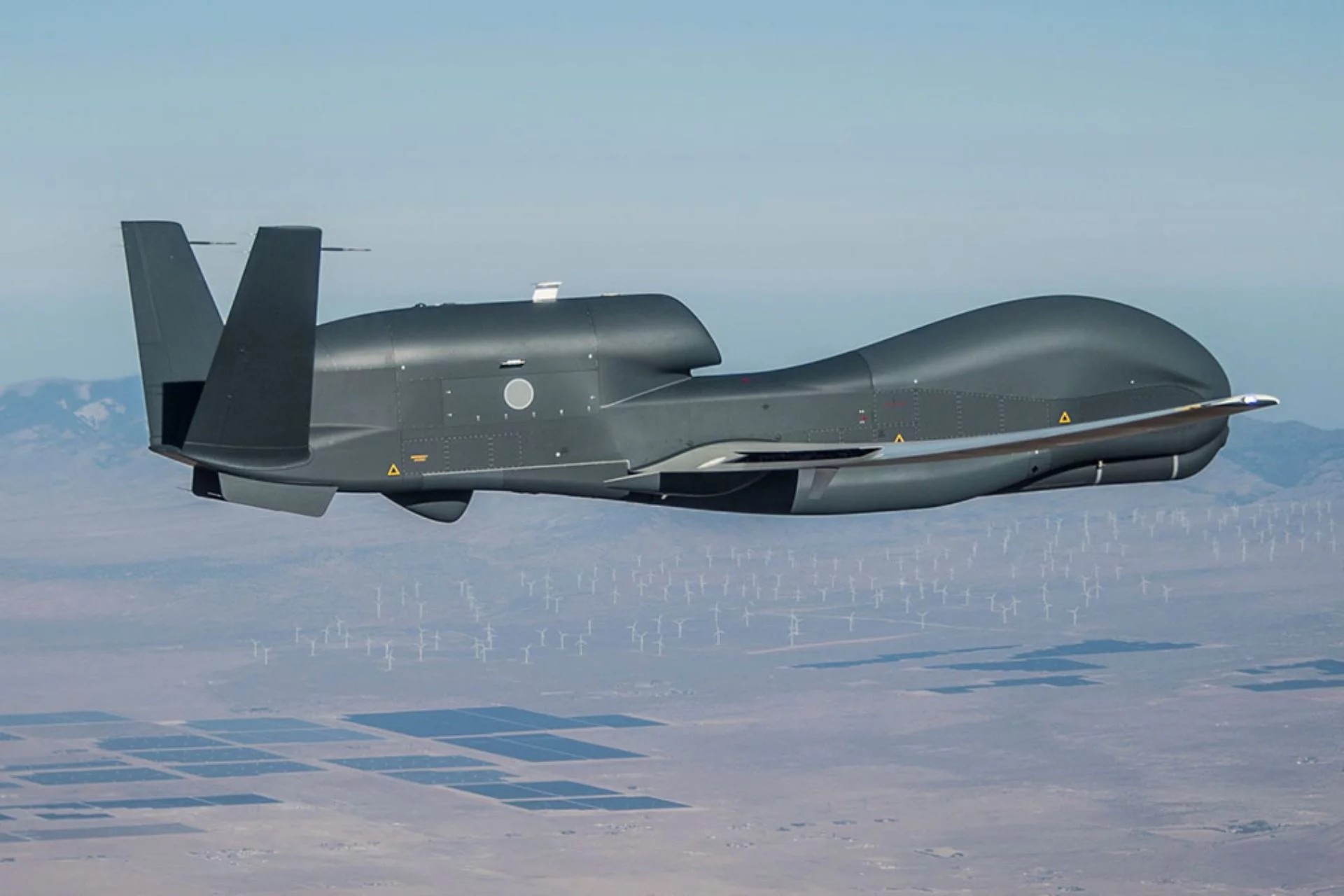
A U.S. Air Force RQ-4B Global Hawk high-altitude reconnaissance drone returned to Sigonella Air Base in Sicily after a nearly 24-hour surveillance mission over the Black Sea on October 25. The flight marks a continuation of Washington’s long-endurance intelligence, surveillance, and reconnaissance (ISR) operations, which resumed in May and continued through the summer.
According to flight-tracking sources, the aircraft—callsign “FORTE10”—flew patterns west of Crimea and along Romania’s coast, consistent with previous mission routes. The sortie represents part of the U.S. High-Altitude Long-Endurance (HALE) ISR coverage restarted after an 11-month pause.
Built by Northrop Grumman, the RQ-4B Global Hawk can reach 60,000 feet (18,300 m) and stay airborne for over 30 hours. It is equipped with the AN/ZPY-2 MP-RTIP AESA radar, electro-optical and infrared sensors, and signal intelligence (SIGINT) payloads. With a maximum takeoff weight of about 14.6 tonnes and a 39.8-meter wingspan, the drone is powered by a Rolls-Royce AE 3007H (F137) engine, cruising at 310 knots.
The Global Hawk transmits data via satellite links, enabling real-time intelligence sharing among NATO allies. Its long-endurance missions enhance visibility over Crimea, occupied eastern Ukraine, and Russia’s coastal regions, providing critical situational awareness to allied forces.
Since 2023, U.S. patrol routes have been shifted farther from Crimea to reduce escalation risks, while the drone’s sensor reach still covers the Sevastopol–Kerch Strait corridor.
According to defense analysts, these missions aim to monitor Russian missile and air-defense activities, support Ukrainian intelligence, and reinforce regional deterrence. U.S. and NATO officials emphasize that flights are conducted strictly in international airspace, maintaining a solid legal basis despite potential Russian objections.
Experts note that the resumption of HALE patrols over the Black Sea significantly improves allied situational awareness, supports stability, and represents a form of deterrence built on persistent observation rather than overt force.
