

Since presidential statements this year, Washington has signaled it is preparing calibrated military options across three distinct regions: the southern Caribbean (near Venezuela), West Africa (Nigeria) and Western Asia (Iraq). Rather than planning large ground invasions, U.S. planners appear to favor coercive, precision capabilities — naval interdiction, stand-off cruise fires and targeted air or special-operations actions — shaped by geography, partner access and legal constraints.
Caribbean: Naval Presence Enables Quick, Limited Pressure
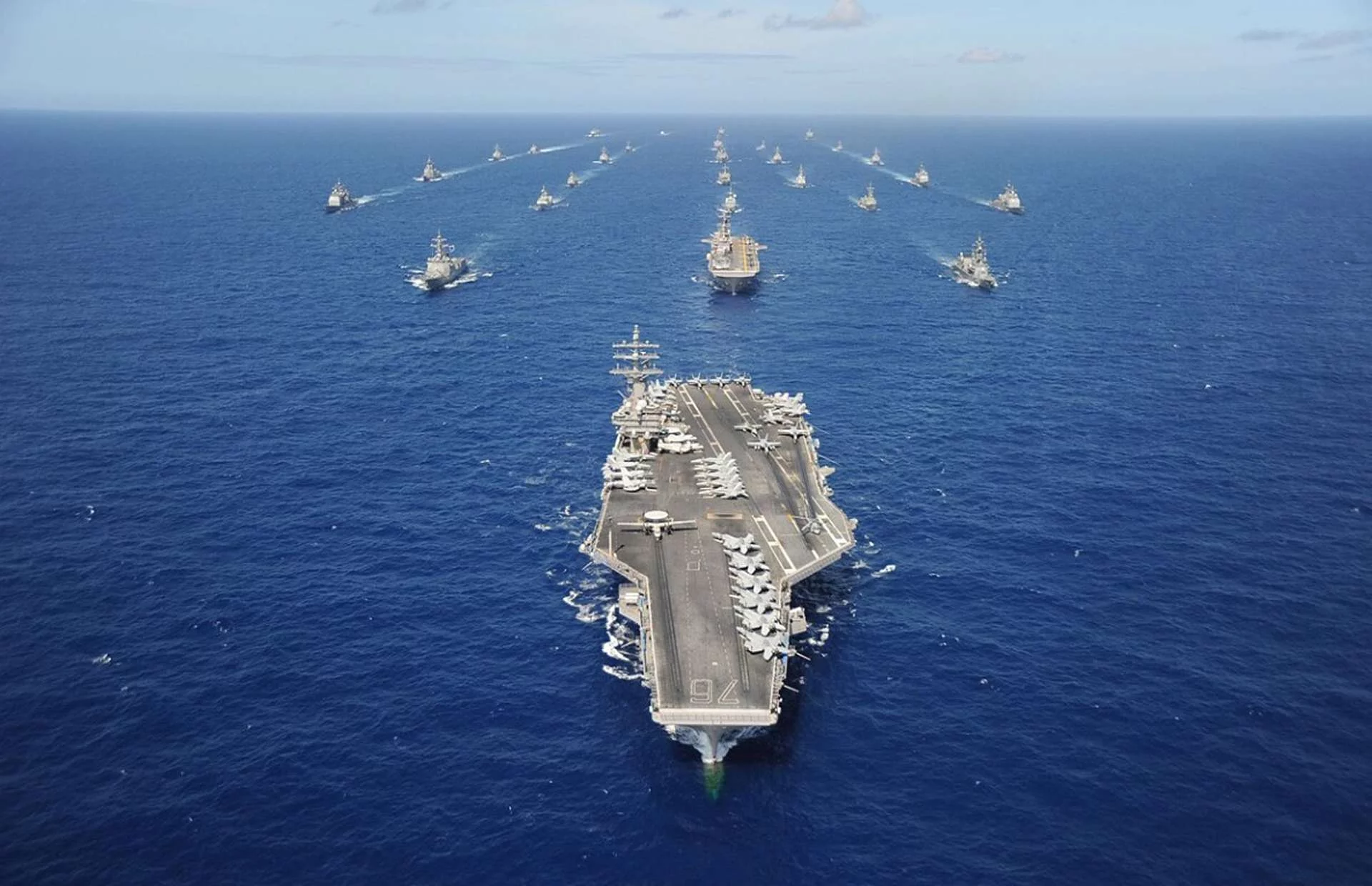
The southern Caribbean presents the most immediate and executable option. Concentrated U.S. naval and air assets in nearby waters create a layered toolkit for maritime interdiction, coastal strikes and limited special operations without deploying large ground forces. Key capabilities that make rapid action plausible include ship-launched cruise missiles, maritime patrol aircraft for targeting and battle-damage assessment, and forward fighters able to project suppression and ISR. The operational approach would likely prioritize disrupting illicit maritime activity, degrading coastal surveillance and striking only validated coastal nodes — a controlled ladder of escalation intended to avoid regime-change objectives.
West Africa: Distance and Access Constrain Options in Nigeria
Nigeria poses a different set of problems. With long logistics lines and fewer nearby U.S. basing options, operations there would be more air-centric and dependent on host-nation permissions. Persistent ISR from remotely piloted aircraft and time-sensitive strikes against armed convoys or mass-atrocity threats are the most credible initial measures — but sustained manned-strike packages or larger deployments require diplomatic access, tankers and staging facilities. That combination of political and logistical friction limits U.S. planners to targeted, partner-enabled interventions rather than rapid expeditionary campaigns.
Iraq: Precision Response Within Political Limits
Iraq remains an area where the U.S. maintains a small but capable footprint and rapid strike options for force protection or counter-militia missions. The likely U.S. playbook emphasizes precise, episodic strikes on command nodes, weapons storage or one-way drone caches after attacks on U.S. personnel, combined with surveillance and advisory support for local forces. Any broader kinetic action would be tightly constrained by Baghdad’s sovereignty and the political cost of expanding operations during an announced consolidation of U.S. forces.
Common Tools and Operational Trade-offs
Across the three theaters, planners rely on a predictable mix: long-range cruise missiles for stand-off strikes, maritime patrol and persistent ISR for target identification, armed remotely piloted aircraft for discriminate engagements, and aerial refueling to extend reach. Each tool’s feasibility is governed by distances (short in the Caribbean, long toward West Africa), partner basing and the need to limit civilian harm. Tanker availability and overflight or basing permissions are decisive variables that can expand or sharply restrict options.
Escalation Management: A Tiered Ladder of Actions
Officials appear to favor clear escalation ladders tailored to each region: start with surveillance and interdiction at sea near Venezuela, then move to disabling coastal defenses or precision strikes only if necessary; in Nigeria, begin with ISR and advisory support, escalating to targeted strikes only with host-nation consent; in Iraq, continue the pattern of retaliatory precision fires linked to specific threats. These calibrated steps are designed to manage political risk, legal exposure and the safety of personnel while preserving reversible pressure.
Risks and Legal Constraints
Any land-attack option raises sovereignty and legal questions, particularly in Venezuela and Nigeria where actions without consent could provoke regional backlash or miscalculation. Civilian protection mandates and the difficulty of identifying dispersed militant networks in Nigeria complicate kinetic choices. In Iraq, expanding strikes without Baghdad’s approval risks undermining local cooperation and accelerating U.S. drawdown plans. Those legal and political constraints are central to why U.S. public messaging emphasizes limited, precision-based options rather than broad invasions.
