

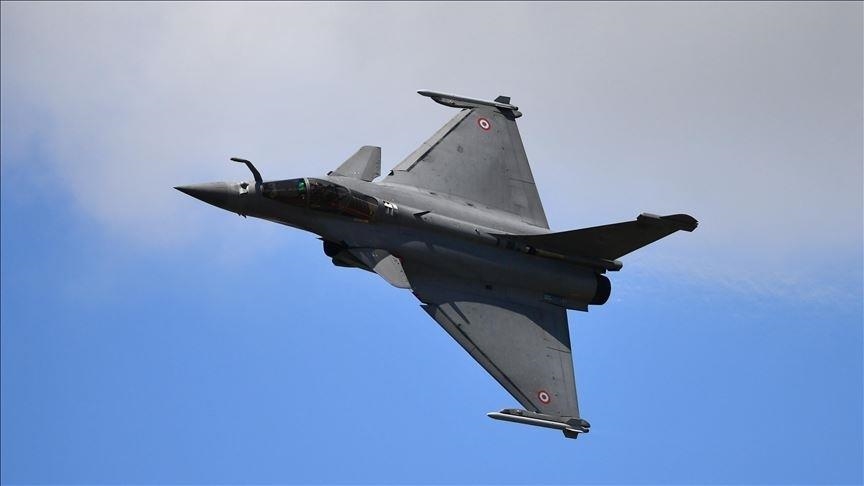
France has marked a significant milestone in its nuclear deterrence posture by completing the first evaluation launch of the upgraded ASMPA-R cruise missile from a Rafale Marine fighter jet. The operation—announced on 13 November by Defence Minister Catherine Vautrin—confirms that France’s carrier-borne air arm now fully parallels its land-based Strategic Air Forces in nuclear strike capability.
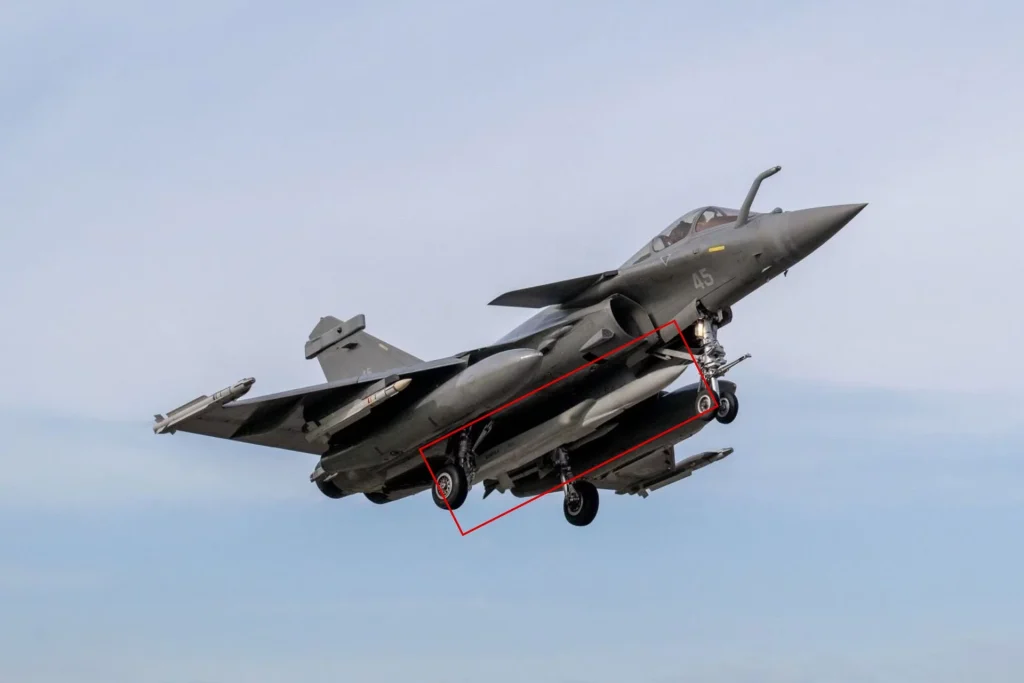
The missile, launched without its nuclear warhead, was tested under Operation Diomede, a demanding mission scenario replicating the profile of a Force aéronavale nucléaire (FANu) raid. The event comes shortly after the ASMPA-R entered frontline service with naval aviation and follows its operational adoption by the Strategic Air Forces in 2023.
The renovated ASMPA-R retains the overall structure of its predecessor but incorporates a new propulsion system, an enhanced inertial navigation chain and a modern thermonuclear warhead estimated at around 300 kilotons. With its range extended to roughly 500 km and its ability to cruise at supersonic speed, the missile offers improved penetration of advanced air defence networks and greater flexibility in approach vectors toward hardened or high-value targets.
The Rafale Marine–ASMPA-R pairing now stands as a fully validated sea-based nuclear vector. Equipped with an AESA radar and the Spectra electronic warfare suite, the Rafale can conduct extremely low-altitude penetration missions under strict emission control while maintaining situational awareness. Operating from the Charles de Gaulle aircraft carrier, the system provides France with a mobile, unpredictable strategic asset that significantly complicates any adversary’s calculations.
Beyond its technical success, Operation Diomede carries geopolitical implications. At a time when discussions around nuclear burden-sharing and deterrence are resurfacing in Europe, France’s demonstration underscores its intention to retain a fully sovereign, modernized and sea-deployable nuclear capability. This autonomy strengthens the resilience of France’s deterrence doctrine and highlights the nation’s ability to sustain a high-end industrial and technological base for sensitive strategic systems.
Looking ahead, the introduction of the Rafale F5 standard and associated combat drones is expected to further reinforce the system’s deep-strike and collaborative combat capabilities. With these developments, France signals that its airborne deterrent—both land-based and carrier-borne—remains a central and enduring pillar of its national security strategy.
