

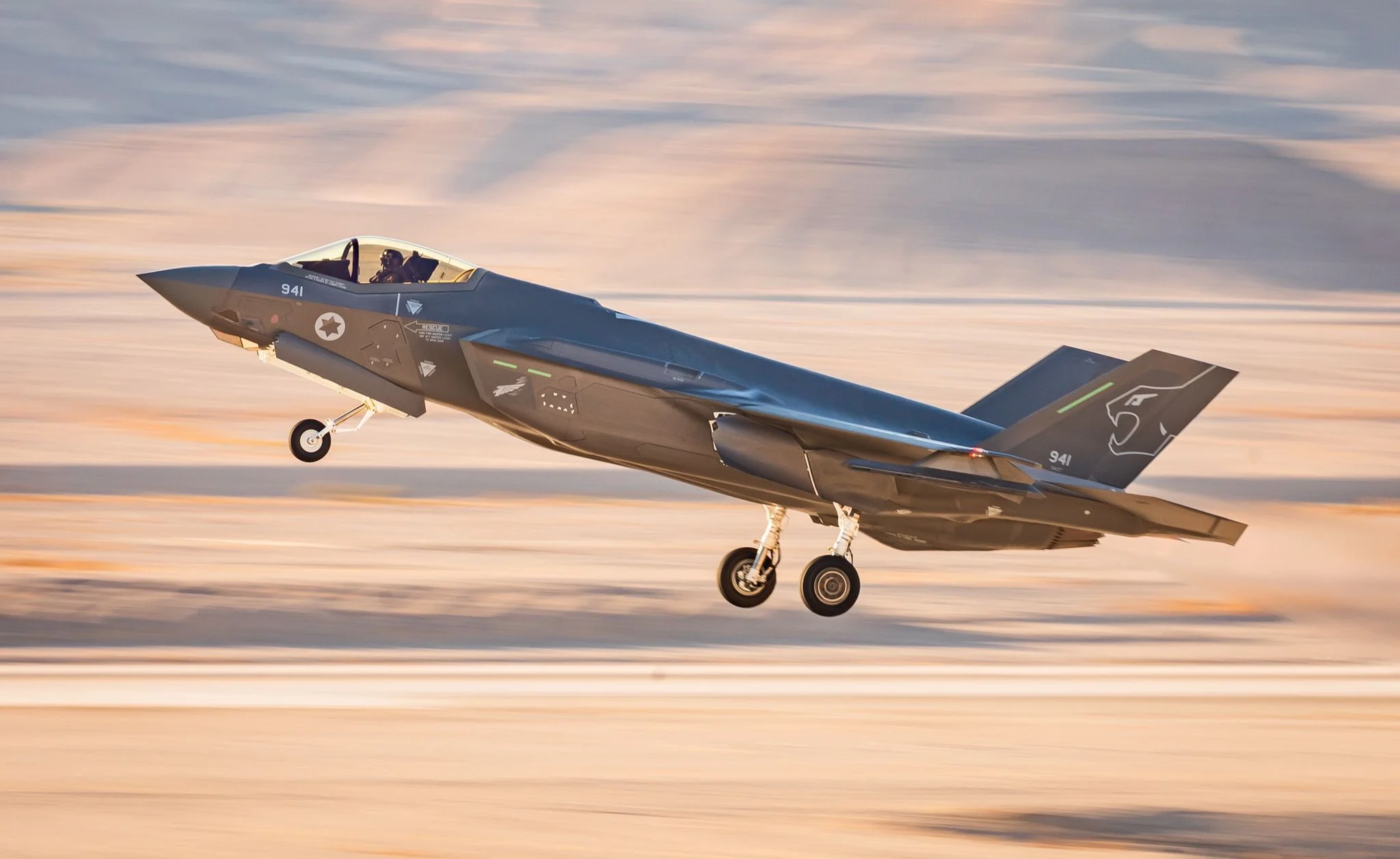
The U.S. Navy has launched a new round of high-intensity carrier landing drills for its F-35C Lightning II pilots at Marine Corps Air Station Iwakuni, according to an early November update shared on its official X account. The training phase underscores the growing operational integration between U.S. and Japanese forces at a time when security tensions in the region continue to escalate.
Service officials confirmed that the forward-deployed F-35C fleet in Japan has begun a demanding cycle of Field Carrier Landing Practice (FCLP). The drills replicate the rhythm and precision of real aircraft carrier recoveries, giving pilots the chance to rehearse the exact maneuvers required before returning to flight decks at sea.
Images released by the Navy show F-35Cs conducting taxi operations, flying tight low-altitude patterns, and executing repeated approaches onto marked arresting zones. Although the runway at Iwakuni is fixed, the procedures, communications and visual cues mirror the unforgiving conditions of carrier landings. FCLP remains a mandatory milestone before pilots embark on operational carriers.
This training cycle comes only months after two Marine Corps F-35B squadrons arrived at Iwakuni in May 2025. Their deployment is part of a broader U.S. effort to strengthen its posture near critical hotspots such as the Taiwan Strait and the East China Sea.
The F-35C, the Navy’s carrier-optimized variant of the Joint Strike Fighter, features expanded wings, reinforced landing gear, and increased fuel capacity for extended range. Combined with its stealth profile and advanced sensors, the aircraft significantly enhances the striking power of carrier air wings in contested operational environments.
Field Carrier Landing Practice is essential for teaching pilots precision tasks such as glide slope control, accurate lineup, and energy management while coordinating with ground and deck crews. Conducting this training routinely in Japan ensures pilots remain fully prepared to integrate with carrier strike groups already operating across the Indo-Pacific.
The strategic relevance of these drills is heightened by China’s expanding military presence across the East and South China Seas and its increasing activity near Taiwan, often in coordination with Russian naval forces. In response, the U.S. continues to emphasize forward presence, rapid deployment readiness, and integrated operations with Japanese partners.
MCAS Iwakuni now serves as a major hub for bilateral missions and joint air-maritime defense scenarios. Cooperation between U.S. and Japanese forces increasingly includes intelligence exchange, joint targeting rehearsals, and enhanced base security operations aligned with Japan’s updated National Defense Strategy.
For U.S. Navy F-35C pilots, the latest round of FCLP is more than a routine qualification—it demonstrates advanced readiness, sharpened tactical skill, and an operational tempo tailored for an Indo-Pacific region defined by great-power rivalry.
