
Anduril Industries and South Korea’s HD Hyundai Heavy Industries have formed a strategic partnership to develop a new generation of modular Autonomous Surface Vessels (ASVs) that will support the U.S. Navy’s vision for a distributed, software-defined future fleet. The initiative comes at a critical time as China rapidly expands its naval forces and Russia continues exerting pressure in contested maritime regions.
Announced on 13 November 2025, the agreement brings together Hyundai—one of the world’s most experienced commercial shipbuilders—and Anduril, a leading U.S. defense technology company known for its software-driven autonomy systems. Although program details remain limited, the collaboration is expected to accelerate the Navy’s transition toward modular unmanned platforms such as the Modular Attack Surface Craft (MASC).
Modular Design With Multi-Mission Flexibility
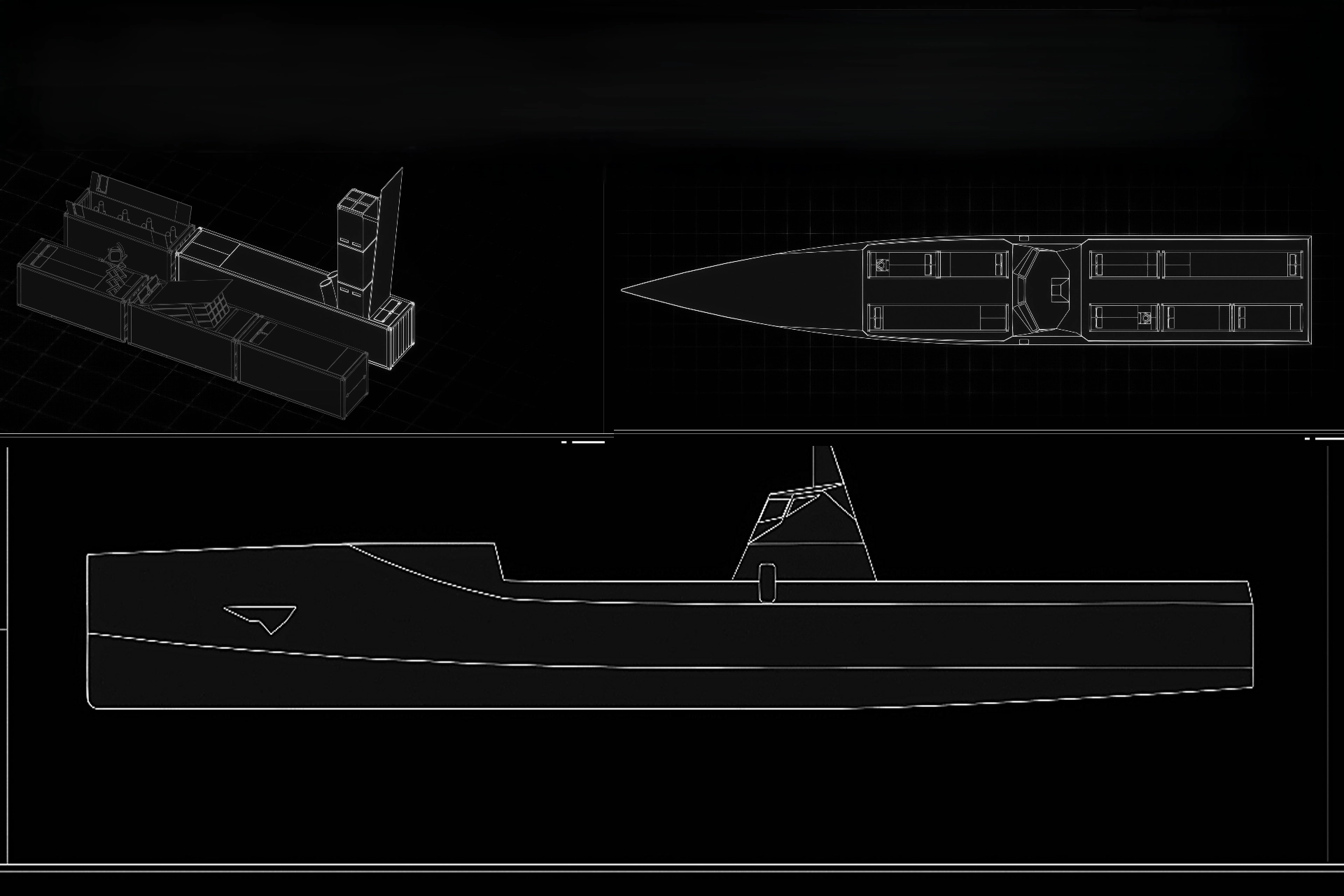
The new ASV family is being developed as a durable, steel-hulled platform suitable for both military and commercial use. Its open-architecture layout supports interchangeable, containerized payloads, enabling rapid configuration for missions including ISR, strike, electronic warfare, anti-submarine warfare and contested logistics.
Propulsion, navigation and mission systems are centrally managed through Anduril’s autonomy software core, allowing the vessels to operate as networked, upgradable platforms throughout their life cycle.
Faster Production, Lower Lifecycle Costs
Unlike traditional surface combatants that require long lead times and large crews, the Anduril-Hyundai design emphasizes scalable production and affordable lifecycle management. By integrating commercial shipbuilding processes with defense-grade modularity, the program aims to deliver more platforms in less time—critical for narrowing the production gap with China’s shipyards.
Strategic Impact and First Prototype
As China grows its fleet at a rate estimated to be three times faster than U.S. output and Russia maintains pressure in the Black Sea and Arctic, the need for a more distributed and resilient autonomous fleet has become increasingly urgent.
To support this vision, Anduril plans to reactivate Seattle’s historic Foss Shipyard as a U.S.-based assembly and testing hub. The first prototype, currently under construction by Hyundai in Korea, will validate the vessel’s design, propulsion architecture and autonomy integration before full-scale American production begins.
This partnership marks a decisive shift in naval acquisition—moving from bespoke, heavily manned warships to scalable, modular, software-defined fleets. If successful, the ASV program could redefine how the United States and its allies generate naval power in contested maritime environments.
