

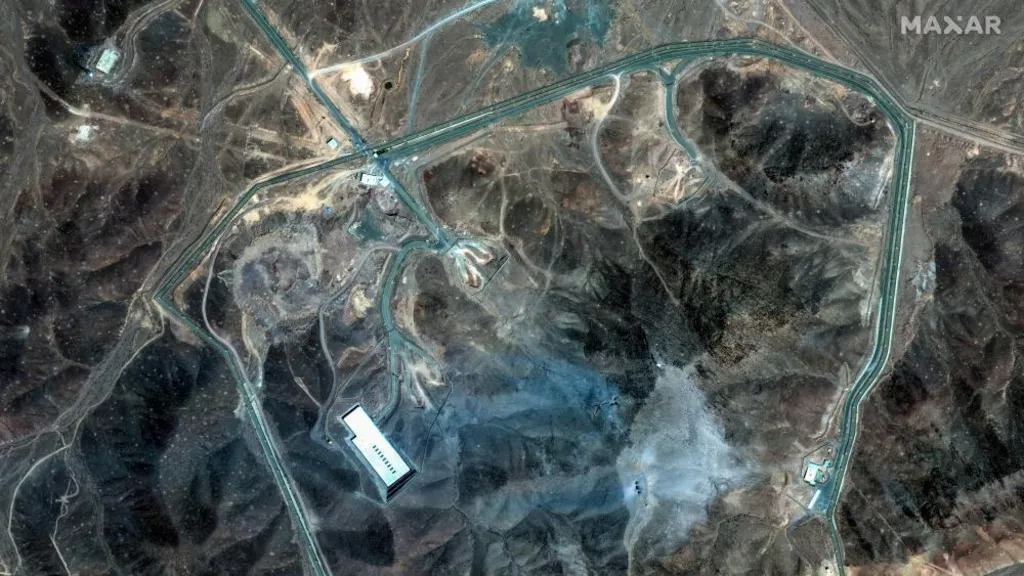
In a bold escalation of military involvement in the Middle East, the United States has officially entered the Israel-Iran conflict with a strategic and high-impact strike targeting Iran’s most fortified nuclear site — the Fordo Fuel Enrichment Plant. Utilizing next-generation GBU-57 “bunker buster” bombs, the operation marked a pivotal moment in regional tensions, signaling Washington’s willingness to employ deep-strike capabilities previously reserved for last-resort scenarios.
The Target: Iran’s Impenetrable Underground Fortress
Located near the holy city of Qom and buried beneath nearly 80 meters of rock, the Fordo facility has long been viewed as a symbol of Iran’s nuclear ambitions — and one of its most invulnerable assets. Constructed deep within a mountain and shielded by advanced air defense systems, the site was considered beyond the reach of conventional airstrikes.
That is, until now.
The United States, reportedly after a week of high-level coordination with Israeli intelligence and in response to sustained attacks on Iranian military assets, launched a surprise precision assault using B-2 Spirit stealth bombers armed with Massive Ordnance Penetrator (MOP) bombs — known as the most powerful non-nuclear weapons in the U.S. arsenal.
What Is the GBU-57 A/B Bunker Buster?
The GBU-57 A/B, nicknamed the “bunker buster,” is a 30,000-pound bomb designed to punch through hardened underground structures. Capable of penetrating up to 200 feet of concrete or earth, it is tailor-made for facilities like Fordo. Only the B-2 Spirit — the U.S. Air Force’s elite stealth bomber — is equipped to carry and deploy this massive weapon.
The bombs are believed to have been released in rapid succession to drill deeper into the mountain, maximizing destructive potential. Though the exact number of bombs used in Sunday’s strike remains classified, officials confirmed that multiple waves were deployed.
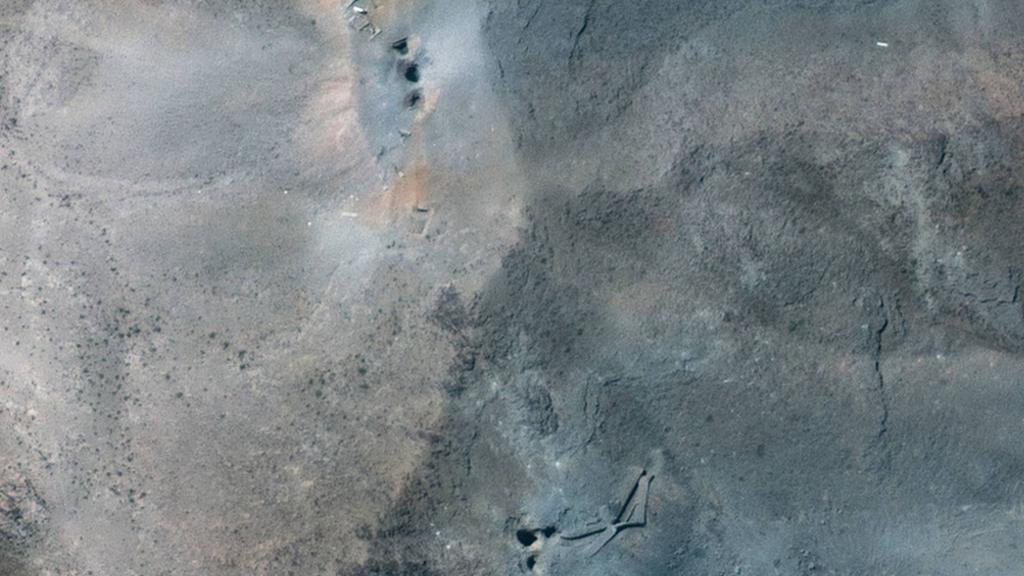
Stealth and Speed: The Power of the B-2 Spirit
The B-2 bombers took off from Whiteman Air Force Base in Missouri and flew an 18-hour mission, aided by refueling aircraft and escorted by stealth fighters. Capable of delivering devastating payloads while remaining undetected by radar, the B-2s carried out their mission without triggering Iran’s air defense systems — many of which had already been weakened during earlier Israeli strikes.
Military analysts say this is the first time the GBU-57 has been used in combat, marking a historic moment in modern aerial warfare.
Strategic Timing and Political Implications
The operation, dubbed Operation Silent Resolve, comes just days after U.S. President Donald Trump indicated he would delay a decision on military involvement to allow diplomatic avenues to continue. However, the sudden reversal and rapid execution of the mission suggest that internal intelligence assessments may have pushed Washington to act before Iran could regroup.
The strike also complicates any future negotiations over Iran’s nuclear program, as Tehran now views direct U.S. involvement as an act of war. While American officials maintain that the operation aimed solely to degrade Iran’s weapons production capacity, Iran has already vowed retaliation.
Radiation Risks? Experts Weigh In
Despite public concern, the International Atomic Energy Agency (IAEA) reported no immediate signs of radioactive leakage from the Fordo site. However, the organization confirmed that highly enriched uranium was being stored at the facility at the time of the strike, raising long-term concerns about regional contamination and escalation.
What Comes Next?
While the Pentagon has declared the mission a success, the geopolitical consequences are only beginning to unfold. Questions remain: Will Iran strike back directly at U.S. assets? Can this lead to a broader regional war? And will diplomatic channels remain open after such a significant breach?
In the words of one senior defense official, speaking anonymously:
“This was not just a military message — it was a geopolitical warning shot.”
As global leaders call for de-escalation, one thing is certain: The Fordo strike has changed the rules of engagement in the Middle East — perhaps permanently.
