

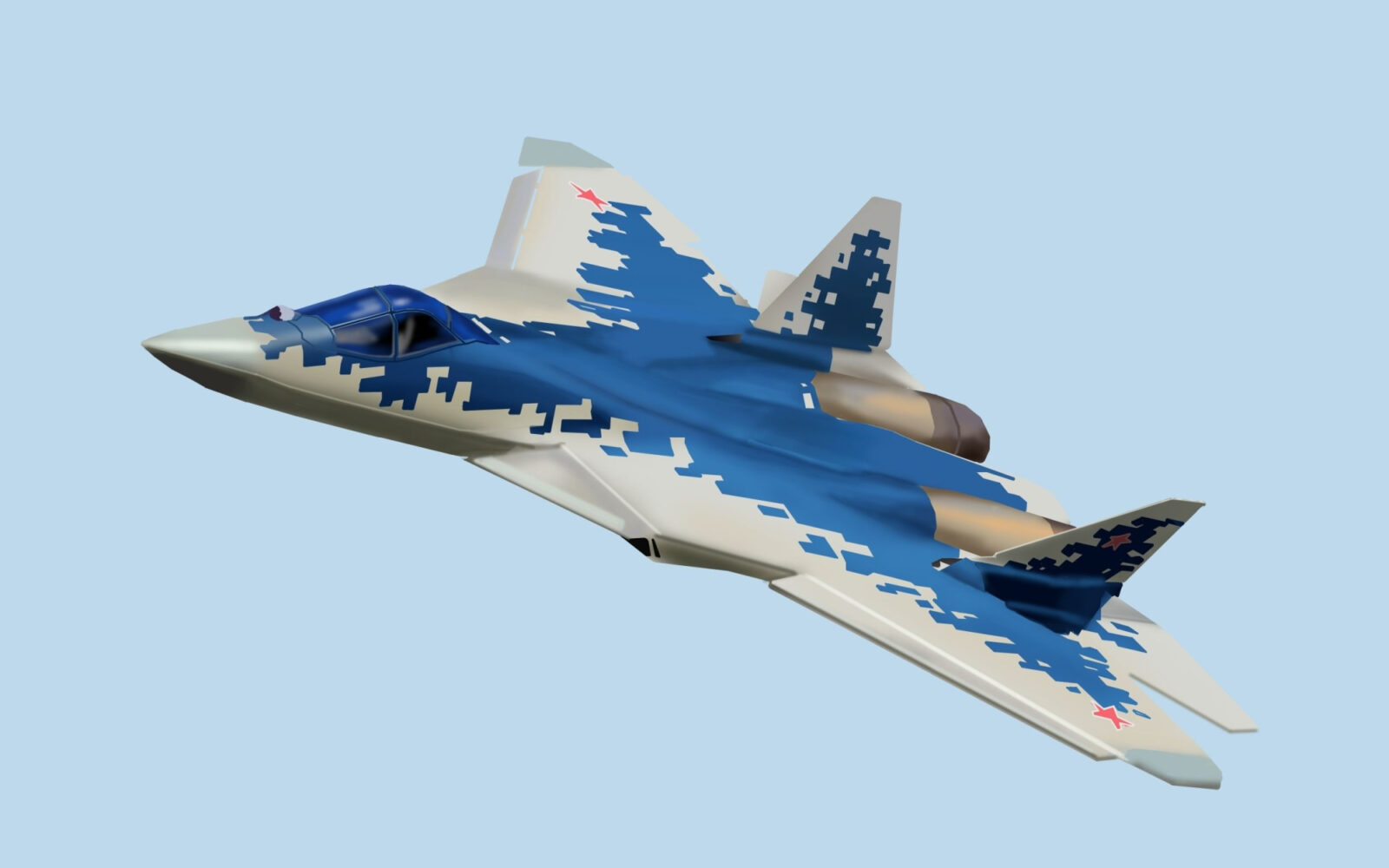
Russia has officially launched the export phase of its Su-57E fifth-generation fighter, marking the first known foreign delivery of the aircraft. United Aircraft Corporation (UAC) CEO Vadim Badekha confirmed at the Dubai Airshow 2025 that two Su-57E jets were handed over to an undisclosed customer and are already in operational service.
“They have entered combat duty and are demonstrating their best qualities. Our customer is satisfied,” Badekha stated.
Shift Toward Aggressive Export Strategy
The Su-57E is the export version of Russia’s Su-57, which has seen limited operational use in Syria and Ukraine. The delivery reflects Russia’s growing push to promote high-end platforms internationally as domestic financial pressures intensify.
UAC previously noted that stable serial production is now enabling more assertive marketing efforts abroad. The company also framed the Su-57 program as a demonstration of technological sovereignty:
“A fifth-generation fighter proven in real combat is evidence of the advanced technological capabilities our country possesses.”
Buyer Remains Unidentified
While the purchasing country has not been revealed, the timing aligns with significant strain on Russia’s state-owned defense industries. Government-imposed fixed-price procurement and war-related production demands have created liquidity challenges, prompting contractors—particularly those linked to the Su-57 program—to seek export orders to sustain production lines and secure working capital.
Capabilities of the Su-57E
Although the exact export specifications have not been disclosed, analysts report that the delivered aircraft are close in configuration to Russia’s frontline variant. Key features include:
- low-observable design
- supercruise capability
- advanced avionics suite
- broad air-to-air and air-to-ground weapons compatibility
The first export delivery is seen as a strategic milestone for Moscow, signalling a more outward-facing posture for its premier stealth fighter and a bid to stabilize its high-end aerospace industry amid wartime constraints.
