

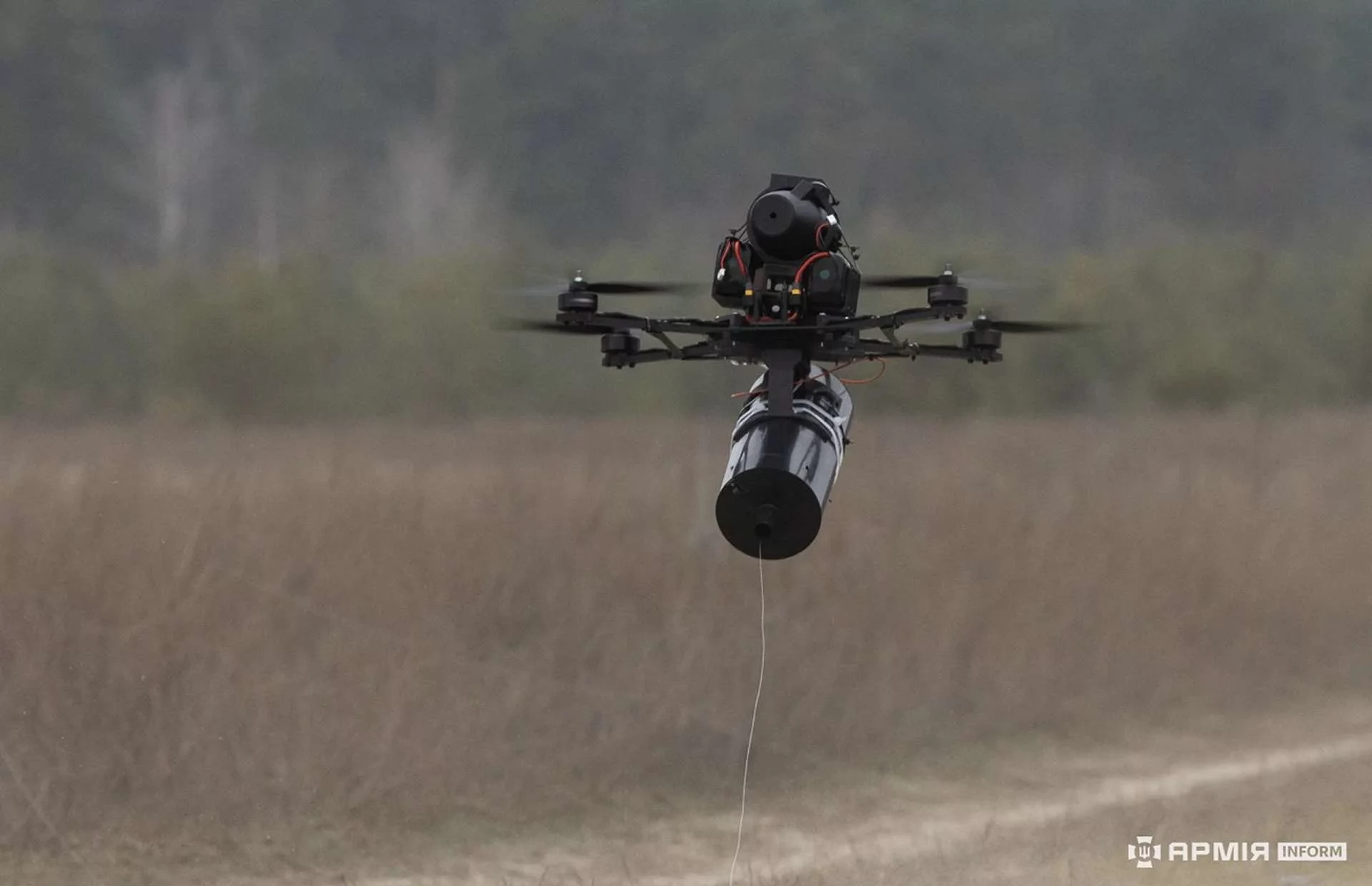
The U.S. Federal Bureau of Investigation has issued a new Request for Information for an unmanned aircraft system that operates entirely through a fiber optic tether, eliminating the need for radio communication. The effort reflects a broader federal shift toward jam-resistant, NDAA-compliant drones as agencies confront growing counter-UAS threats.
According to the U.S. Department of Justice’s contracting portal, the solicitation—listed as RFI2025001—was posted on November 20, 2025. The FBI is seeking a drone that maintains a full physical fiber optic link between the aircraft and the ground control station. The notice sets no limits on airframe size, class, or performance, signaling an intentionally wide net for potential vendors.
FBI teams have already begun evaluating such radio-free drones, which can operate securely inside buildings, reinforced structures, and areas saturated with electronic jamming.
Procurement summaries indicate that industry responses due in December will help refine requirements and identify qualified manufacturers. The only hard criteria are fiber optic control, NDAA compliance, and openness to submissions from both small and large companies.
Parallel to this effort, the Bureau is pursuing a separate requirement for a rugged RF-controlled quadcopter with 30 minutes of endurance—suggesting a future mixed fleet: conventional drones for routine surveillance and fiber-linked systems for the most sensitive, contested, or RF-denied missions.
Fiber optic control replaces vulnerable radio links with a lightweight cable that carries commands and high-bandwidth video through pulses of light. Because no RF energy is emitted, standard electronic warfare tools cannot jam, track, or intercept the signal—making physical damage the only way to break the link.
The system’s limitations include added weight and the risk of snagging on urban obstacles. Yet battlefield experience in Ukraine shows that current fiber-linked FPV drones operate effectively between 10 and 25 km, with ongoing development pushing toward 50 km. Ukrainian officials describe these platforms as “effectively immune to jamming.”
For the FBI, the tactical benefit is clear. Border officials report that cartel groups increasingly use counter-drone jammers along key smuggling routes. Fiber-controlled drones would allow FBI SWAT and the Hostage Rescue Team to push sensors into tunnels, ships, hangars, subway infrastructure, or barricaded buildings without losing control.
The Bureau has previously considered small drone-mounted non-lethal payloads for hostage scenarios, and a fiber-linked platform could support such missions even in heavy jamming environments.
The NDAA-compliance requirement also aligns with U.S. policy removing Chinese-made DJI and Autel drones from federal use. This shift mirrors the Pentagon’s “Blue UAS” program promoting domestically made systems.
U.S. law enforcement is already familiar with tethered drones like Fotokite, used for persistent overwatch from police and fire vehicles. The FBI’s envisioned fiber system, however, would be a free-flying drone capable of maneuvering through complex terrain while trailing its tether.
The same fiber-optic drones that are reshaping electronic warfare in Ukraine are now influencing domestic procurement in the United States. If the FBI’s RFI evolves into a funded program, it will create a new market for NDAA-compliant, unjammable fiber-linked drones—and provide a real-world testbed for how such systems can be used or countered in urban environments.
