

Australian counter-UAS manufacturer DroneShield has secured a new $5.2 million handheld C-UAS order from a European military customer, placed through its long-standing regional reseller. The deal adds to DroneShield’s rapidly expanding European portfolio and follows a record-breaking $61.6 million contract signed in June 2025 with the same end user.
All systems included in the contract are off-the-shelf, with delivery and full payment scheduled for Q4 2025. The company’s European reseller has now placed 12 contracts worth more than $70 million, indicating that the customer has moved well beyond limited trials and is shifting toward routine fielding and unit-level distribution.
Integrated Detection and Defeat: RfPatrol Mk2 and DroneGun Mk4
While DroneShield did not disclose the exact configuration, recent European deliveries have centered around the Immediate Response Kit (IRK), which includes:
📡 RfPatrol Mk2 – Ultra-Light Passive UAS Detector
- Approx. 800 g
- IP67-certified rugged design
- 360° passive detection of drone control links
- Interchangeable antennas covering wide RF bands
- Up to 8 hours continuous operation
- NATO-compatible battery format
- Ideal for dismounted patrols and military police units
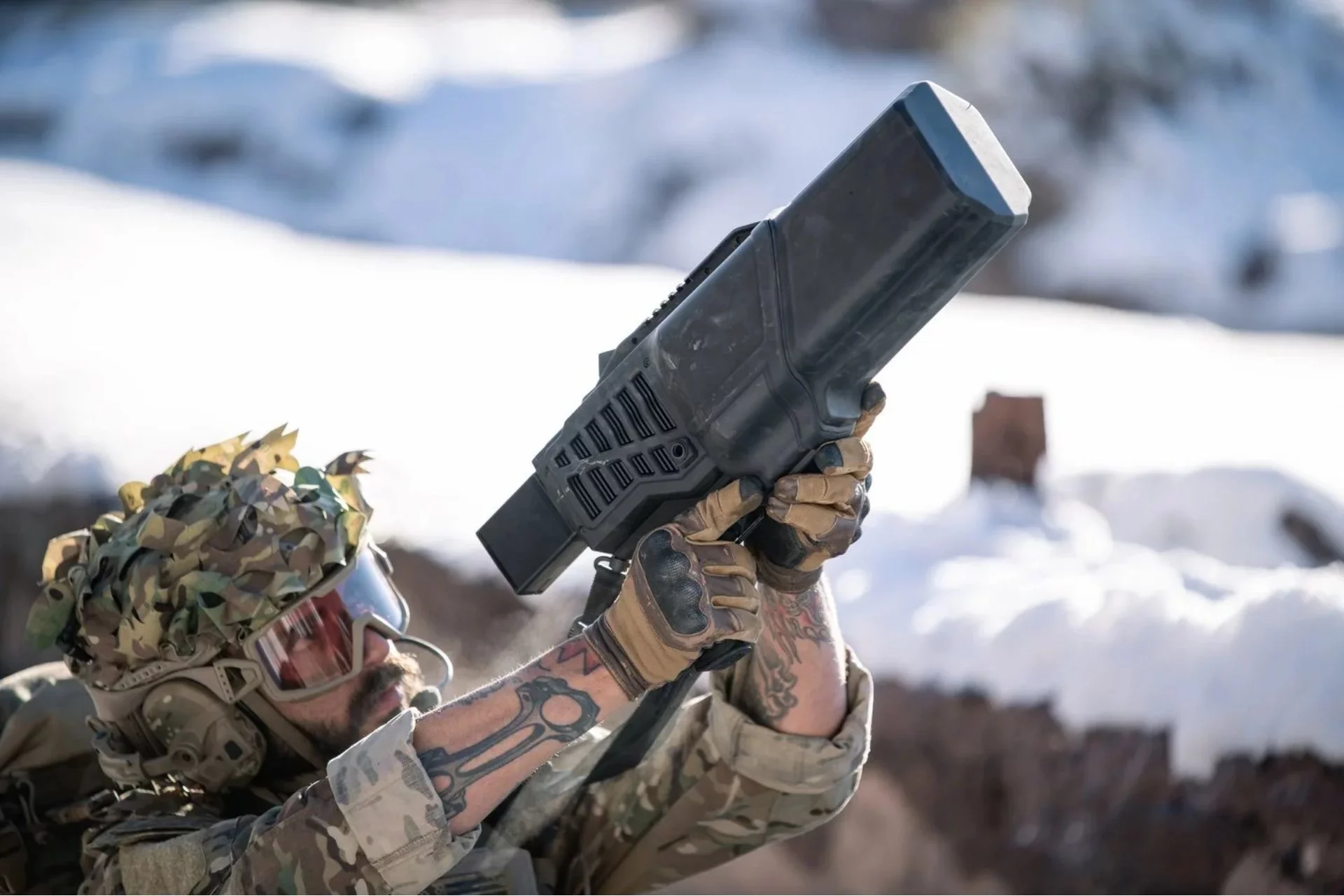
🔫 DroneGun Mk4 – Handheld Counter-Drone Jammer
- Around 3.2 kg, including battery
- Disrupts ISM bands and GNSS signals
- <3 seconds start-up time
- Over 1 hour of aggregate jamming
- Picatinny mounting points and LED indicators
- Up to 1 km effective range depending on terrain and signal conditions
The combination allows frontline units to detect incoming drones early using RfPatrol Mk2 and neutralize them with DroneGun Mk4 by severing command, navigation, and video feeds. This non-kinetic defeat method is especially vital around ammunition depots, fuel storage, and airports where debris from kinetic interceptors poses risks.
Europe’s Drone Battlefield Is Expanding
From the daily drone exchanges between Russian and Ukrainian forces to non-state actors using commercial drones near infrastructure sites, the European security environment is rapidly changing.
EU initiatives such as ReArm Europe and Readiness 2030 prioritize air defense and counter-drone capabilities as part of a continent-wide push to rebuild stockpiles and harden critical locations.
Repeated C-UAS purchases from the same European customer suggest the emergence of a reference architecture for distributed handheld counter-drone equipment within at least one NATO member or partner force. As European militaries integrate jammers, sensors, and C2 networks into layered defense systems, each new tranche raises the operational cost for adversaries relying on small drones.
