

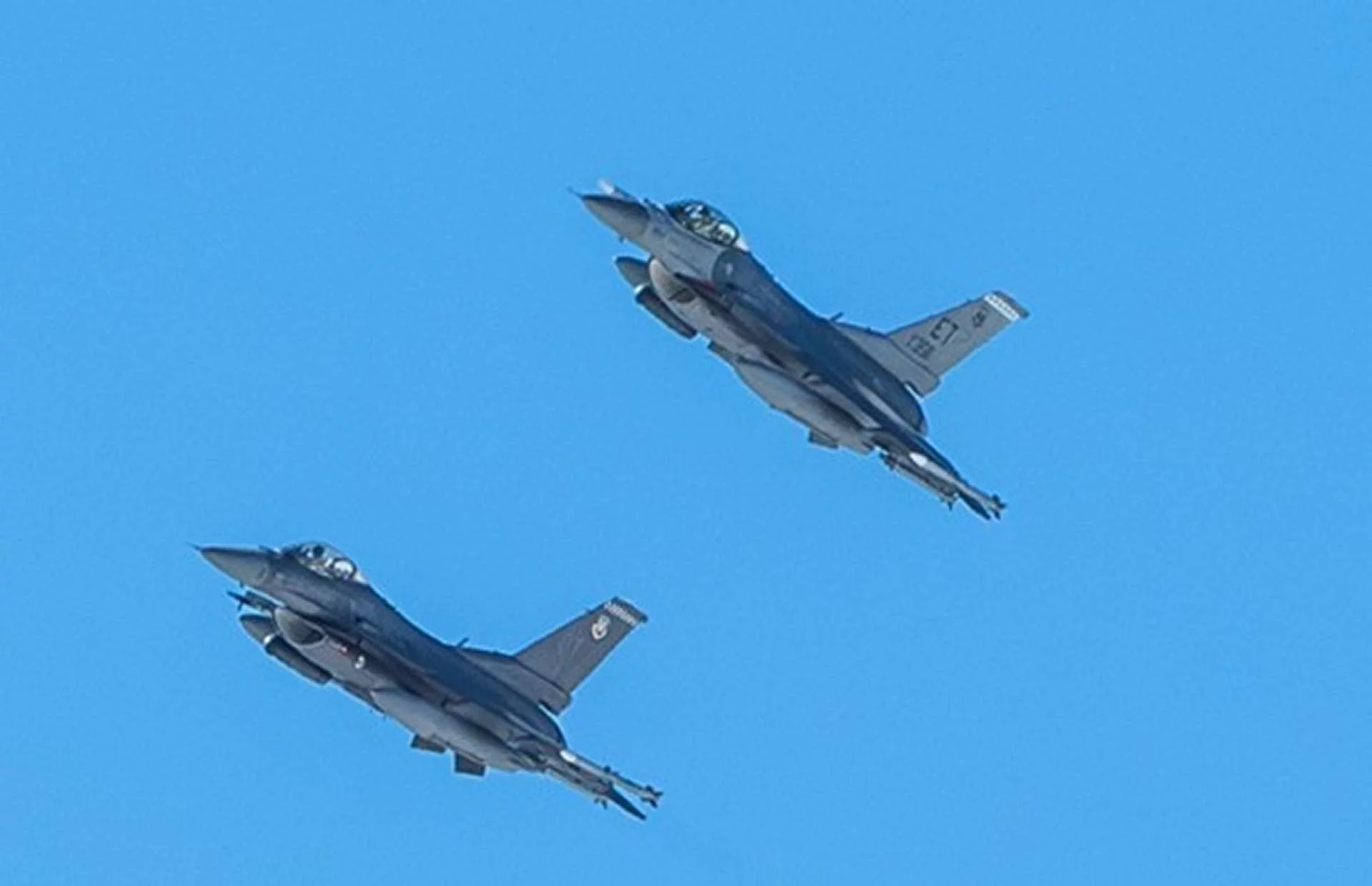
Northrop Grumman has completed the full integration of the AN/ALQ-257 Integrated Viper Electronic Warfare Suite (IVEWS) with the AN/APG-83 SABR AESA radar on U.S. Air Force F-16s. The merged architecture allows the Viper to search, jam, and track within the same spectral window—sharply improving the fighter’s survivability in contested, near-peer environments.
IVEWS is a digital, ultra-wideband system combining a new radar warning receiver, an EW-optimized processor, and high-power transmitters sized specifically for the limited nose and wing-root spaces of the F-16. The suite can detect, classify, geolocate, and counter the latest radio-frequency threats, including millimeter-wave engagement radars used by modern surface-to-air missile systems.
The real breakthrough is how the jammer and radar now operate simultaneously. IVEWS and SABR coordinate pulse-by-pulse in real time, ensuring each waveform knows which part of the spectrum the other is occupying. This eliminates the traditional need to “blank” the radar during jamming, preventing the loss of situational awareness. As a result, an F-16 can perform high-resolution SAR mapping or multi-target tracking while IVEWS actively denies enemy fire-control radars.
Derived from technologies in the F-22’s APG-77 and the F-35’s APG-81, the APG-83 radar provides long-range detection, GMTI capability, detailed SAR imagery, and advanced maritime modes with far greater reliability than older mechanically scanned radars. It is now the primary radar for the USAF’s F-16 modernization program and the baseline sensor for new Block 70/F-16V aircraft worldwide.
IVEWS underwent extensive development and testing, including integration work at J-PRIMES and evaluations during Northern Lightning 2021. More than 70 sorties and several hundred flight hours in dense electromagnetic environments followed, leading to its approval as a program of record. Additional congressional funding accelerated production to meet urgent operational needs in the Middle East.
Combined, IVEWS and SABR transform the F-16 into a platform capable of conducting its own penetration and escort missions rather than relying solely on offboard jamming. The suite can rapidly sort mobile and adaptive emitters while still feeding a clean radar picture to the cockpit and the Link 16 network—sharpening SEAD operations by improving target accuracy for HARM missiles, decoys, and long-range weapons.
With hundreds of F-16s in service across Europe, the Middle East, and the Indo-Pacific, the upgrade path is strategically significant. Turkey has already become the first major international buyer with plans to equip over 150 aircraft. Other nations are exploring the integrated U.S. solution as electronic threats evolve rapidly. The same modular EW technology is also migrating to platforms like the Army’s HADES ISR aircraft and unmanned systems, offering export potential beyond fighter self-protection.
