

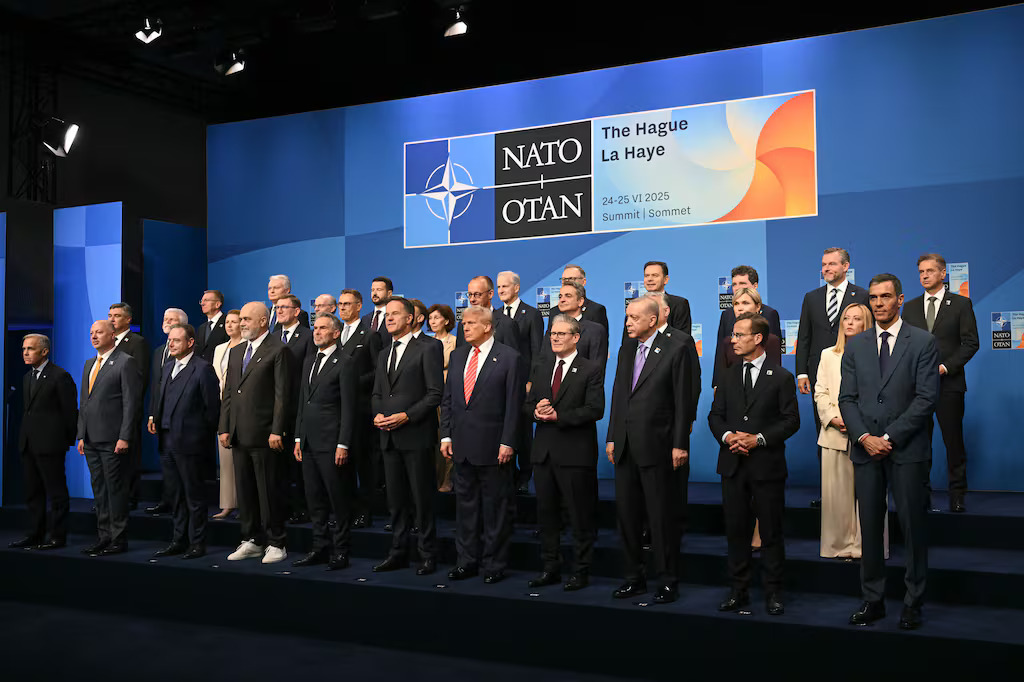
According to NATO Secretary-General Mark Rutte’s statement on Wednesday at the summit in The Hague, NATO allies have agreed to increase their defense spending to 5% of GDP following a vote by all 32 member countries.
As part of the agreement, member states committed to allocating at least 3.5% of their GDP to “core defense requirements,” raising the bar from the previous 2% target. At a press conference after the two-day summit, Rutte emphasized that U.S. President Donald Trump played a significant role in achieving this result, stating that such an increase would not have happened without him. Trump has long criticized NATO members in Europe and Canada for not spending enough on defense, and has previously suggested that the U.S. might not uphold its mutual defense commitments under NATO if those countries did not increase their efforts. As recently as two years ago, most NATO countries had still failed to meet the 2% goal set at the 2014 Wales Summit.
“All allies are united in the understanding that we need to step up to stay safe,” said Rutte, adding that European countries and Canada will now share greater responsibility for collective security.
Rutte stated that Trump had been clear and consistent in his commitment to NATO, once again affirming this at the summit. At the same time, he stressed that the U.S. expects increased contributions from Europe and Canada. While reiterating that NATO’s Article 5 — the mutual defense clause — is “absolutely clear,” Rutte noted that no specific details are disclosed about what might trigger it, so as not to give strategic advantages to adversaries.
Before departing for Washington, Trump struck a more conciliatory tone in his press briefing, a notable shift from his previous harsh rhetoric, and sought praise for the spending boost. “I came here thinking it was just something I was supposed to do,” Trump said, but noted that after hearing the patriotic messages of fellow alliance members, his view changed.
“It’s not a rip-off,” he said, momentarily putting aside his long-standing complaint that Europeans were taking advantage of the U.S. “We will help them protect their countries.”
According to Rutte, the U.S. has been asking its allies to increase defense spending since the 1950s, and the agreement reached in The Hague is crucial for NATO’s stability. He pointed to growing threats from Russia and China’s “impressive military buildup” as major drivers behind the need to strengthen the alliance.
Rutte stated that Russia poses both a short- and long-term threat to NATO. Intelligence assessments suggest that Russia could be in a position to launch an attack against NATO within the next three to seven years. “The threat is real, and we must ensure we are capable of defending ourselves,” he said.
Trump had called for 5% of GDP to be allocated to defense. The agreement reached in The Hague balances this request by allocating 3.5% to core defense tasks and 1.5% to supportive efforts such as infrastructure and cybersecurity.
“These decisions will have a profound impact on our ability to do what NATO was founded to do: deter and defend,” said Rutte.
The U.S. is already meeting the required level for core defense spending. With additional investments in infrastructure, cyber threats, hybrid warfare, and the defense industrial base, the U.S. is contributing close to the full 5%, Rutte added.
“Trump was completely right; Europe and Canada were not contributing enough to the alliance,” said Rutte. Trump, speaking alongside Rutte in a joint press conference, described the spending increase as “a great victory for everybody.” He added, “We’ll be equalized very soon — and that’s the way it should be. It’s going to be a lot of money, a lot of defense.”
Rutte said the additional funding will go toward air defense systems, ammunition, drones, tanks, and troops. He also noted that NATO must expand defense industrial capacity on both sides of the Atlantic, potentially creating millions of new jobs across the alliance.
“We need both quality and quantity,” the secretary-general said. “We need to innovate, and we need to act fast.”
Some countries, including Spain and Belgium, have expressed concerns about the 3.5% target. Rutte noted that Spain believes it can meet NATO’s capability targets with just 2.1% of GDP. He said that each member will report on how they intend to meet these goals, and NATO will conduct a full review of progress in 2029.
Spain, which ranked last in NATO last year with an estimated 1.3% of GDP spent on defense, has long been among the alliance’s lowest spenders.
In his post-summit remarks, Trump harshly criticized Spain for requesting an exception to the 5% target. He suggested offsetting the spending gap with trade arrangements that favor the U.S.
Rutte also noted that NATO allies have pledged over €35 billion ($41 billion) in aid to Ukraine so far this year and said he expects the total support in 2025 to surpass last year’s figure of more than €50 billion.
