

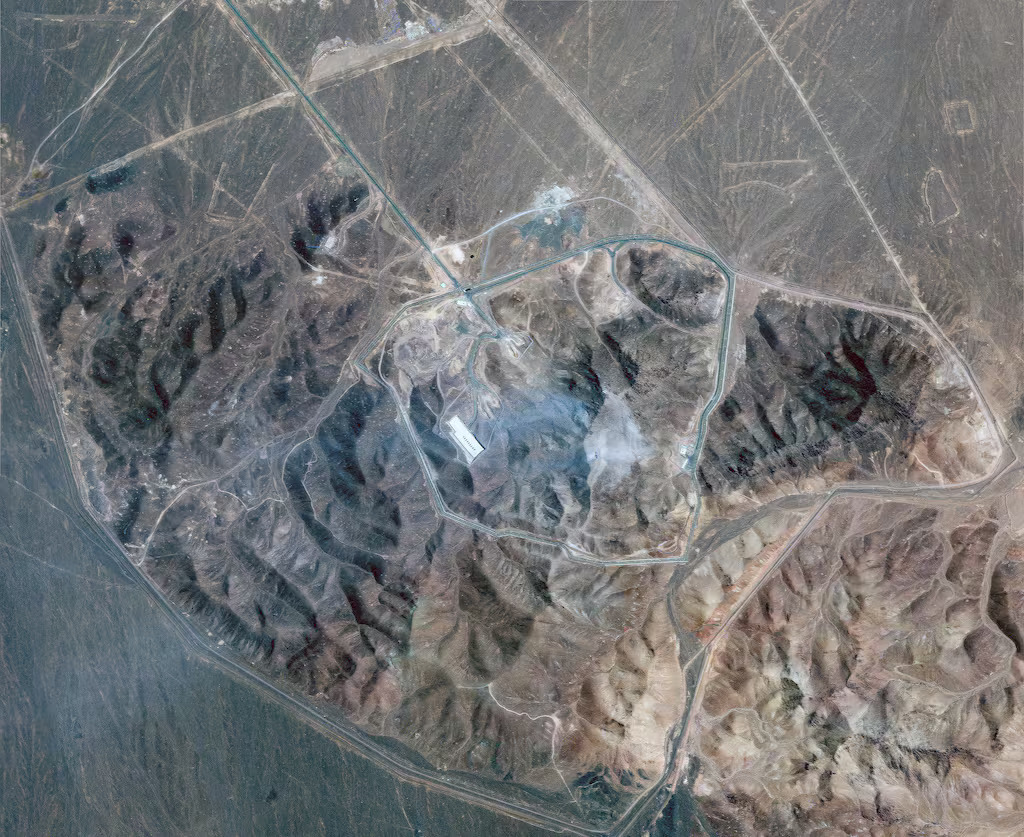
Despite bold assertions by former President Donald Trump that recent U.S. airstrikes “completely obliterated” Iran’s nuclear capabilities, a classified U.S. intelligence assessment paints a far more nuanced picture. According to sources familiar with the report, the Iranian nuclear program has suffered only a temporary setback — estimated to be a matter of months — rather than full elimination.
The report, compiled by the Defense Intelligence Agency (DIA) and shared with top officials earlier this week, suggests that key infrastructure at Iran’s nuclear facilities in Fordo, Natanz, and Isfahan was damaged but not destroyed. Moreover, the DIA notes that Iran may have preemptively relocated highly enriched uranium and operational centrifuges from the targeted sites before the U.S. strike, preserving much of its nuclear potential.
This intelligence contradicts public remarks by Trump and Israeli Prime Minister Benjamin Netanyahu, both of whom declared the strikes a decisive blow. Netanyahu called the joint U.S.-Israel action “historic” and claimed Iran’s program was “brought to ruin.” Trump, attending the NATO Summit in The Hague, repeated that the nuclear sites were “totally destroyed” and criticized news outlets for suggesting otherwise.
Disputed Damage and Unanswered Questions
Although the Fordo site’s surface structures, including its entrance tunnel, were visibly damaged by 30,000-pound bunker-buster bombs, the subterranean enrichment halls survived, according to imagery analysis and intelligence sources. Satellite data from Maxar Technologies confirmed that Iran had likely sealed entrances and removed sensitive materials in the days leading up to the attack.
Experts now believe Iran anticipated the strike. Trucks and bulldozers were seen moving at the Fordo site several days earlier, possibly relocating uranium stockpiles and centrifuges. A former intelligence official noted that while uranium is relatively transportable, centrifuges are far more delicate, making the preservation of key enrichment equipment a significant operational feat if true.
The White House Pushes Back, Launches Leak Probe
The Biden administration, through White House officials and Defense Secretary Pete Hegseth, dismissed the DIA report, calling it “preliminary” and of “low confidence.” Trump allies expressed fury over the leak, with special envoy Steve Witkoff labeling it “treasonous” and demanding an investigation. Secretary of State Marco Rubio accused anonymous sources of undermining national security: “These leakers are professional stabbers,” he said.
The CIA and the Office of the Director of National Intelligence have declined to comment, maintaining silence amid growing political tension over the narrative of success.
Iran’s Nuclear Potential Still Intact
Despite the strikes, Iran may still possess enough enriched uranium to build several nuclear weapons if it chooses to pursue that path. Analysts say approximately 42 kg of 60% enriched uranium, if further refined to 90%, is sufficient for one atomic bomb. Iran reportedly retains over 400 kg of enriched uranium, a portion of which may have been safely hidden.
The country also continues to construct and expand enrichment facilities, including a newly announced third site in Isfahan. IAEA chief Rafael Grossi has warned that Iran’s lack of transparency and restricted access for inspectors have further complicated assessments of its true capabilities.

A Shadowy Future for Iran’s Nuclear Ambitions
Experts remain divided on what comes next. Some believe that the strikes will push Iran toward doubling down on its nuclear efforts in secret. Others argue that the loss of critical infrastructure and skilled personnel will delay — but not derail — Tehran’s ambitions.
“Iran now has a strong foundation for a rebuilt, possibly covert program,” said Eric Brewer of the Nuclear Threat Initiative. “But it’s starting from a weaker position.”
Kelsey Davenport, an analyst at the Arms Control Association, warned that if Iran has already secured its advanced centrifuges, it could rapidly construct a hidden enrichment site, making monitoring and prevention significantly more difficult.
For now, the global community watches closely. The aftermath of the strikes may not have halted Iran’s nuclear trajectory — only temporarily rerouted it.
