

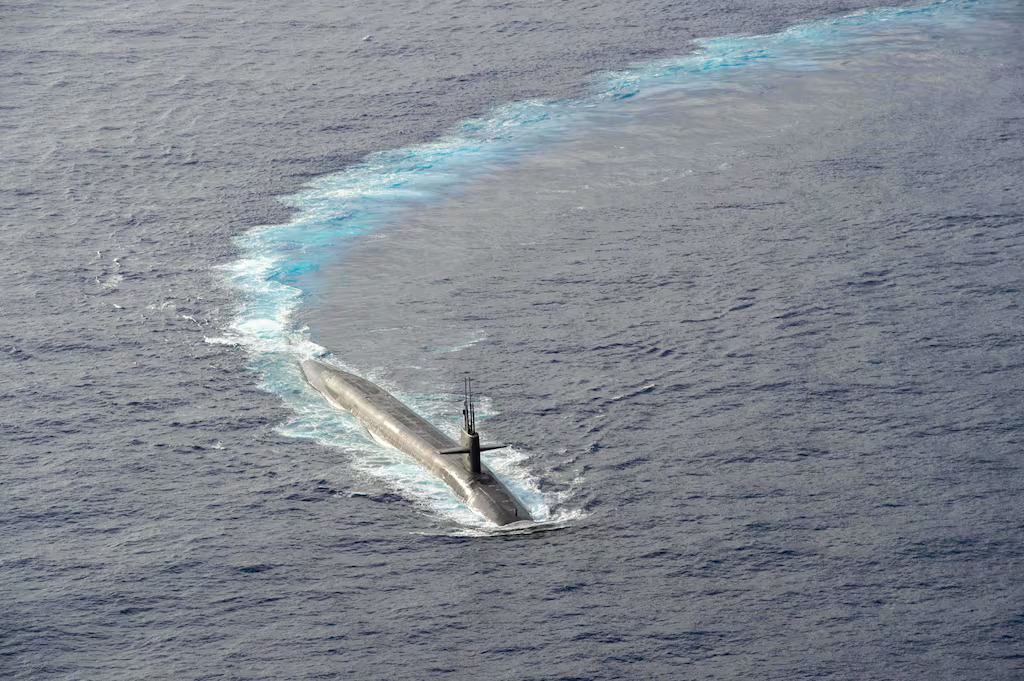
As headlines focused on stealth bombers and bunker-buster bombs in the aftermath of Operation Midnight Hammer, a quieter but equally powerful force played a crucial role in the U.S. military’s coordinated strikes on Iran: a stealthy Ohio-class guided-missile submarine operating beneath the waves.
On the evening of June 21, at approximately 5:00 p.m. EST, the submerged vessel launched over two dozen Tomahawk cruise missiles aimed at critical infrastructure in Isfahan, marking the beginning of a large-scale offensive that would culminate in the most significant assault on Iran’s nuclear sites to date.
A Strike from the Deep
While the identity of the specific submarine remains classified, U.S. Navy Secretary John Phelan confirmed during a Senate hearing on Tuesday that an Ohio-class submarine executed the first wave of the attack and “performed exceptionally,” dealing a serious blow to Iran’s nuclear capacity.
Designed during the Cold War as part of America’s nuclear deterrent force, Ohio-class submarines are now proving their value in conventional warfare. Four of these behemoths — Ohio, Michigan, Florida, and Georgia — have been converted into guided-missile submarines (SSGNs), capable of launching up to 154 Tomahawk missiles with pinpoint precision from beneath the sea.
Precision, Stealth, and Shock Value
The decision to launch Tomahawks from an Ohio-class platform was as strategic as it was symbolic. Able to dive to depths beyond 800 feet, travel over 25 knots, and remain virtually undetectable, these submarines are uniquely equipped to deliver sudden, precise attacks deep inside hostile territory — all while remaining cloaked by the ocean.
The Tomahawk Land Attack Missile (TLAM), with a range exceeding 1,000 miles, struck with surgical accuracy, paving the way for the follow-up air assault. Moments after the sub’s launch, B-2 Spirit stealth bombers and tactical fighters entered Iranian airspace, delivering GBU-57 “bunker busters” to underground nuclear sites. But it was the submarine that ensured element of surprise, disrupting Iran’s defensive posture and communications before aircraft ever arrived.
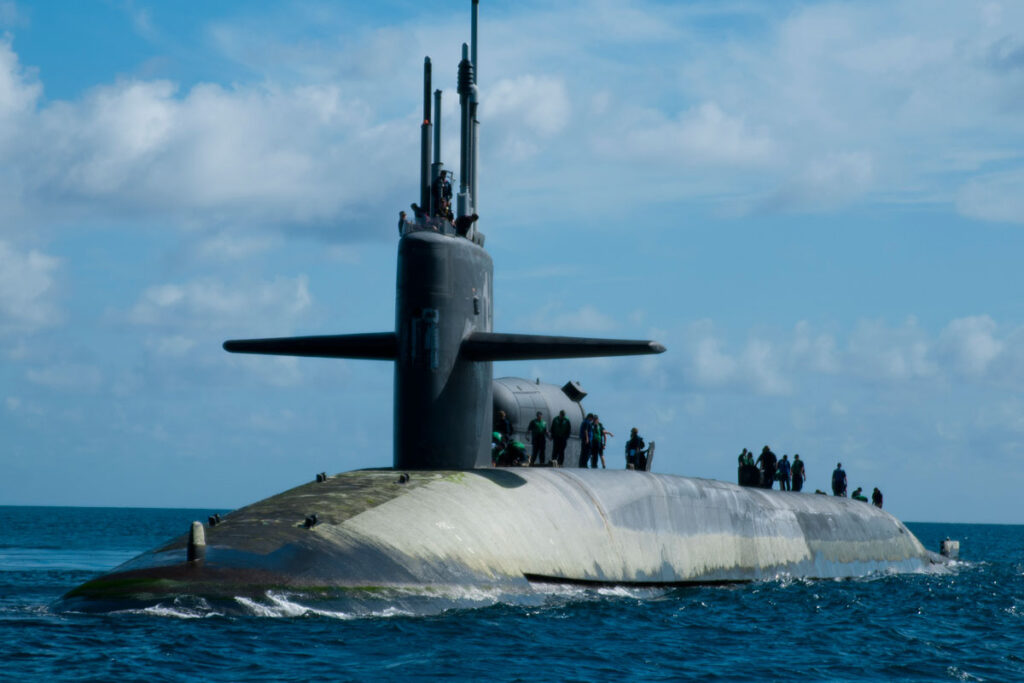
More Than Missiles: A Multifaceted Arsenal
Ohio-class guided-missile submarines are not just launch platforms. Each can deploy up to 66 special operations forces (SOF) personnel and a range of underwater delivery vehicles, giving them versatile offensive capabilities in both overt and covert scenarios.
Originally built as part of the United States’ nuclear triad, the platform’s stealth and flexibility have given it a second life in modern combat, especially in missions requiring discretion, reach, and overwhelming firepower.
A Legacy Nearing Sunset
Though they remain among the most feared vessels in the Navy’s arsenal, the Ohio-class subs are nearing retirement. The first of the class is set to decommission in 2027, and attention is now turning to their successor: the Columbia-class.
However, the Columbia program faces delays. Acting Chief of Naval Operations Adm. James Kilby warned this week that the lead submarine in the Columbia-class series may not be ready until March 2029, a full two years behind schedule. This development raises concerns about maintaining the Navy’s undersea strike and deterrent capabilities during the transitional period.
Message Delivered
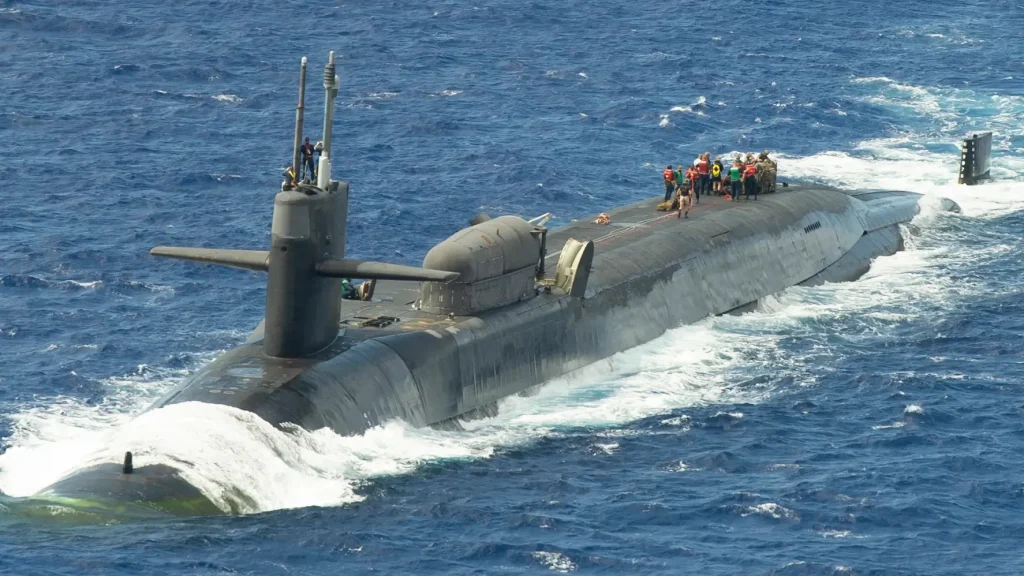
Beyond its operational impact, the use of an Ohio-class submarine in Operation Midnight Hammer sent a clear signal — not just to Tehran, but to global observers. It showcased the U.S. military’s ability to strike from unexpected angles, using deep-sea platforms that are nearly impossible to detect, yet capable of delivering nation-shaking blows.
While B-2 bombers might steal the spotlight, it was a steel giant moving silently beneath the surface that fired the operation’s first — and perhaps most strategic — shots.
