

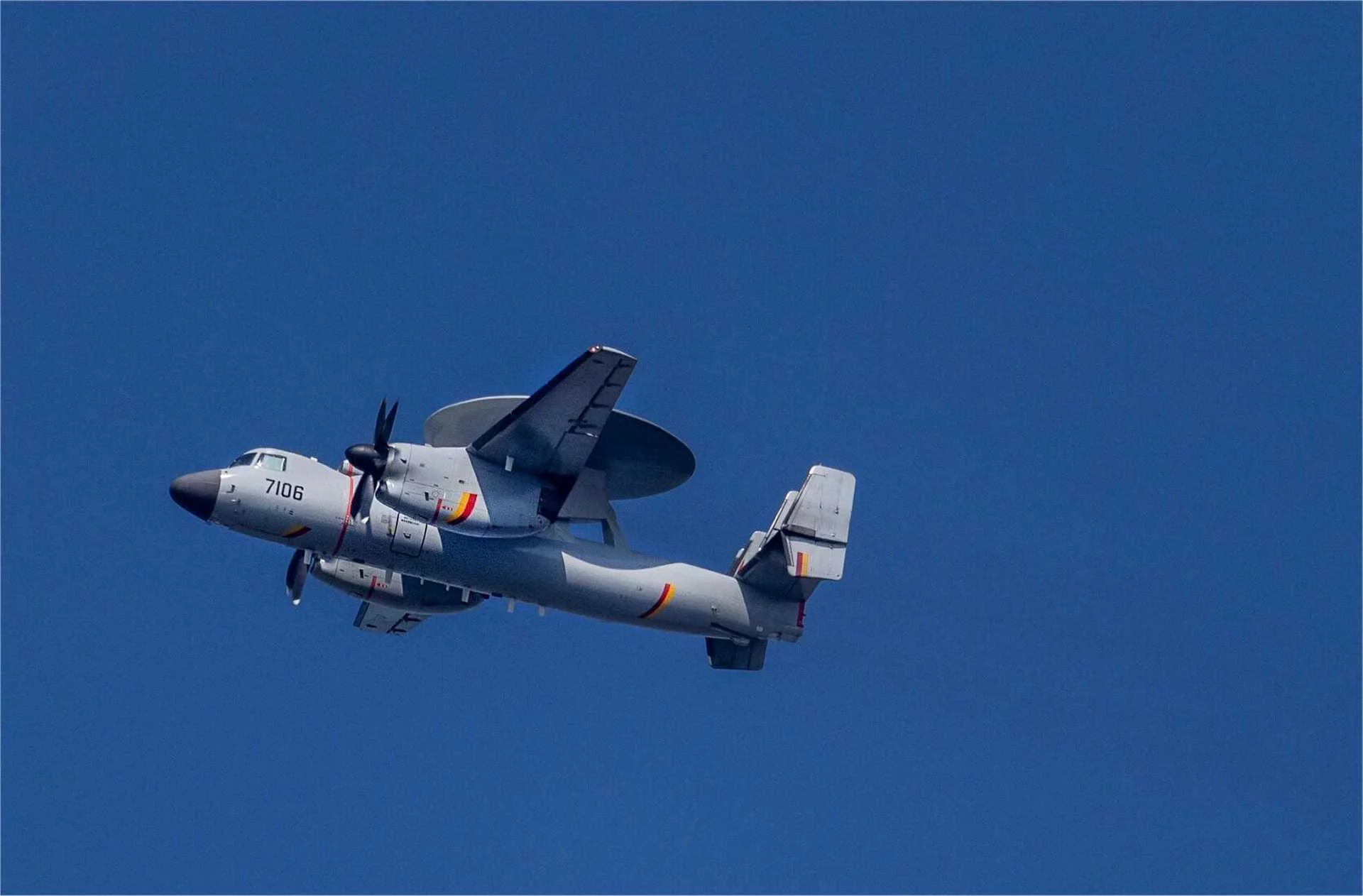
China is on the brink of operationally deploying its most advanced carrier-based surveillance aircraft to date—the KJ-600, a fixed-wing airborne early warning and control (AEW&C) system designed to significantly upgrade the People’s Liberation Army Navy (PLAN)’s carrier strike capabilities. High-resolution images recently surfaced on Chinese social media showing the KJ-600 flying in formation with J-15 carrier-based fighters, a strong indication that the aircraft has entered its final testing stages.
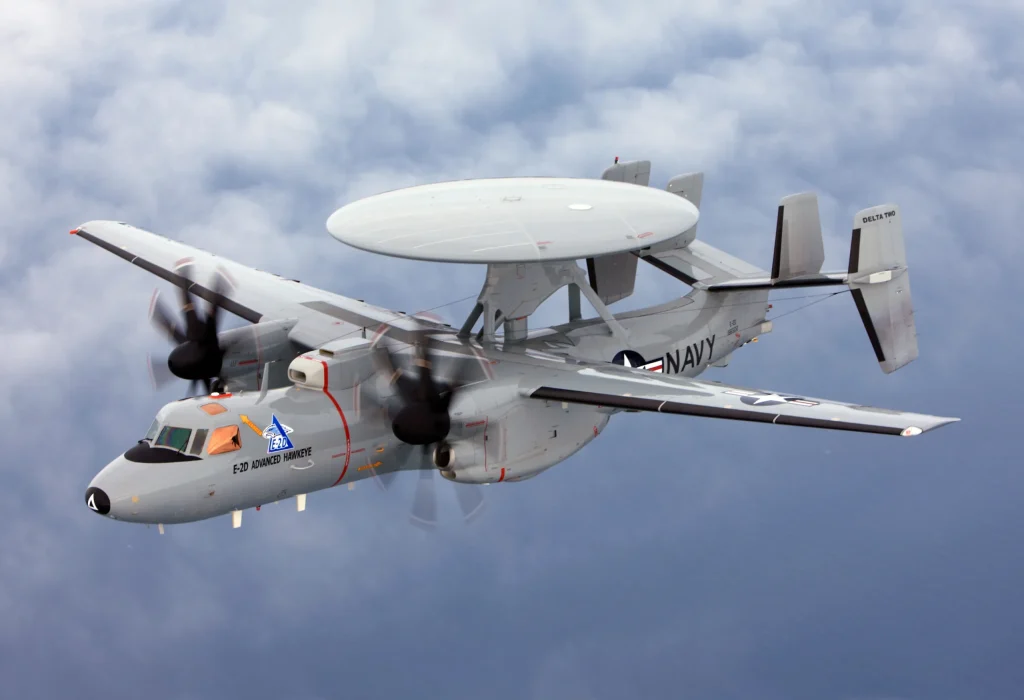
Closely modeled after the U.S. Navy’s E-2D Advanced Hawkeye, the KJ-600 is equipped with a rotodome-mounted AESA radar, twin turboprop engines, and a high-mounted wing design. But it’s more than just a lookalike: it represents China’s first real leap toward a networked, power-projection navy capable of operating far from home waters.
The Eye in the Sky for China’s New Supercarriers
The KJ-600 has been developed with the Type 003 “Fujian” aircraft carrier in mind—a new-generation Chinese flattop that uses electromagnetic catapult launch systems (EMALS) similar to those on America’s Ford-class carriers. These systems allow the launch of heavier aircraft like the KJ-600, overcoming a long-standing limitation in PLAN naval aviation.
The aircraft’s AESA radar provides 360-degree surveillance, allowing the detection and tracking of enemy aircraft, cruise missiles, and naval assets at extended ranges. While exact specifications remain classified, defense analysts suggest the KJ-600 can operate in dense, contested airspace and may have the capacity to track low-observable (stealth) targets.
From Helos to Hawkeyes: Filling a Strategic Gap
Until now, China’s carrier strike groups relied primarily on rotary-wing AEW platforms like the Z-18J, which suffer from limited altitude and range. The KJ-600 fills that critical void, giving Chinese carriers an over-the-horizon command and control platform capable of orchestrating complex fleet operations and providing early warning against enemy air or missile attacks.
The aircraft’s deployment also reflects a broader strategic shift within China’s naval doctrine—from near-shore denial to blue-water power projection. With the KJ-600 onboard, Chinese carriers will now be better equipped to patrol and contest areas like the South China Sea, Taiwan Strait, and even the broader Indo-Pacific region.
A Technological Face-Off with the U.S. Navy
Though the KJ-600 draws heavy inspiration from the E-2D Advanced Hawkeye, it is unlikely to match the full technological maturity of its American counterpart—at least not yet. The E-2D, powered by Rolls-Royce T56 engines and equipped with the AN/APY-9 radar, offers real-time data sharing through Cooperative Engagement Capability (CEC), linking it seamlessly with Aegis destroyers, F-35s, and other U.S. assets.
While China has reportedly begun developing its own “combat cloud” and secure tactical networks, experts note that interoperability, latency, and data fusion remain developmental hurdles for the KJ-600.
Nonetheless, the gap is narrowing. The KJ-600 is said to house next-gen mission consoles, a five-person crew, and possibly advanced electronic warfare capabilities—features that bring it closer to the operational footprint of the Hawkeye than ever before.
Strategic Ramifications: A Shifting Balance in the Pacific
The looming induction of the KJ-600 sends a clear message: China is ready to challenge U.S. naval air supremacy. The aircraft expands China’s anti-access/area denial (A2/AD) umbrella and strengthens its ability to detect and respond to incursions by U.S. and allied forces.
According to regional observers, this development may lead to more assertive Chinese posturing in disputed waters and tighter military coordination with Russian naval assets. It also introduces new layers of complexity to allied planning, particularly as nations like Japan, Australia, and the Philippines expand their own naval modernization efforts.
What Comes Next?
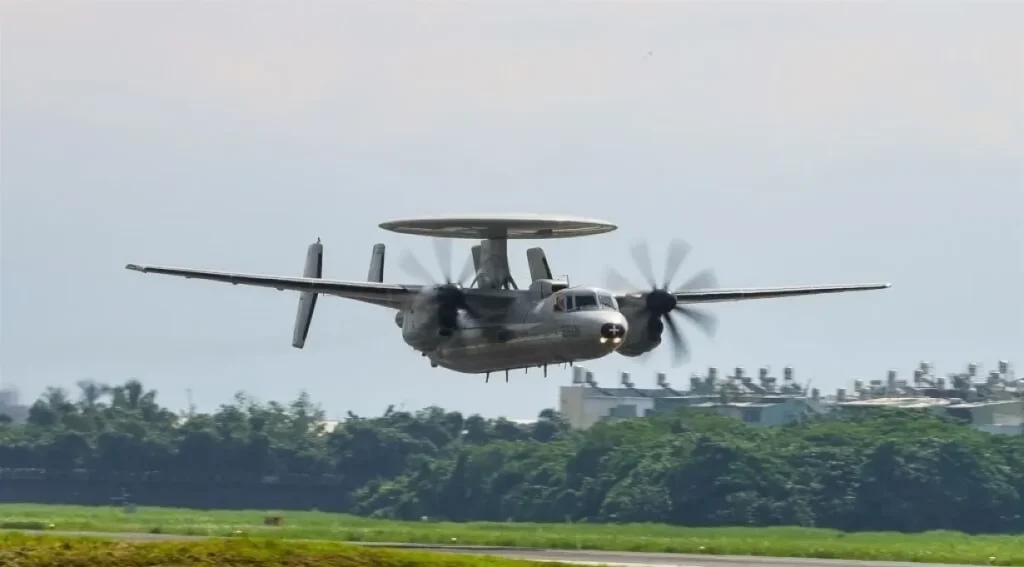
The KJ-600’s successful transition from land-based trials to carrier operations marks a historic evolution in Chinese naval aviation. As more units enter service and data-link systems improve, it will become an essential pillar of China’s maritime surveillance, targeting, and electronic warfare ecosystem.
Though the E-2D still holds the edge in integrated combat operations and battle-tested resilience, China’s KJ-600 is the most formidable rival it has yet faced in the carrier-based AEW&C domain. Its deployment is not just a technological milestone—it’s a strategic inflection point that may redefine the airpower balance across the Indo-Pacific.
As China prepares to field multiple carrier strike groups in the coming decade, the KJ-600 will act as their digital nerve center, guiding fleet actions across thousands of miles of ocean. In the evolving chessboard of the Pacific, the KJ-600 is China’s next big move.
