

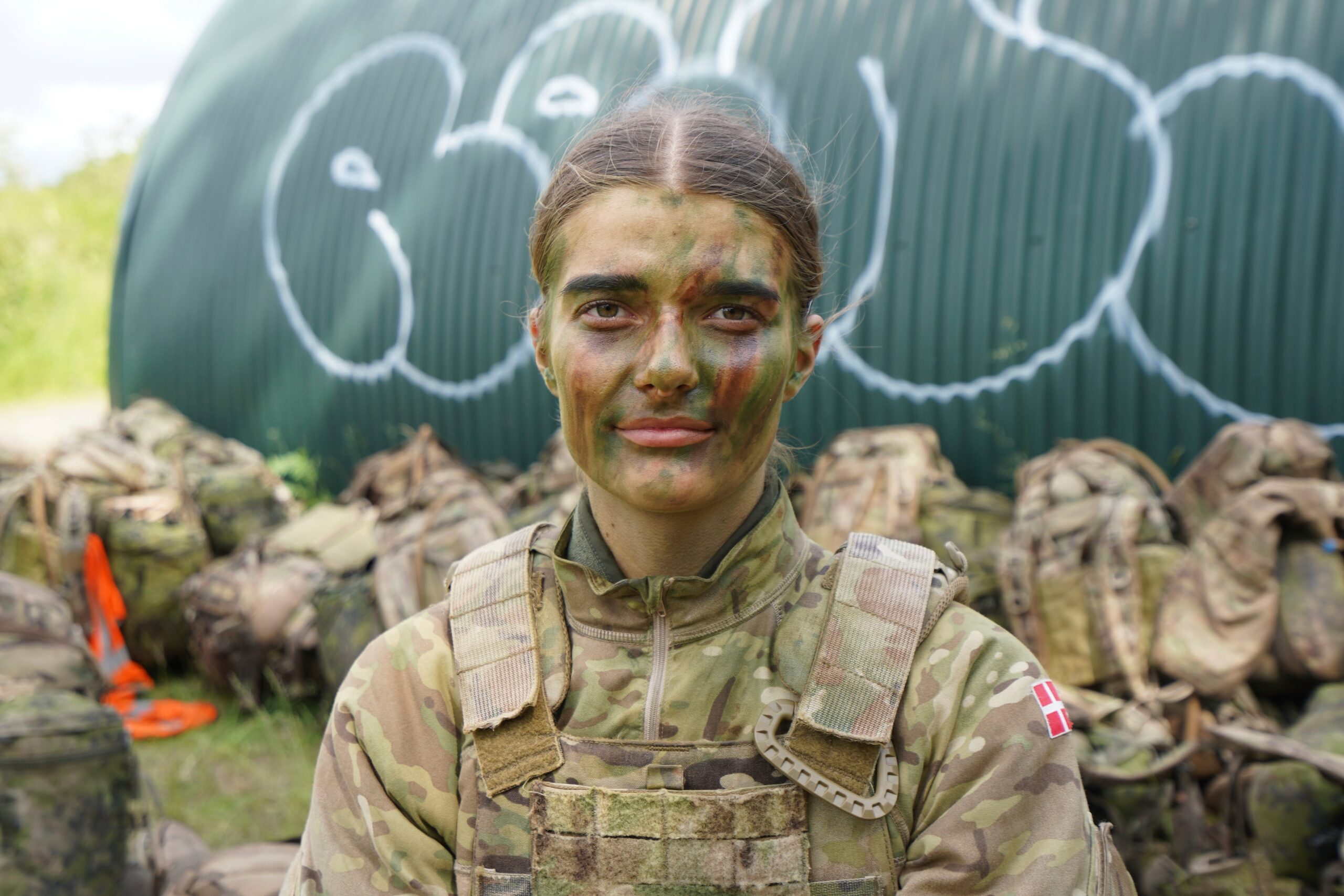
For the first time in its history, Denmark is set to introduce compulsory military service for women, moving toward a gender-equal draft system amid growing regional security concerns.
In the dense forests north of Copenhagen, 20-year-old Katrine, her face streaked with camouflage, keeps watch during her final military exercises. Having volunteered for service earlier this year, she represents a new generation of female recruits taking on expanded roles in Denmark’s armed forces.
Until recently, military service for women in Denmark was strictly voluntary. While women have been eligible for full-time roles in the armed forces since the 1970s, conscription laws applied only to men. That’s now changing.
With escalating geopolitical tensions—particularly Russia’s ongoing war in Ukraine—the Danish government has approved legislation that brings 18-year-old women into the conscription lottery alongside men. The aim: to increase overall military readiness and ensure equal participation regardless of gender.
Katrine, reflecting on the broader implications, said: “Given the state of the world, I believe it’s fair and necessary for women to contribute just like men.”
The new law, passed in early June, mandates that young women turning 18 after the date of the legislation’s approval will be subject to a randomized draft, mirroring the existing system for men. While voluntary enlistment remains an option, unfilled spots will now be allocated through a gender-neutral lottery.
Colonel Kenneth Strøm, head of Denmark’s recruitment program, emphasized that the change is a response to the current security environment. “With more recruits, we gain greater military capacity and reinforce our contributions to NATO’s collective defense,” he noted.
Denmark, home to about 6 million people, currently maintains a professional military force of 9,000. The reform aims to raise the number of annual conscripts from around 4,700 to 6,500 by 2033.
Recruits will also face an extended service period—nearly tripling in length from four months to eleven. The revised program includes five months of basic training followed by six months of operational deployment and further instruction.
Anne Sofie, another volunteer in Katrine’s unit, acknowledged the mixed reactions among potential conscripts. “Some may dread the draft but might be surprised by how much they actually enjoy the experience,” she said.
The decision to expand conscription is part of Denmark’s broader defense overhaul. In February, the government announced a $7 billion defense fund aimed at pushing military spending above 3% of GDP in 2025. The conscription initiative is partly supported by this Acceleration Fund.
However, experts like Rikke Haugegaard from the Royal Danish Defence College caution that logistical challenges remain—from limited infrastructure and barracks to the risk of sexual misconduct. “It won’t happen overnight. The military will need to adapt gradually to accommodate these changes,” she said.
Denmark follows the lead of fellow Nordic nations. Sweden reinstated gender-neutral conscription in 2017, while Norway was the first in Europe to introduce such a system back in 2013.
Despite the peaceful atmosphere within its borders, Denmark’s move highlights a growing consensus among Western nations: the security landscape in Europe has fundamentally shifted—and the response requires everyone to step up, regardless of gender.
