

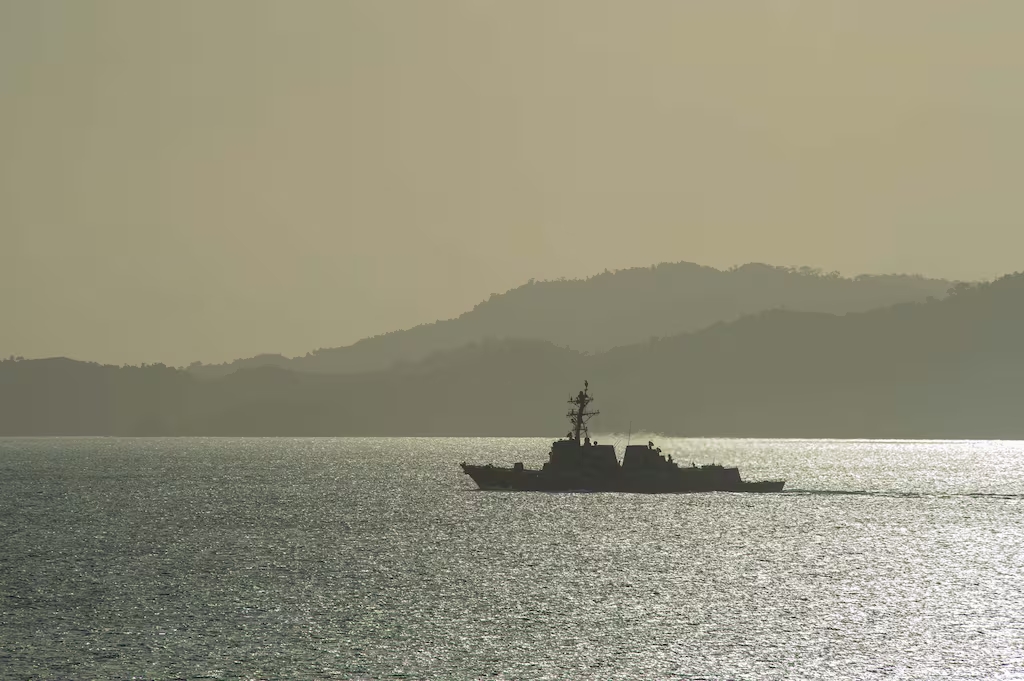
Amid rising tensions in the South China Sea, the Philippines has begun ramping up its maritime defense by constructing new naval bases in key regions across the country and modernizing existing facilities. As part of a defense cooperation agreement with the United States, significant development is underway on Balabac Island, located in the southern part of Palawan province.
Defense Secretary Gilberto Teodoro announced last month that infrastructure work on the joint Air Force and Navy base in Balabac would be expedited. Highlighting the island’s “strategic location,” Teodoro said a stronger military presence there would help deter potential Chinese intelligence operations on the main island of Palawan.
Balabac is located just 140 nautical miles from Mischief Reef, which is controlled by China but falls within the Philippines’ exclusive economic zone—an area backed by a 2016 international arbitration ruling. China has rejected the ruling and continues to militarize the disputed reef.
Balabac is one of the Philippine bases designated under the U.S.-Philippines Enhanced Defense Cooperation Agreement (EDCA). This arrangement allows the U.S. to deploy rotating troops, preposition military assets, and provide funding for base upgrades. In total, the agreement covers nine military sites across the Philippines—six Air Force bases, two Army bases, and one Navy base.
West Philippine Sea Spokesperson Explains
Beyond Balabac, the Philippine Navy is pursuing new base projects across the archipelago. As part of the Strategic Basing Plan, the government aims to enhance the Navy’s presence in major maritime corridors and upgrade current bases to meet modern operational needs by 2040.
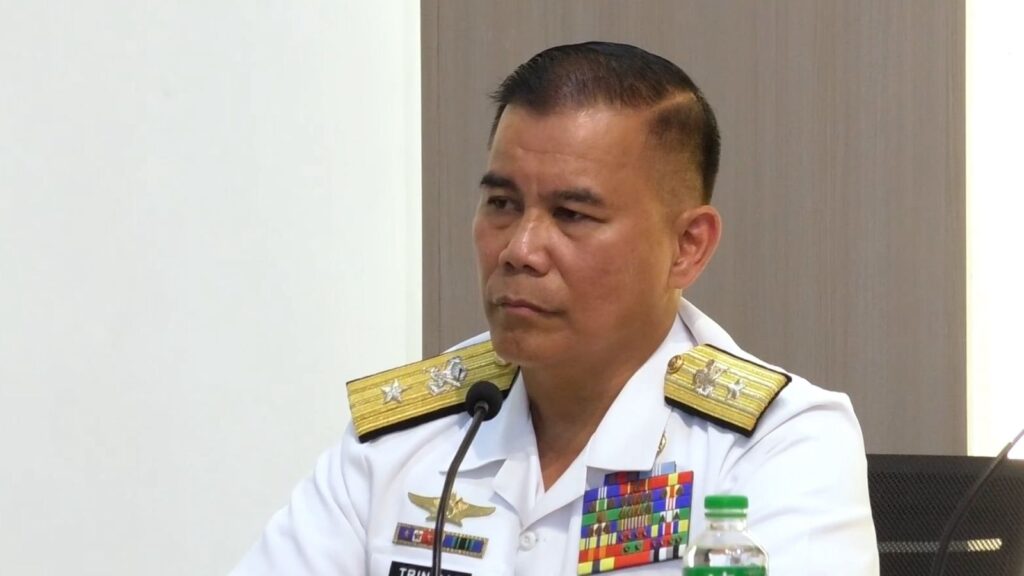
Rear Adm. Roy Vincent Trinidad, spokesperson for the West Philippine Sea and the Navy’s Inspector General, stated that the bases will serve not only new warships but also the existing fleet. The Navy has recently bolstered its capabilities with the acquisition of frigates, offshore patrol vessels, landing ships, radar systems, and missile platforms. Additional corvettes from South Korea are also expected to arrive soon.
Trinidad also revealed plans to establish 28 small forward naval outposts in strategic areas near the West Philippine Sea and Philippine Rise in the northeast, where incursions by Chinese research vessels have increased in recent months.
Among the largest infrastructure projects are a major naval base in Subic Bay and a naval support base in Mindanao. During the Navy’s 127th anniversary celebration, President Ferdinand Marcos Jr. announced that groundbreaking at Naval Station Nabasan in Subic would begin soon. Following that, Chiquita and Grande Islands will also be developed into bases.
These islands are located across from the Agila Subic Shipyard—formerly operated by Hanjin and acquired in 2022 by U.S.-based Cerberus Capital Management. The area drew attention again in March after Chinese and Filipino nationals suspected of espionage were arrested on the islands.
The upcoming naval support base in Natividad, located in the province of Misamis Oriental in Mindanao, will serve ships operating from Sangley Point. According to Trinidad, these locations will first be declared military reservation zones and later developed into full naval bases, pending a presidential proclamation.
Improvements are also being made at existing facilities, including Naval Base Rafael Ramos in Cebu, where upgrades are being prepared to accommodate frigates and landing ships.
To streamline the country’s external defense strategy, the military is also exploring joint basing between the Navy and the Air Force. “This is the direction of the Department of National Defense,” Trinidad said. “Instead of each service developing separate bases, joint basing would be a smarter way to manage resources efficiently.”
