

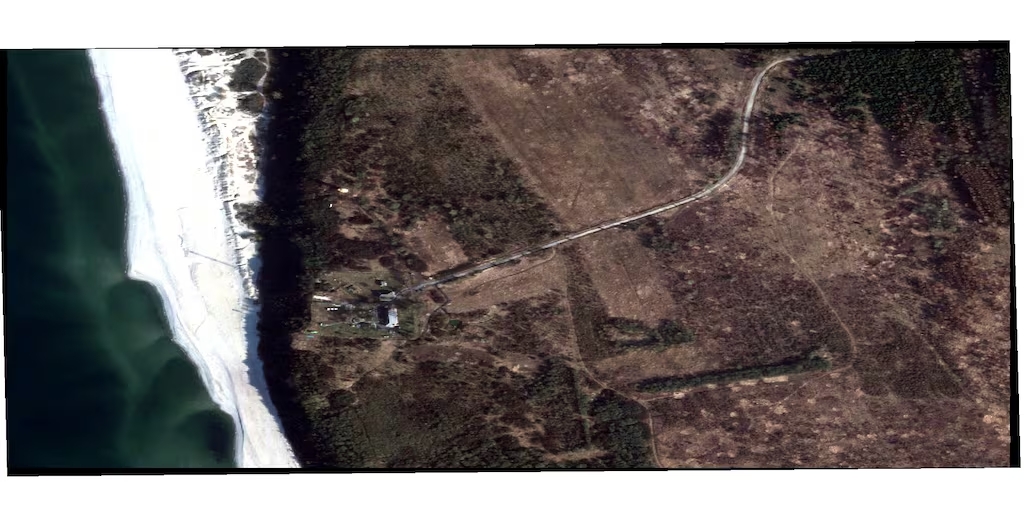
Polish researchers are zeroing in on the source of persistent GPS disruptions affecting the Baltic Sea region—interference believed to be orchestrated by Russian military units since the start of the war in Ukraine.
Since Russia’s full-scale invasion in February 2022, aviation and maritime operations across northeastern Europe have experienced widespread Global Navigation Satellite System (GNSS) anomalies. Airlines have reported frequent flight path deviations, rerouted aircraft, and even trip cancellations. Commercial ships have similarly reported being knocked off course, endangering cargo routes and coastal navigation.
According to research conducted by academics in Poland, the disruptions stem from a combination of jamming—which blocks satellite signals—and spoofing, a more sophisticated method that manipulates location data to mislead GPS systems. “We’ve noticed a transition in 2025 where spoofing has become the dominant form of interference,” said Dr. Jaroslaw Cydejko, a navigation expert and professor at Gdynia Maritime University.
The interference has been especially intense along major air and sea corridors stretching from Gdańsk to the Gulf of Finland. In some cases, airports in Estonia and Finland have been forced to temporarily halt operations. While GPS has become indispensable for navigation, Cydejko noted that its reliability can no longer be taken for granted. “Mariners are trained to operate without satellite guidance, but dependency on GNSS is now deeply embedded,” he said.
International concern is growing. In March, eight countries—including Poland, Finland, France, the Netherlands, Ukraine, and the Baltic states—filed a formal complaint with the United Nations. The issue is now being reviewed by global regulatory bodies such as the International Maritime Organization (IMO), the International Civil Aviation Organization (ICAO), and the International Telecommunication Union (ITU).
While Moscow has yet to issue an official response, intelligence and open-source data suggest two key Russian strongholds as the origin points: Kaliningrad, a militarized exclave bordered by Poland and Lithuania, and the St. Petersburg region. Both areas are known for housing advanced Russian electronic warfare units, which have previously been linked to GPS disruptions.
Cydejko and his team have been tracking these signals closely, shifting much of their recent research toward analyzing electronic emissions over the Baltic Sea. “What we’re seeing is not isolated,” he said. “It’s a pattern of persistent, targeted interference that reflects deliberate strategy.”
As electronic warfare becomes an increasingly central aspect of modern conflict, the Baltic’s GNSS blackouts may be just one front in a broader information and infrastructure war.
