

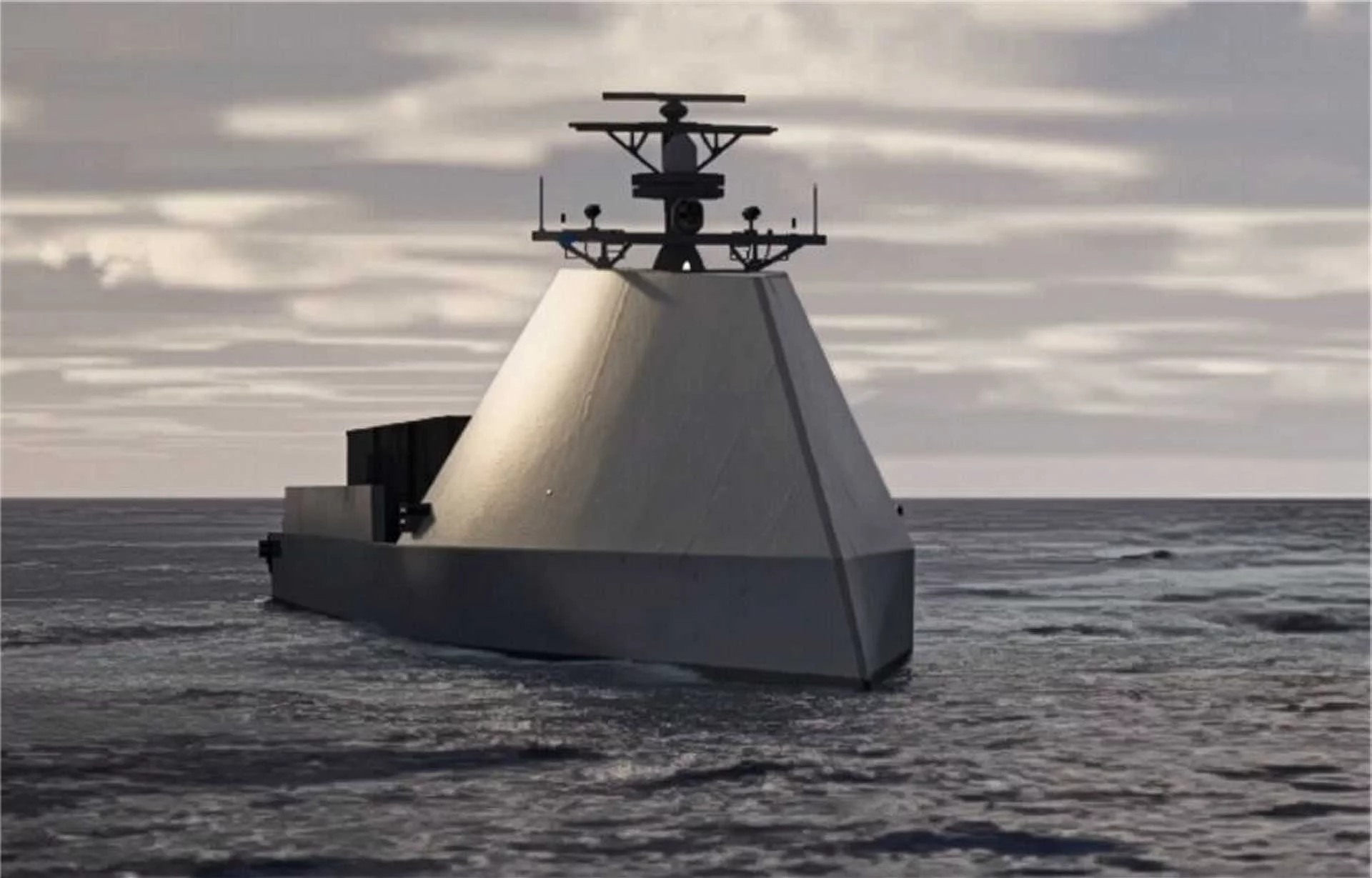
Huntington Ingalls Industries (HII) has successfully completed a three-day sea trial of its ROMULUS unmanned surface vessel (USV) off the coast of Virginia Beach. The test marked the first-ever integration of Shield AI’s Hivemind software with HII’s Odyssey autonomy suite, showcasing a major milestone in maritime autonomy.
During the trial, the ROMULUS 20 prototype executed mission profiles with minimal human involvement, demonstrating the vessel’s ability to operate independently and make real-time decisions during complex scenarios.
AI Integration Enables Smarter, Independent Operations
What sets this test apart is the AI-driven mission control at the core of ROMULUS. The system can continue its mission even in GPS-denied or communication-degraded environments. It autonomously detects threats, reroutes in real time, and coordinates with allied vessels.
ROMULUS has evolved from a tactical unmanned platform into an intelligent, adaptive naval asset capable of independent decision-making.
ROMULUS Program: Scalable and Mission-Flexible Design
The ROMULUS program represents a shift in U.S. and allied naval innovation, emphasizing endurance, modularity, and rapid production. Built on a commercial hull, ROMULUS supports scalable, cost-effective manufacturing using existing supply chains.
The upcoming ROMULUS 190, now under construction, is designed for greater speed, range, and payload capacity. It can exceed 25 knots, operate autonomously for 2,500 nautical miles, and carry four 40-foot ISO containers adaptable for missions like ISR, ASW, electronic warfare, communications relay, or kinetic strikes.
Advanced Digital Infrastructure
HII’s Odyssey autonomy suite oversees propulsion, navigation, collision avoidance, and system diagnostics. With the integration of Hivemind, ROMULUS gains advanced mission planning, adaptive tasking, and environment-aware decision-making.
This technology is vital as the U.S. Navy transitions toward distributed and manned-unmanned teaming operations, extending reach and survivability without direct human oversight.
The Future of Naval Autonomy
AI integration enables coordinated multi-vessel operations—a single operator can control a swarm of ROMULUS vessels, each autonomously adjusting to tactical changes. This creates a resilient, adaptive, and decentralized force capable of operating in contested maritime zones.
Toward a Fully Autonomous Fleet
With further trials underway and the ROMULUS 190 nearing launch, HII is moving closer to fielding a mission-ready, AI-powered USV for next-generation naval warfare. The program signals a transformative step toward autonomous maritime dominance in the coming decade.
