

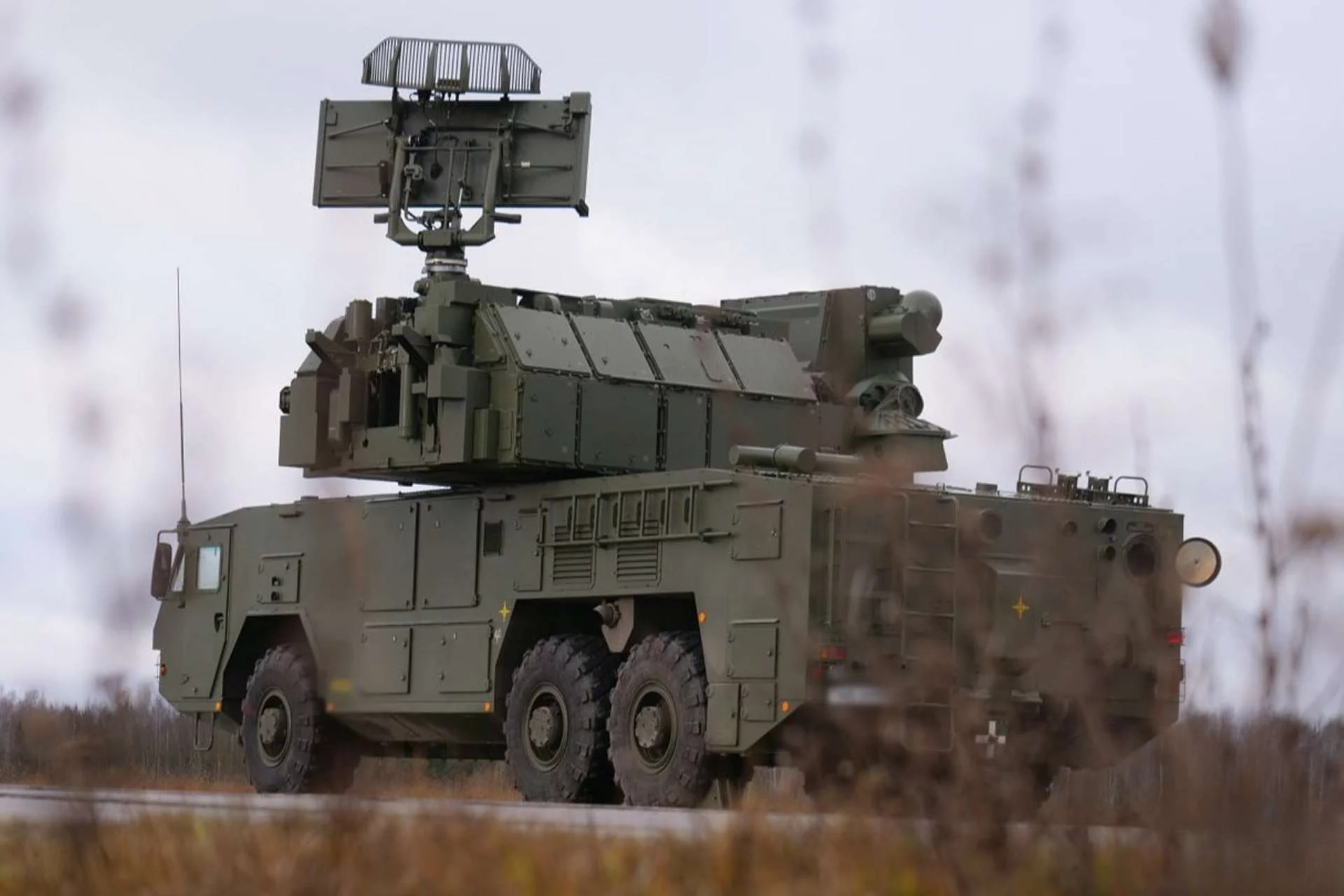
Belarus has received a fresh delivery of Tor-M2K short-range air defense systems from Russia, further reinforcing the Union State’s integrated air defense network and enhancing coverage along NATO’s eastern frontier. The announcement was made by the Belarusian Ministry of Defense on 25 November.
Expanded Russian-Belarusian Air Defense Integration
The new shipment, delivered under ongoing military-technical cooperation agreements, highlights Minsk and Moscow’s long-term effort to build a layered, regional air and missile defense system at a time when drones, cruise missiles and precision munitions are reshaping modern air warfare.
Belarus has now strengthened an already-equipped brigade, signaling that short-range, high-mobility air defense remains a vital pillar for protecting key military assets and strategic infrastructure.
Tor-M2K: Mobile, Fully Integrated Short-Range Shield
The supplied systems are confirmed to be the Tor-M2K variant, combining:
- Almaz-Antey’s short-range missile system,
- A Belarusian MZKT-6922 6×6 high-mobility chassis,
- 16 ready-to-launch missiles,
- A fast-rotating phased-array radar,
- Fully digital fire-control architecture.
The system engages targets at 12–15 km and up to 10 km altitude, tracking multiple threats simultaneously—particularly valuable against massed drone and missile attacks.
How Tor-M2K Differs From Other Air Defense Systems
Unlike systems such as Pantsir-S1 or Western NASAMS and IRIS-T:
- Tor-M2K integrates radar, control system and missiles on a single armored platform.
- Offers rapid cold-launch vertical engagement.
- Provides high mobility for maneuver formations rather than fixed-site protection.
Combat-Proven System With Upgraded Capabilities
Tor systems have been used extensively in:
- Syria, where they defended Khmeimim Air Base against drone attacks,
- Ukraine, where they protect maneuvering units and strategic SAM assets such as S-300 and S-400.
Operational feedback from these theaters has driven upgrades in radar modes, engagement tactics and automation.
Broader Strategic Implications for NATO’s Eastern Border
Belarus hosts multiple Russian military assets and is deeply integrated into the Union State’s joint air defense network. The additional Tor-M2K systems:
- Increase short-range air defense density,
- Protect command nodes, air bases and logistical hubs,
- Enhance survivability of Russian units stationed in Belarus,
- Strengthen the inner layer of a multi-tiered defense shield along NATO’s eastern flank.
For NATO observers, the growing deployment of Tor-M2K indicates a more sophisticated and denser air defense environment—one designed to challenge both manned aircraft and unmanned systems.
Conclusion
The latest Tor-M2K delivery is not unexpected, but it is strategically significant. It confirms Belarus’s continued investment in Russian short-range air defense technology and underscores the tightening of a joint Belarus-Russia defensive perimeter—reshaping the security landscape along NATO’s eastern border.
