

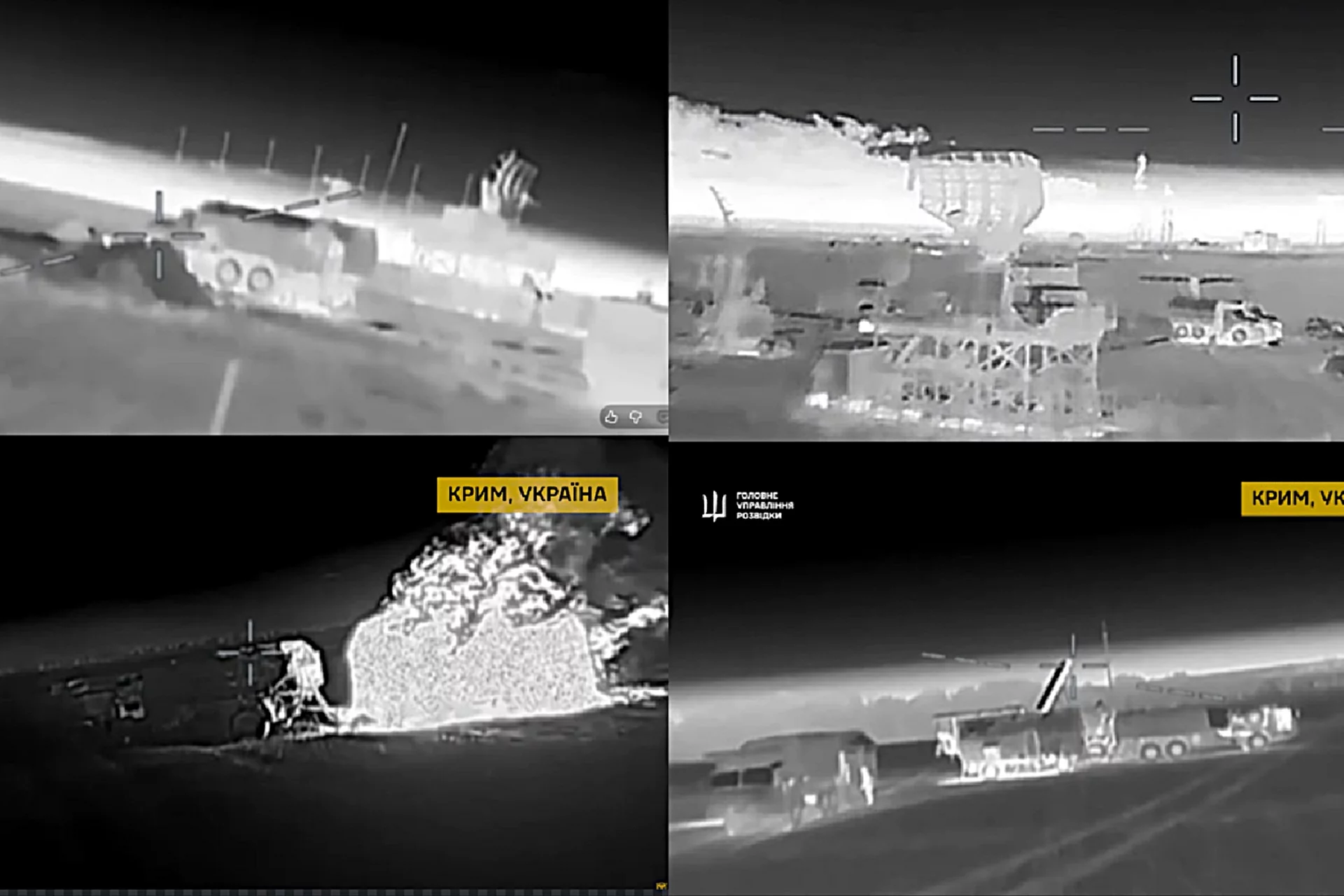
The Ukrainian Main Directorate of Intelligence (GUR) announced a precision operation carried out on the night of November 1-2, delivering a significant blow to the heart of Russia’s air defense network in occupied Crimea. The attack reportedly disabled the command post of an S-400 “Triumf” battalion and targeted critical radar systems. This development is seen as the latest and most crucial step in a months-long systematic campaign aimed at suppressing Russian sensors.
Why Russia’s S-400 Air Defense Network Was Targeted
The S-400 Triumf system is the backbone of Russia’s long-range air defense, playing a key role in safeguarding the airspace over Crimea and the Black Sea.3 Ukraine’s sustained strikes against this system are part of a broader strategy to fracture Russia’s Integrated Air Defense System (IADS) capability.
The primary components targeted in this latest strike and their functions include:
- 92N6E Multifunctional Radar: The S-400’s primary engagement and missile guidance radar—the “eyes” and “shooter” of the battery.
- Command Post Autonomous Power Supply: The vital energy source feeding the radar and the command center.
- AORL-1AS Airfield Surveillance Radar: A target that degrades the clarity of the air picture over runway approaches.
- P-18 “Terek” VHF Set: A long-wavelength early warning radar often used to cue on low-observable targets.
Hitting not only the radar system but also the command post’s power backbone is designed to severely complicate maintenance crews’ efforts to rapidly restore the system, significantly lengthening downtime.
Operational Consequences and Implications
This sensor suppression operation carried out by Ukrainian UAVs has significant operational and strategic consequences that will alter the military balance in Crimea.
Tactical Advantages Secured by Ukraine
| Advantage Category | Description |
| UAV Survivability | Blinding the radar reduces the risk of detection for reconnaissance and strike drones. |
| Deep Strike Capability | Disabling the S-400’s fire-control radar opens a wider corridor for incoming cruise missiles and guided rockets. |
| Logistical Strain | The difficulty of quickly replacing specialized systems like the 92N6E in the theater increases pressure on Russian supply chains. |
Risks Created for Russia
- Regional Blind Spots: Air defense coverage over Western and Central Crimea is severely degraded.
- Asset Reallocation Necessity: Air defense assets must be stripped from other sectors to fill the gap, reducing protection elsewhere.
- Accelerated Wear and Tear: Surviving systems are forced into higher duty cycles, hastening wear and potential failure.
These attacks point to a larger strategic pattern intended to fragment Crimea’s air shield into isolated bubbles. Successful strikes also send a signal to international partners, reinforcing the argument for sustained supplies of long-range strike enablers to Ukraine.
